Foreign Policy
Pakistan and Afghanistan Are Fighting, Too
Foreign Policy · Mar 2, 2026 · Collected from RSS
Summary
War in Iran could pose instability risks as its neighbors to the east escalate their conflict.
Full Article
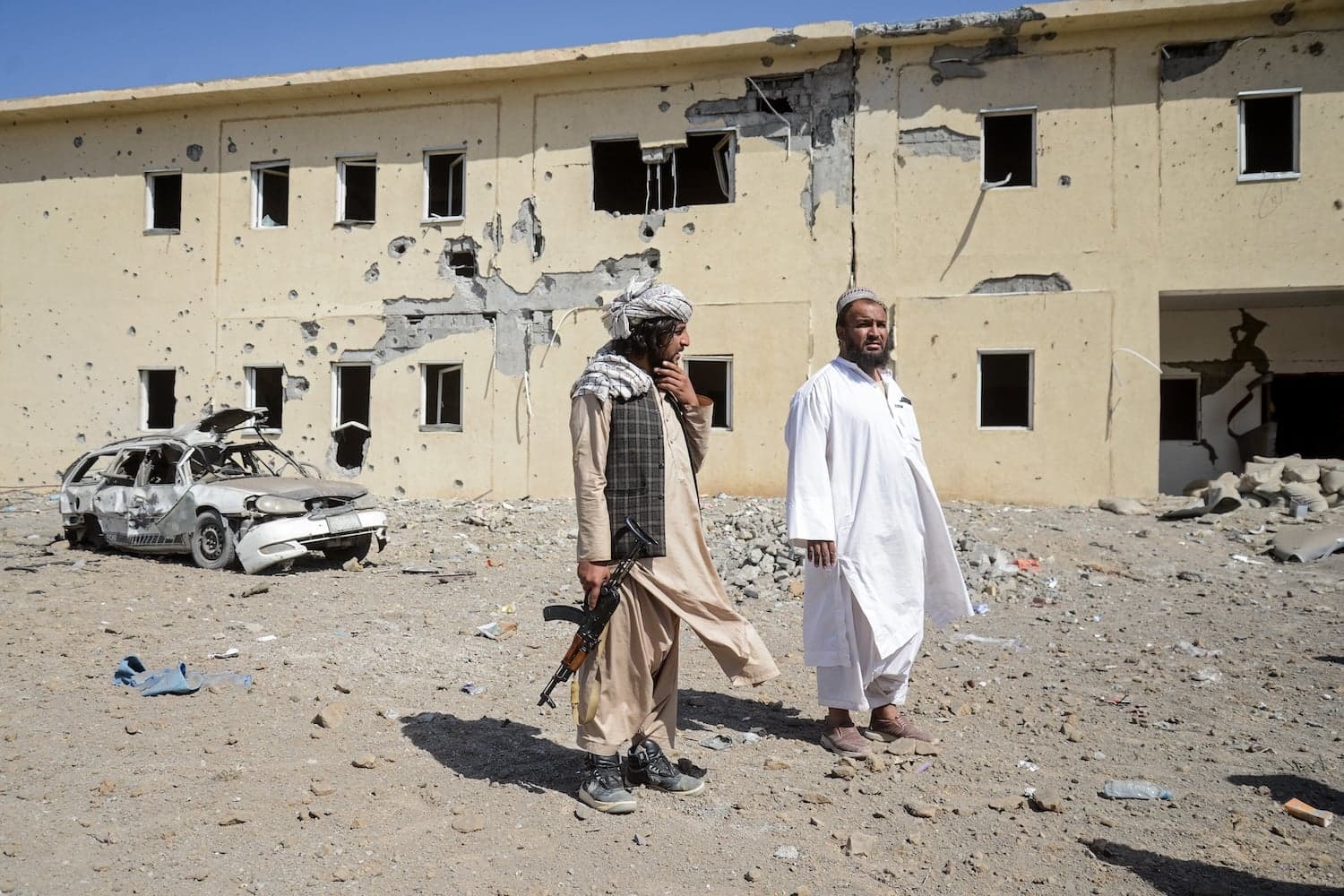
Welcome to Foreign Policy’s South Asia Brief, which comes early this week amid major developing news in the region and beyond. The highlights this week: Pakistan-Afghanistan clashes escalate as war flares in the Middle East, New Delhi and Islamabad walk their own diplomatic tightropes over the conflict in Iran, and Bangladesh’s new government stirs controversy by ousting the central bank governor. Sign up to receive South Asia Brief in your inbox every Wednesday. Sign up to receive South Asia Brief in your inbox every Wednesday. By submitting your email, you agree to the Privacy Policy and Terms of Use and to receive email correspondence from us. You may opt out at any time. Enter your email ✓ Signed Up The War Next Door With the world’s attention focused on a dangerous war in Iran after the United States and Israel launched strikes against the country on Saturday, it’s easy to overlook another brewing conflict to the east. Yet just a day earlier, Pakistan and Afghanistan engaged in their most intense clashes in years, with the Pakistani defense minister calling the violence an “open war.” A new war in the Middle East amid these escalating cross-border clashes could disadvantage both Islamabad and Kabul, deepen their conflict, and pose broader risks to stability. Underlying the escalating tensions is Pakistan’s contention that the Taliban regime is sheltering the Tehrik-i-Taliban Pakistan (TTP), a militant group that has increased its attacks in Pakistan since 2021. The Taliban deny this, but they rarely sever ties with militant partners. They also have little incentive to curb the TTP, which could drive its members to the Taliban’s main rival, the Islamic State-Khorasan. Pakistan has lost leverage over the Taliban since the U.S. withdrawal from Afghanistan in 2021; The group no longer needs the cross-border sanctuary that Pakistan supplied during the 20-year war. Unsurprisingly, diplomatic steps have failed to address Pakistan’s concerns about the TTP, pushing Islamabad toward intensifying military action. Friday’s violence began as Pakistan carried out airstrikes across Afghanistan while Taliban soldiers targeted dozens of Pakistani border posts. Pakistan says its strikes focused on terrorist targets as well as Afghan defense facilities, marking an escalation; the Taliban says that the Pakistani strikes hit civilians. On Monday, the clashes stretched into a fourth day. The war in Iran is bad news for Pakistan, which imports most of its oil and gas from the Middle East and has significant trade interests there—as well as more than 5 million of its citizens residing in Persian Gulf countries. (One Pakistani citizen was reportedly killed in an Iranian missile attack in the United Arab Emirates on Saturday.) Further instability in Iran could trigger significant numbers of refugees to cross the border into Pakistan. Unrest could also spill over in Pakistan’s Balochistan province, emboldening the separatist Balochistan Liberation Army (BLA) and creating ripe conditions for it to ramp up its attacks against the state. Like the TTP, the BLA has scaled up its operations in recent years. This all seems to indicate that Pakistan could soon face a dizzying array of security challenges: Taliban assaults on the border, TTP attacks within the country, increased BLA operations, and the overlooked threat of Islamic State-Khorasan. (Another Pakistan-based branch of the Islamic State claimed responsibility for a February attack in Islamabad that killed at least 31 people.) That’s not to mention Pakistan’s dangerously tense eastern border with India; the two countries fought their worst conflict since 1971 last May, sending bilateral relations into a deep freeze. Meanwhile, the Taliban face another problem. The group’s most trusted partners, especially Qatar and Saudi Arabia, will be bogged down by the conflict in their neighborhood. Both countries, along with Turkey, mediated talks between Pakistan and Afghanistan after another round of violence in October—leading to a now-shattered cease-fire. The Taliban may be talking tough by vowing to carry out sustained military operations against Pakistan, but they likely don’t want all-out war—especially if Pakistan decided to directly target the Taliban leadership. The Saudis and Qataris certainly won’t have the bandwidth to serve as mediators in the coming weeks. The fire in the Middle East could lead flames to spread into South Asia—which is already confronting its own growing conflagration. What We’re Following India and Pakistan walk tightropes. New Delhi and Islamabad both face diplomatic challenges as war develops in the Middle East. Predictably, India’s government has engaged in cautious messaging so far, expressing that it is “deeply concerned” and calling for de-escalation. Like Pakistan, India has a few million expatriates as well as key energy and trade interests in the Middle East. But India is unlikely to publicly condemn Israeli and U.S. military operations in Iran, mainly because of its deepening ties with Israel—a growing source of arms. The two sides moved closer to inking new defense deals after Indian Prime Minister Narendra Modi’s trip to Jerusalem last week. By taking a neutral position over Iran, India risks undercutting its efforts to position itself as a champion of the global south. Pakistani Prime Minister Shehbaz Sharif condemned “in the strongest possible terms” Israel’s attack on Iran on Saturday; he did not mention the U.S. strikes. Sharif also expressed solidarity with Saudi Arabia and the United Arab Emirates after they were hit by Iranian strikes. But Islamabad’s immediate challenge is to tamp down public anger. On Sunday, angry protesters tried to storm the U.S. consulate in Karachi, which resulted in at least 10 deaths. Anger toward U.S. policies runs high in Pakistan. The scenes on Sunday—though less serious—might remind some observers of the storming of the U.S. Embassy in Islamabad in 1979 following false rumors that the United States had laid siege to the Great Mosque of Mecca. (Those protests were influenced by the Iranian Revolution earlier that year.) Pakistan will need to manage this anger while trying not to antagonize the United States, which has become a close partner during President Donald Trump’s second term. Complicating matters further is that last year, Pakistan signed a mutual defense pact with Saudi Arabia, which has been targeted by Iranian missile strikes. Bangladesh Bank controversy. Last week, Bangladesh’s new government abruptly ousted its central bank governor, Ahsan Mansur, who was appointed to serve a four-year term shortly after Prime Minister Sheikh Hasina resigned under pressure in August 2024. Mansur, a well-regarded economist, was replaced with businessman Mohammed Mostaqur Rahman. The move has provoked a political firestorm in Dhaka just weeks after the government took office. The controversy began last week, when a group of officials at the central bank—known as the Bangladesh Bank—called for Mansur’s resignation, alleging “autocratic” behavior. Mansur labeled the protest a “conspiracy” but left office soon after. Rahman is a controversial pick, and his appointment has raised fears that he will resist efforts to implement reforms in Bangladesh’s deeply corrupt banking sector—as well as concerns that the ruling Bangladesh Nationalist Party (BNP) will renege on pledges to support wider reform efforts. FP’s Most Read This Week Iran Is Built to Withstand the Ayatollah’s Assassination by Ali Hashem The United States Is Misreading Iran by Ali Hashem 6 Questions About Operation Epic Fury by Daniel Byman Under the Radar Another controversial BNP appointment has received less attention: Khalilur Rahman’s selection as Bangladesh’s foreign minister. Rahman was the national security advisor and the high representative on the Rohingya refugee issue under the interim government that led Bangladesh from August 2024 until last month. A few striking things stand out about Khalilur Rahman’s appointment. Many of the BNP government’s other cabinet picks did not serve in the interim government. He has previously had some uncomfortable moments with the BNP, which demanded his resignation over comments about BNP leader and now Prime Minister Tarique Rahman (no relation). Some observers in India, where I spent much of the past week, are uncomfortable with Khalilur Rahman, as they feel that he is not inclined to be friendly toward New Delhi. That said, Indian External Affairs Minister S. Jaishankar issued warm words of congratulations and said he looks forward to working with Khalilur Rahman. The choice makes ample sense—because of Khalilur Rahman’s deep experience with foreign affairs and because he offers some continuity from the interim government. He also knows Washington well, having made a series of visits there during the interim government’s term. (He can likely take credit for the relatively smooth bilateral relations last year.) Bangladesh’s most important relationships may lie closer to home, but the United States—a top export destination—is a key partner as well. Tarique Rahman likely wanted to ensure that he has someone in his cabinet who is comfortable engaging with Washington.
Share this story