Foreign Policy
Clustered Story
Iran’s Proxies Are Out for Themselves for Now
Foreign Policy · Mar 2, 2026 · Collected from RSS
Summary
Why the country’s vaunted network of regional militias has mostly stayed quiet.
Full Article
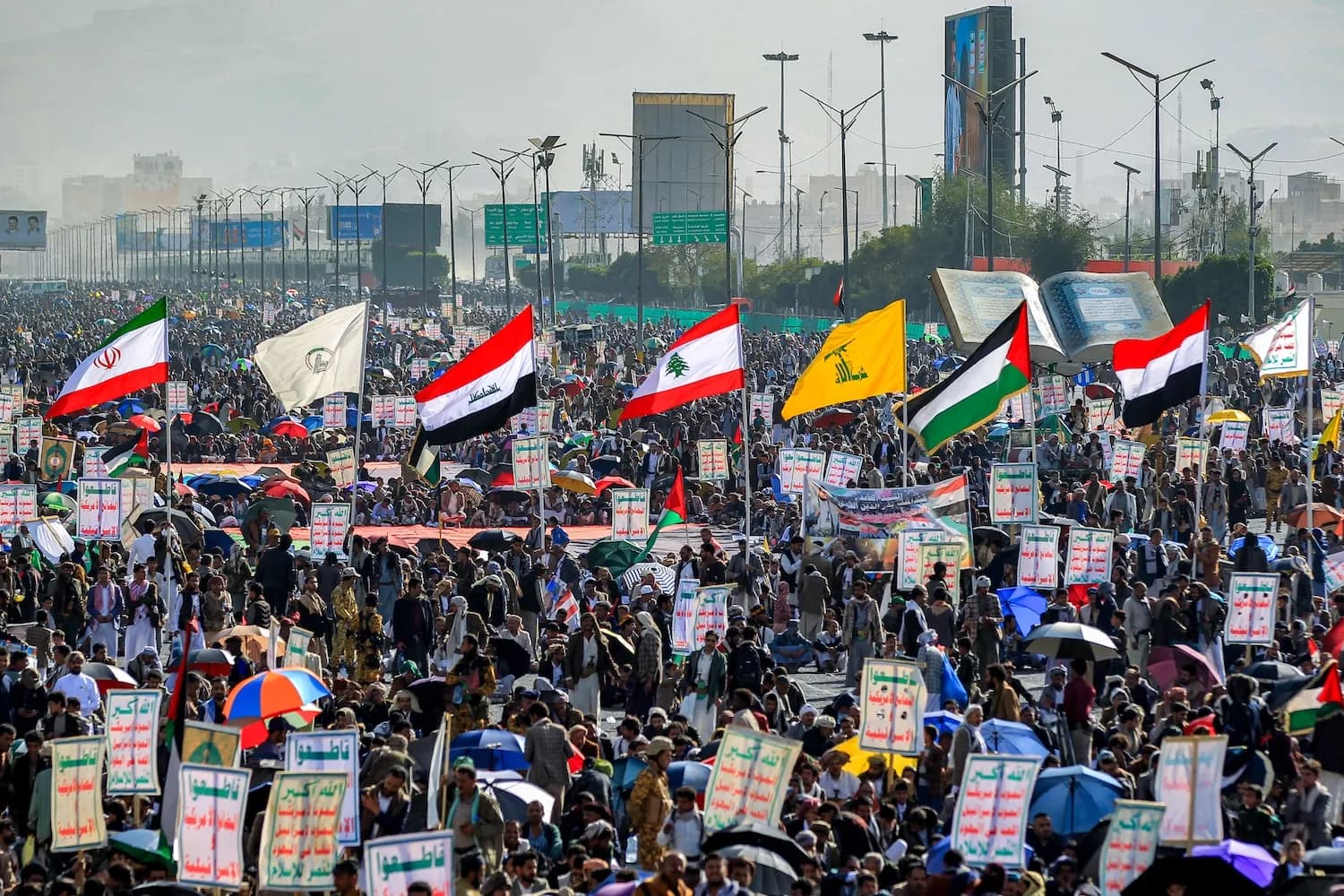
It has long been assumed that a regime change war against Iran would trigger its allied militias in Lebanon and Iraq to unleash chaos across the Middle East, and perhaps even elsewhere in the world, with far-reaching consequences. The proxies themselves have reinforced those assumptions. Days before the recent Israeli and U.S. strikes on Iran, Hezbollah said that the killing of Ayatollah Ali Khamenei, Iran’s supreme leader, would be a red line. Hezbollah indeed launched rocket attacks against Israel this past weekend, spurring an Israeli military response in Lebanon. Two Iran-backed groups in Iraq also expressed readiness to defend Iran, and one of them described it as a “holy” undertaking. And two unnamed Houthi leaders told the Associated Press that the group intended to resume missile and drone attacks on ships in the Red Sea. It has long been assumed that a regime change war against Iran would trigger its allied militias in Lebanon and Iraq to unleash chaos across the Middle East, and perhaps even elsewhere in the world, with far-reaching consequences. The proxies themselves have reinforced those assumptions. Days before the recent Israeli and U.S. strikes on Iran, Hezbollah said that the killing of Ayatollah Ali Khamenei, Iran’s supreme leader, would be a red line. Hezbollah indeed launched rocket attacks against Israel this past weekend, spurring an Israeli military response in Lebanon. Two Iran-backed groups in Iraq also expressed readiness to defend Iran, and one of them described it as a “holy” undertaking. And two unnamed Houthi leaders told the Associated Press that the group intended to resume missile and drone attacks on ships in the Red Sea. It is still early, but the proxies have been mostly quiet otherwise. That reflects a gap between their rhetoric and current capabilities. The militias are severely constrained by domestic politics and a lack of capabilities compared to the U.S. and Israeli arsenals. It is possible that their response remains mostly rhetorical, paired with a limited number of face-saving strikes. Hezbollah was long deemed the second pillar of Iranian defense against a U.S. or Israeli attack, alongside its ballistic and cruise missiles. But years of assault by Israel have diminished its capabilities, and it remains to be seen whether Hezbollah can still do significant damage. Eran Lerman, Israel’s former deputy national security advisor, speaking with FP before Hezbollah fired rockets on Sunday night, said that the group still has “an arsenal that it could use” against Israel but only at a huge price. “Israel has extensive intelligence penetration and can hit them pretty hard, degrading remaining capabilities, including through ground incursions if needed,” he said. “If Hezbollah gets involved, it will basically bring a long story to an end,” Lerman said, alluding to an all-out invasion of Lebanon with U.S. backing. “In any case, we are not really worried about their capabilities.” Hezbollah faces severe domestic constraints. Hours after the attack on Iran began, Lebanese Prime Minister Nawaf Salam called on Hezbollah to stay out of it. “I once again call on all Lebanese to act with wisdom and patriotism, placing Lebanon and the Lebanese people’s interests above any other consideration,” he said. The group also faces pressure from its own supporters, who had to leave their homes to escape Israeli bombings in recent years but now wish to rebuild and return to their towns and villages. Lebanon needs billions for reconstruction, and that funding won’t come if Hezbollah fights on Iran’s behalf. Late Sunday Hezbollah fired a barrage of rockets towards Israel hours after Hezbollah chief Niam Qassem said that the group will “undertake our duty of confronting the aggression” by Israel and the US and will not leave “the field of honor and resistance.” But the relatively small scale of the salvoes suggested it was an afterthought—as did a statement issued earlier in the day by the group that stopped short of threatening retaliation against Israel. Iraq, a Shia-majority country and home to a smattering of Iran-backed groups, also risks being embroiled in a regional conflict. Kataib Hezbollah, one of the more extreme groups in the largely Shia organization called the Popular Mobilization Forces (PMF), has struck U.S. bases in the past and possesses drones and short- and medium-range missiles. Even before Iran was hit, the group reportedly called on its forces to prepare for a long-term “war of attrition” against the United States. On Feb. 28, hours after the United States and Israel struck Tehran, Iraqi media reported a strike on camps belonging to the group, which warned of action against U.S. bases “soon.” But the various PMF factions “are not a monolith,” said Mara Redlich Revkin, an Iraq expert and associate professor of law at Duke University. “And they do not follow a unified command or decision calculus. The umbrella encompasses dozens of factions with varying degrees of loyalty to Iran, operational capabilities, and incentives.” “That said, Kataib Hezbollah and Harakat al-Nujaba are the factions most ideologically aligned with the [Islamic Revolutionary Guard Corps] and most likely to feel compelled to respond,” she said. In contrast, factions that have integrated more into the Iraqi state—such as the Badr Organization—have more to lose domestically and are therefore “more susceptible” to pressure from Iraqi Prime Minister Mohammed Shia al-Sudani, “who was accepted by the Iran-aligned factions as a compromise choice in 2022 but has since tried to assert more state authority over them and push back against Iran’s influence.” Revkin added that these groups possess drones, rockets, and the ability to deploy ground forces across borders. “We have seen all of these in previous rounds of attacks on U.S. bases. Between October 2023 and February 2024 alone, Iran-backed militias carried out more than 170 attacks on U.S. military bases and assets in Iraq, Syria, and Jordan,” she said. “So, the capability is there, but the [PMF] have also shown restraint and selectivity in how they have responded to recent escalations.” Like Hezbollah, Iraqi PMF also stayed out of the12-day conflict between Iran, Israel, and the Unite States last June. And yet, Revkin said, the militias have “a degree of de facto autonomy,” billions in budget, approximately 200,00 fighters, and are difficult to keep in check at the best of times. The Houthis in Yemen have previously hit Saudi oil facilities and present a danger to oil assets in Gulf countries, and thus to global energy prices. But they can also threaten shipping lanes running through the Red Sea. MSC, a global shipping company, has asked its vessels in the Gulf to seek safe shelter as a precautionary measure until further notice. They may sit out the current war, too—not least to avoid jeopardizing the deal they signed with Trump last May, in which they agreed to stop attacking U.S. ships. The Houthis have recently started assembling and manufacturing arms in Yemen, which means they are less dependent on Iran to supply drones and missiles. It is too early to tell how the proxies will react over the course of the war with Iran. Some fear that Iran may instead deploy them to curb domestic protests. “During the 2022 Mahsa Amini protests and again during the most recent 2025-2026 protests, there were credible reports of Iraqi militia members—including from Kataib Hezbollah—being deployed inside Iran to help suppress demonstrations,” Revkin said. Another theory is that proxies are on hold, to be deployed by Iran at a later stage in the conflict. While the Iranian regime has intensified attacks against Israel, killed at least three people at a military base in Kuwait, and hit several sites in Gulf countries, it is hoping that either Washington’s Arab allies will get Trump to dial down the war or he will get distracted. Israelis and Americans appear unsure about how long they want to keep up with the bombings. But so far, despite the declaration by Iranian President Masoud Pezeshkian that Khamenei’s killing was a war on all the world’s Muslims, especially Shias, the proxies have not jumped to call of duty yet. They clearly feel pressure to avoid dragging their war-tired countries into yet another conflict and losing their local standing. And yet they remain ideologically aligned with the Iranian government and may feel compelled to join the fray if the regime finds itself fighting for its survival and in need of trained hands to encircle US assets in the region or conduct hybrid attacks abroad.
Share this story