insideclimatenews.org
Why Electricity Bills Are So High and How the Blowback Could Hit Trump
insideclimatenews.org · Mar 2, 2026 · Collected from GDELT
Summary
Published: 20260302T140000Z
Full Article
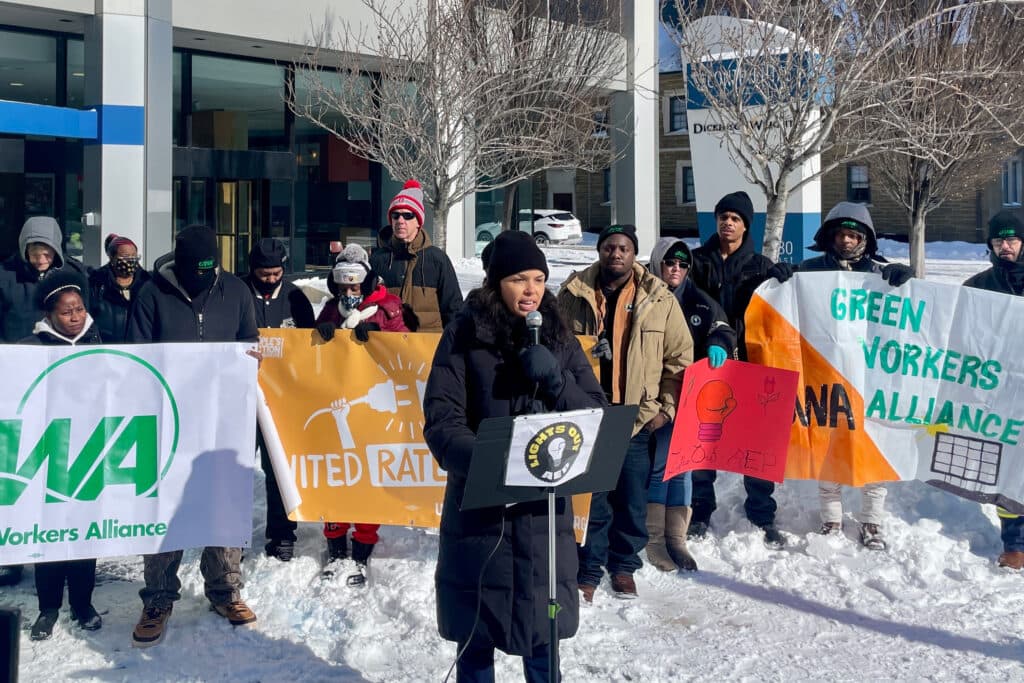
COLUMBUS, Ohio—Protestors stood in the snow outside the offices of Ohio’s utility regulator in January to say they were fed up with rising electricity rates. Even a few years ago, the scene would have been hard to imagine, considering the complexity of utility costs and the obscurity of state regulatory agencies. But rate hikes in Ohio and across the country have provoked frustrated consumers to demand answers. “It’s just getting harder and harder now to live,” said Steve Van Kuiken, a United Church of Christ pastor in Columbus who is part of a community group opposing rate increases. “The working class is really getting squeezed, and everything’s going up.” Van Kuiken was describing the resentment that has gripped much of the country. U.S. residential electricity rates increased by 5 percent in 2025 compared to the prior year, according to data released Feb. 24 by the Energy Information Administration that provides a comprehensive look at the price shift during President Donald Trump’s first full year in office. A few states, particularly in the Northeast and Midwest, saw double-digit growth, which has an extra sting because it followed a period of relatively flat growth. Consumers are asking why, but the answers don’t come easily and vary by state and utility. One factor is utilities’ surge in spending on wires and other equipment used to deliver electricity, a trend partly attributable to rising power demand from data centers, according to researchers. Another factor is the increase in natural gas prices, which hits hardest in states such as Pennsylvania that rely heavily on gas for generating electricity. Among the other drivers are state policies that require utilities to meet benchmarks for buying renewable energy. The effect is most evident in the Northeast and Mid-Atlantic and barely noticeable in other regions. And then there are some highly local reasons, such as wildfires in California and hurricanes in Florida. While the list of factors is long, data centers get a disproportionate share of the blame. But the problems are deeper, touching on the financial motivation of utility companies, said Charles Hua, founder and executive director of PowerLines, an advocacy group that seeks to reduce utility bills. He explained that utilities earn a profit by investing in infrastructure such as power plants, poles and substations—capital expenditures, or “capex.” For years, the companies were limited in their spending because electricity demand was flat. “Now demand is growing,” he said. “So that’s a perfect excuse or opportunity for [utilities] to go to the regulators and say, ‘Hey, we need cost recovery and a return on equity on these new generation capex investments.’” Hua said it’s worth asking whether the incentives in this system are having a perverse effect that foists unnecessary costs on consumers. For example, utilities have a financial incentive to build rather than increase the efficiency of the current grid. Utilities have endured criticism about rising rates and said that some of the discussion lacks proper context. In a report last month, the Edison Electric Institute, a trade group for electricity utilities, said price increases are in line with inflation in most states and the national average is skewed by a few states with the largest rate hikes. The demonstrators in Ohio urged officials to reject a proposed rate plan from AEP Ohio, a Columbus-based utility. Asked for comment, AEP said many of the reasons for rising rates are beyond the company’s control, such as the costs of being part of the multi-state PJM Interconnection grid. “We know our customers are frustrated by the high cost of energy. We are frustrated, too,” an AEP spokesperson said in an email. So far, we’ve been talking about rates, but this may undersell the extent of hardship because it doesn’t account for the fact that electricity consumption is also growing. The average monthly electricity bill for a U.S. household—which takes into account the rate and consumption—was $151.89 last year, an increase of 7 percent from the prior year. Following a frigid start to winter in which Brittany Sawyer’s electricity use for heating was high, the Columbus resident is looking at a monthly bill of $643.93. Sawyer, a mother of two who works three jobs, was stunned when she saw the amount. That’s an unusually high bill considering that the average Ohio household paid $149.82 per month for electricity last year, up 11 percent from the prior year. “I don’t know what I’m going to need to do, or how I’m gonna figure it out,” she said, adding that most likely she will cover the costs by taking on debt and reducing spending for entertainment, such as going to movies. “You’re robbing Peter to pay Paul at this point,” she said. It’s not surprising that electricity prices have become a key political issue in the run-up to the November midterm elections, given that Trump campaigned on a promise to cut energy prices by 50 percent within one year, sometimes saying this would include a 50 percent cut to electricity prices. Climate action advocates see prices as an energizing issue for their movement, pointing to steps the Trump administration has taken that could contribute to future rate increases, such as halting development of offshore wind and forcing older coal plants to stay open. Here is a closer look at what’s driving the rise in electricity bills. Utilities Are Spending More to Deliver Power Ryan Hledek, a principal at The Brattle Group, a consulting firm, has closely examined the factors driving electricity prices and is reluctant to name a single factor as the most significant. “It’s complicated, is the short answer,” he said. But he has found one cost driver that is significant in every state: the growth in utilities’ infrastructure spending. He explained that the companies are faced with a combination of aging equipment—some of which is 80 years old or older—and an economy in which the costs of replacing equipment have soared. The Edison Electric Institute has tracked the growth in spending on long-lived equipment, which went from $108.6 billion in 2015 to a forecasted $207.9 billion in 2025, according to a recent report. The largest one-year percentage increase during that time was between 2024 and 2025, signaling an acceleration. A notable shift from 2015 to 2025 is that utilities are now investing a larger share of their money in equipment for delivering electricity, including the transmission system of large power lines and the distribution system of local lines. In 2025, transmission and distribution accounted for 50 percent of this spending, up from 45 percent in 2015. There are many possible explanations for the growing emphasis on the delivery system, including the need to repair damage from extreme weather and a desire to increase the system’s capabilities to accommodate large power consumers such as data centers. Paying for Natural Gas Natural gas was the country’s leading fuel for power plants in 2025, accounting for 41 percent of the gigawatt hours produced by U.S. power plants. Some states depend so heavily on natural gas for electricity that there’s not much they can do when gas prices rise. Pennsylvania stands out as a major gas producer that also has seen large percentage increases in electricity rates. A natural gas well site is seen under construction behind a farm in Washington County, Pa., on Sept. 6, 2024. Credit: Rebecca Droke/AFP via Getty Images The pain of high gas prices was the opposite of what some of those states experienced in the late 2010s, when prices were low. Eric Gimon, a senior fellow at the think tank Energy Innovation, explains this with a football analogy. In the late 2010s, the low price of natural gas was like an offensive lineman, shielding consumers from some of the factors driving up electricity costs, such as infrastructure spending. “For a long time, we were in a period of a kind of stasis,” he said, about how different factors counteracted each other. But now that gas prices are rising, “that stasis goes away.” In other words, the offensive lineman has stopped protecting consumers. A paper Hledek co-authored with researchers at the Lawrence Berkeley Lab in October 2025 quantified the relationship between gas prices and states’ dependence on gas. The authors found that once a state gets at least 40 percent of its electricity from gas, it becomes much more sensitive to changes in gas prices, both when prices rise and when they fall. About 20 states got 40 percent or more of their in-state electricity generation from gas last year. But there was substantial variation in their rate increases. Among the half dozen states that are the most gas-reliant, Rhode Island, Delaware, Massachusetts and Florida saw above-average power rate increases over the past five years in percentage terms, while Mississippi and Louisiana had rate increases slightly below the national average. Forecasts, including those from the Energy Information Administration, indicate that gas prices will continue to increase through the remainder of this year and into next year. Prices are rising for many reasons, including the increase in liquefied natural gas exports and rising demand for gas for power plants serving data centers. The People Who Set Rates In early February, state utility regulators gathered in Washington, D.C., during the thaw after a historic storm. Outside, sidewalks had slippery spots and ice slid in large chunks from rooftops. In a downtown hotel’s conference space, the visitors contemplated an equally treacherous landscape—the uproar over rising energy costs. It was the annual winter summit of the National Association of Regulatory Utility Commissioners, or NARUC, and attendees used the polite term “affordability” to describe the pressures facing these typically little-known state government officials. “What I’m hearing across the board is that we are in a very unique and challenging situation for a lot of diff
Share this story