insideclimatenews.org
Dow Asks Texas to Legalize Plastic Pollution from its Seadrift Complex
insideclimatenews.org · Mar 2, 2026 · Collected from GDELT
Summary
Published: 20260302T140000Z
Full Article
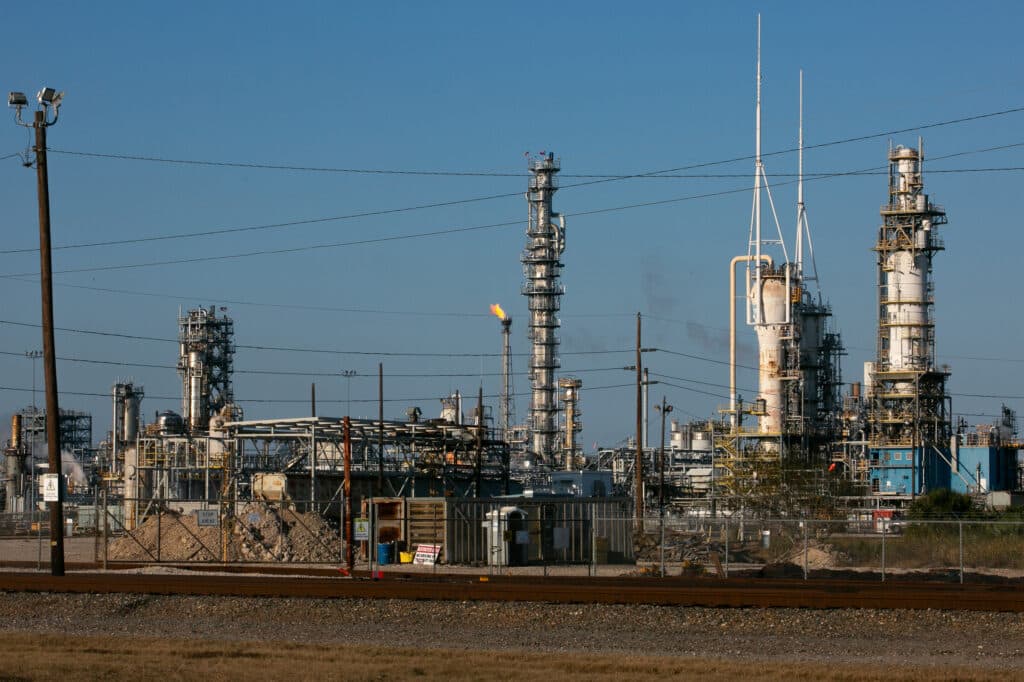
Two weeks ago, when Texas sued a massive Dow petrochemical plant over water pollution, state environmental regulators were already considering a novel proposal from the company that would effectively legalize discharges of plastic material from the 4,700–acre complex into waters feeding San Antonio Bay and the Gulf of Mexico. If approved by the Texas Commission on Environmental Quality, it could set a precedent for authorizing discharges of materials like polyethylene pellets and PVC powder from other plastics manufacturing facilities, legal experts said.Dow and its subsidiary, Union Carbide Corporation, requested the tweak to its wastewater permit in a 320-page application filed Jan. 4—three weeks after a citizen group announced plans to sue the companies over unpermitted plastic pollution. The TCEQ posted the application for public comment in February. “Dow/UCC’s latest request is unprecedented,” said Rebecca Ramirez, a Houston-based attorney at the nonprofit Earthjustice, who is representing the citizen group, San Antonio Bay Estuarine Waterkeeper. “We are not aware of any other instance where TCEQ has granted such an exception.” A TCEQ spokesperson, Richard Richter, declined to comment, citing ongoing litigation. The State of Texas sued Dow on Feb. 13 alleging years of “habitual” water pollution violations involving plastic pellets at its Seadrift complex. The state’s lawsuit had the effect of blocking the Waterkeeper lawsuit. Neither Dow, the largest North American chemical manufacturer, nor Union Carbide responded to queries about the proposed amendment. The company’s permit amendment application sought, among other things, to loosen standard language that limited “floating solids” to “trace amounts” in chemical plant wastewater. Dow’s application said that language is “vague” and “has the potential to be more stringent than necessary.” It didn’t specify a new limit but said “proposed language will be forthcoming.” Current wastewater permits for chemical plants don’t explicitly authorize discharge of plastics, other than “trace amounts” of “floating solids.” “Dow would like to be able to discharge an unspecified amount of plastic,” Ramirez said. “It could set a dangerous precedent, and we’ll fight it every step of the way.” Previous Lawsuit Won Big Settlement San Antonio Bay Estuarine Waterkeeper sued another nearby chemical plant, Formosa Plastics, in 2016. By collecting evidence of plastics in the nearby waterways, Waterkeeper convinced a federal judge in Texas that floating solids in Formosa’s discharges had exceeded “trace amounts” chronically for decades. “There’s over 100 miles of pellets and powder mix that’s covered up in piles of sand and debris,” said Ronnie Hamrick, a retired supervisor at Formosa and member of the waterkeeper group who gathered much of the evidence for that lawsuit. “At Lighthouse Beach, where the kids swim, and you’ve got particles floating all over the water.” The group won a landmark settlement in 2019 that has required Formosa to pay out well over $100 million for an environmental trust fund, ongoing penalty fees, facility upgrades and projects to clean up legacy plastic pollution. “Formosa went into that court thinking they’d just sit there, pay $250,000 and that’s it,” said Hamrick, who started working at Formosa out of high school in the 1970s. “These people are sneaky.” Diane Wilson digs through sediments mixed with polyethylene pellets on Feb. 1 on the banks of the Victoria Barge Canal. Credit: Dylan Baddour/Inside Climate News Diane Wilson and her group, San Antonio Bay Estuarine Waterkeeper, spent a year collecting evidence and preparing a lawsuit against Dow before the State of Texas intervened and blocked the effort. Credit: Dylan Baddour/Inside Climate News Other groups in the Waterkeeper Alliance with nonprofit lawyers sued plastics plants and reached settlements in South Carolina in 2021 and Pennsylvania in 2025. In December, San Antonio Bay Estuarine Waterkeeper filed its 60-day legal notice of intent to sue Dow, presenting bags and buckets full of plastic pellets that its members had gathered along the Victoria Barge Canal, which connects San Antonio Bay to Dow’s Seadrift complex. “Untold quantities of plastic nurdles and other pollutants are being discharged to receiving waters and lands surrounding the Facility,” said the 25-page document. Discharge of the pellets, known as nurdles, as well as powder, flakes, foam “and other pollutants beyond trace amounts occurs daily, or at a minimum, every day that the production plants that produce nurdles are operational,” it said. Dow Moves to Legalize its Plastic Discharge Three weeks later, Dow filed its permit amendment application, asking to change language prohibiting “discharge of floating solids or visible foam in other than trace amounts.” That’s a “standard permit term in Texas wastewater discharge permits,” said Erin Gaines, a clinical professor at the University of Texas School of Law’s environmental clinic. “I haven’t heard of other facilities having a different permit term for floating plastics,” Gaines said. Dow’s application also sought nine other permit modifications, including authorization to release firefighting fluids through all of its 16 outfalls, and an increase on maximum daily discharge at one of its outfalls from 17 million gallons to 25 million gallons. Diane Wilson, a 78-year-old retired shrimper from Seadrift who founded San Antonio Bay Estuarine Waterkeeper, called Dow’s application “outrageous… given decades of flagrant violations.” Wilson and her small staff spent the last year boating up and down the Victoria Barge Canal to gather evidence of large-scale discharges of plastics from Dow’s complex which, Wilson alleges, go back decades. “Plastics facilities have been discharging microplastics into the environment for a very long time,” said Josh Kratka, managing attorney at the National Environmental Law Center in Washington, D.C. “It’s only now we’re becoming aware of the problem and how serious it is.” The awareness results from the efforts of citizen groups like the waterkeeper that have exposed the phenomenon and its scale. “The governments are kind of following in the wake of citizen activists on this issue,” Kratka said. Industry groups including the Plastics Industry Association, Texas Chemistry Council and Texas Association of Manufacturers did not respond to requests for comment. This story is funded by readers like you.Our nonprofit newsroom provides award-winning climate coverage free of charge and advertising. We rely on donations from readers like you to keep going. Please donate now to support our work.Donate Now Texas Blocks Waterkeeper Lawsuit On Feb. 13, 58 days after Waterkeeper filed its required 60-day notice of intent to sue Dow, Texas attorney general Ken Paxton’s office filed its own lawsuit accusing the Seadrift complex of “habitual” water pollution violations. While that lawsuit listed hundreds of violations documented in Dow records or TCEQ reports, it also precluded Waterkeeper from filing its own. The Clean Water Act allows citizens to sue for pollution violations, but only when regulators haven’t stepped in to address documented violations. Paxton’s lawsuit followed a pattern in which state authorities sue polluters and then negotiate modest settlements in order to prevent more aggressive litigation from environmentalists, Kratka said. Dow’s wastewater permit amendment application is currently undergoing a period of public comment. Later it will go for a vote by the three commissioners of the TCEQ who were appointed by Texas Gov. Greg Abbott. Dow contributed $20,000 to Abbott’s two inaugural committees, according to company disclosures, while Dow’s PAC gave $5,000 to Abbott’s 2026 reelection campaign and $20,000 to other Republican candidates in October. Abbott’s office did not respond to a request for comment. Dow also contributed $100,000 to the Republican State Leadership Committee, with $40,000 going to Texas Republican organizations and $7,500 going to the Texas House Democratic Caucus between 2020 and 2023, according to company disclosures. Lawyers for San Antonio Bay Estuarine Waterkeeper said they plan to challenge Dow’s permit amendment if the TCEQ grants it. Kratka doubted the amendment would stand up to judicial review. “There are all sorts of provisions in the Clean Water Act that are designed to prevent backsliding,” he said. “It would be difficult, legally, for the state to loosen limits in its permits.” About This Story Perhaps you noticed: This story, like all the news we publish, is free to read. That’s because Inside Climate News is a 501c3 nonprofit organization. We do not charge a subscription fee, lock our news behind a paywall, or clutter our website with ads. We make our news on climate and the environment freely available to you and anyone who wants it. That’s not all. We also share our news for free with scores of other media organizations around the country. Many of them can’t afford to do environmental journalism of their own. We’ve built bureaus from coast to coast to report local stories, collaborate with local newsrooms and co-publish articles so that this vital work is shared as widely as possible. Two of us launched ICN in 2007. Six years later we earned a Pulitzer Prize for National Reporting, and now we run the oldest and largest dedicated climate newsroom in the nation. We tell the story in all its complexity. We hold polluters accountable. We expose environmental injustice. We debunk misinformation. We scrutinize solutions and inspire action. Donations from readers like you fund every aspect of what we do. If you don’t already, will you support our ongoing work, our reporting on the biggest crisis facing our planet, and help us reach even more readers in more places? Please take a moment to make a tax-deductible donation. Every one of them makes a difference. Thank you, Dylan Baddour Reporter, Austin Dylan Baddour covers
Share this story