insideclimatenews.org
Hurricane Helene Is Headed for Georgian Electric Bills
insideclimatenews.org · Feb 26, 2026 · Collected from GDELT
Summary
Published: 20260226T110000Z
Full Article
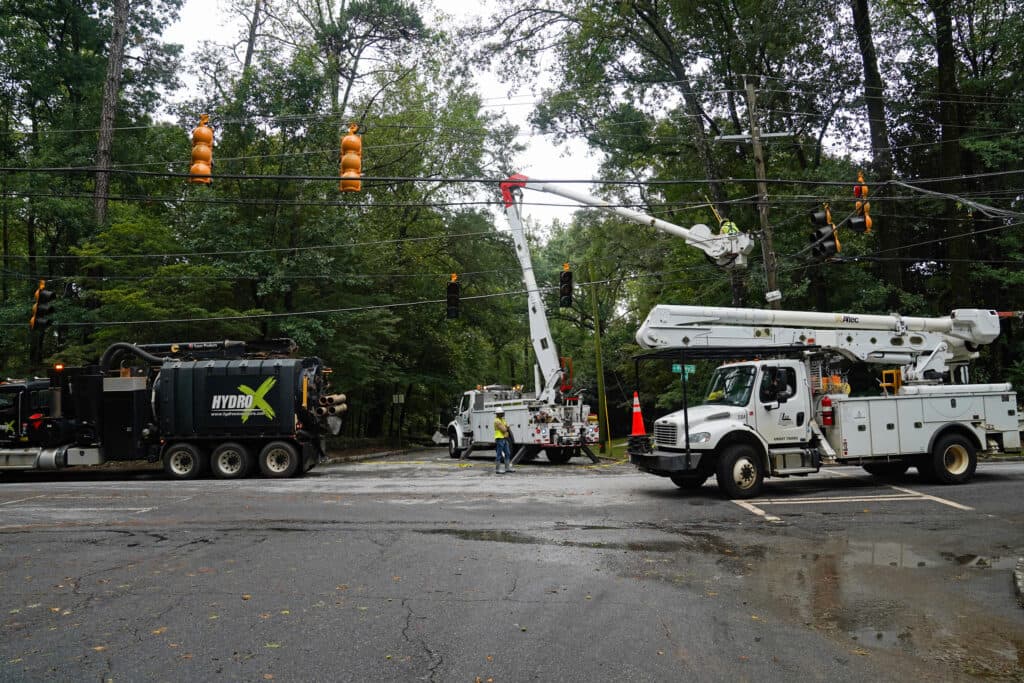
Hurricane Helene may be long over, but its costs are poised to land on Georgians’ electricity bills. After the storm killed 37 people in Georgia and caused billions in damage in September 2024, Georgia Power is seeking permission from state regulators to pass recovery costs on to customers. On Feb. 17, Georgia Power asked the Georgia Public Service Commission (PSC) to approve recovery of storm-related expenses, seeking to collect $912 million from customers over the next four years, a price tag that underscores how climate-driven extreme weather is beginning to show up on everyday electricity bills. The request comes just weeks after the PSC approved a nearly 10-gigawatt Georgia Power expansion plan dominated by new natural gas plants. The nine proposed projects could emit an estimated 20 million metric tons of carbon dioxide equivalent each year—roughly the same as the annual emissions from more than 4.5 million cars—that climate scientists say are fueling more intense hurricanes and other extreme weather. “I think it is appalling,” said Patty Durand, founder of Georgians for Affordable Energy. “Within two months of receiving approval to expand fossil fuels, they are asking for nearly a billion dollars in grid repair costs for the most destructive storm in state history—one that can be attributed to climate change.” A study by the World Weather Attribution found that climate change intensified Hurricane Helene’s rainfall, making it about 10 percent heavier than it would have been otherwise. Helene formed over record-warm Gulf waters that “have been made 200–500 times more likely due to the burning of fossil fuels,” according to the attribution group. Warmer temperatures increased evaporation and allowed the atmosphere to hold more moisture, fueling heavier rainfall as the storm moved inland. The study warned that continued fossil fuel burning could push global temperatures 2 degrees Celsius above pre-industrial levels, making storms like Helene 15 to 25 percent more likely. “With 41 counties declared major disaster sites, Helene became the most destructive storm in Georgia Power’s 140-year history,” the company said in PSC filings. Helene caused 1,544,132 customer outages—second in company history only to Hurricane Irma in September 2017—triggering a costly effort to repair the grid and restore power. Georgia Power did not respond to questions about increasing storm recovery costs and climate change. In a press release, the company said it “works every day to ensure safe, efficient and timely response to severe weather, including hurricanes, tornadoes, ice storms and more.” The company added that “costs to repair damage and restore electricity are recovered through regular proceedings at the Georgia PSC,” and that it maintains a fluctuating reserve fund to manage storm-related expenses. Georgia Power’s PSC filing indicates the company did not pursue an insurance claim to offset storm damage, despite carrying property insurance coverage. Instead, the utility is seeking to replenish its storm reserve fund from ratepayers. Storm recovery cases are routine at the PSC, but advocates say the growing toll of extreme weather demands change. They argue that Georgia Power should account for climate risks in its long-term energy planning and in its storm reserve funds to prevent mounting costs from being repeatedly passed on to customers. While the vast majority of the request would cover more than $770 million in damage to the grid caused by Helene, other large expenses include $48.8 million from Hurricane Ian in 2022, where rainfall was made 18 percent heavier by climate change, and $75 million from Hurricane Idalia in 2023, where climate change made wind speeds up to 5 percent stronger. Georgia Power is also seeking to recover nearly $72 million from ice and winter storms, which scientists say are being intensified by shifting polar vortex patterns and a warmer atmosphere that can hold more moisture. If approved, the storm recovery costs would add $4.42 per month to the total bill of customers using 1,000 kilowatt-hours of electricity over the next four years. Because average household usage in Georgia is slightly higher than that benchmark, many customers would pay more. The charge would mark the first added cost to customers’ bills since a rate freeze took effect last July. While the freeze applies to base rates, it does not prevent the utility from charging customers separately for storm recovery approved in other proceedings. Even with the new storm recovery charge, customers may still see a slight decrease in their overall bills. A separate fuel recovery proceeding could lower the average residential bill by about $5.74 per month, according to Georgia Power—offsetting the $4.42 monthly storm recovery charge. Whether the PSC approves Georgia Power’s full recovery request will depend on a regulatory process that includes interventions, testimony and rebuttals, culminating in a final decision expected in May. For Georgia Power customers, the decision could offer an early test of how often climate-fueled disasters translate into higher monthly bills—and how much protection a base rate freeze actually provides. About This Story Perhaps you noticed: This story, like all the news we publish, is free to read. That’s because Inside Climate News is a 501c3 nonprofit organization. We do not charge a subscription fee, lock our news behind a paywall, or clutter our website with ads. We make our news on climate and the environment freely available to you and anyone who wants it. That’s not all. We also share our news for free with scores of other media organizations around the country. Many of them can’t afford to do environmental journalism of their own. We’ve built bureaus from coast to coast to report local stories, collaborate with local newsrooms and co-publish articles so that this vital work is shared as widely as possible. Two of us launched ICN in 2007. Six years later we earned a Pulitzer Prize for National Reporting, and now we run the oldest and largest dedicated climate newsroom in the nation. We tell the story in all its complexity. We hold polluters accountable. We expose environmental injustice. We debunk misinformation. We scrutinize solutions and inspire action. Donations from readers like you fund every aspect of what we do. If you don’t already, will you support our ongoing work, our reporting on the biggest crisis facing our planet, and help us reach even more readers in more places? Please take a moment to make a tax-deductible donation. Every one of them makes a difference. Thank you, Ryan Krugman Contributor Ryan Krugman is a recent graduate of Columbia University’s Climate School focusing on climate change reporting and communications. He also holds a Bachelor’s degree from St. Lawrence University where he studied Environmental Science and Sociology. As a former Inside Climate News fellow, he is now reporting on climate and environmental issues in New England and Georgia.
Share this story