Foreign Policy
Trump Is Betraying His Base By Waging War on Iran
Foreign Policy · Feb 28, 2026 · Collected from RSS
Summary
Voters were promised America First, not Bush-era interventions.
Full Article
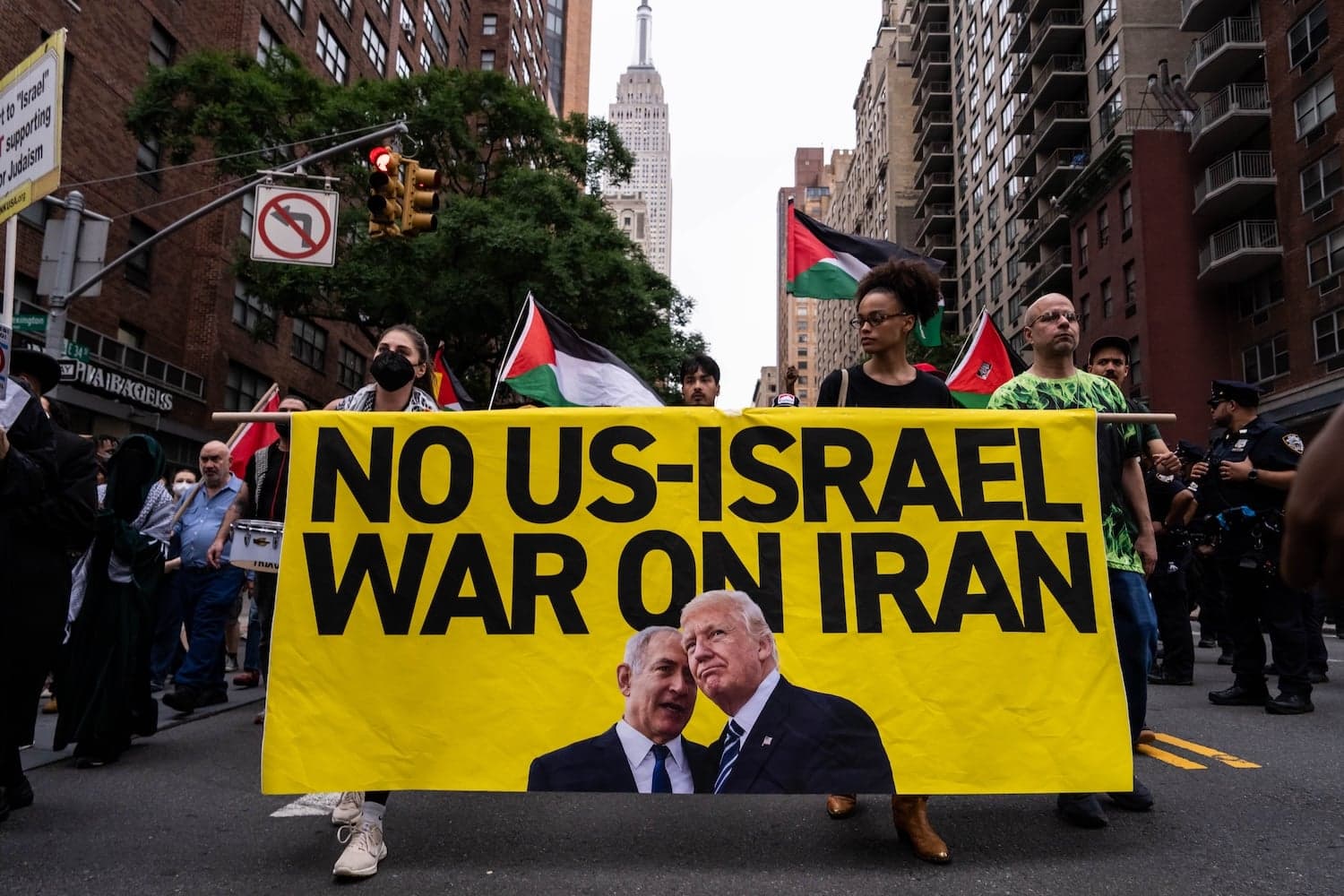
On Saturday, U.S. President Donald Trump, head of the Board of Peace, winner of the FIFA Peace Prize, and ardent opponent of America’s pointless wars in the Middle East, initiated a massive military campaign of regime change in Iran. At the end of the day, he proved unable to overcome the dominance of Iran hawks inside the Republican Party, and more importantly, incapable of resisting the temptation to use military force for unclear ends. This is perhaps no surprise given his traditionally poor impulse control. But the decision to start another war of choice is a betrayal not just of the president’s base, but also of the American people more broadly. Trump’s own senior advisors portrayed him during his presidential campaign as the peace candidate; Stephen Miller once described the Kamala Harris campaign as “warmongering neocons [who] love sending your kids to die for wars they would never fight themselves.” On Saturday, U.S. President Donald Trump, head of the Board of Peace, winner of the FIFA Peace Prize, and ardent opponent of America’s pointless wars in the Middle East, initiated a massive military campaign of regime change in Iran. At the end of the day, he proved unable to overcome the dominance of Iran hawks inside the Republican Party, and more importantly, incapable of resisting the temptation to use military force for unclear ends. This is perhaps no surprise given his traditionally poor impulse control. But the decision to start another war of choice is a betrayal not just of the president’s base, but also of the American people more broadly. Trump’s own senior advisors portrayed him during his presidential campaign as the peace candidate; Stephen Miller once described the Kamala Harris campaign as “warmongering neocons [who] love sending your kids to die for wars they would never fight themselves.” Trump has now become what he once denounced, with longtime supporter Tucker Carlson describing today’s attacks as “absolutely disgusting and evil.” He has rolled the dice, seeking a short, successful war, and now must wait and see whether he has instead committed the United States to the very thing he promised to avoid—another disastrous Middle East quagmire. It is too early to say what will happen in Iran. But it is very clear that this is not what his base or the American people wanted. How did we get here? Trump’s foreign policy was actually one of his better issues during the 2024 presidential campaign, where he consistently held a small but significant lead over Harris on almost every major foreign-policy point from Ukraine to Gaza to China. Indeed, despite skepticism from many in the foreign-policy community, Trump’s “America First” framing seems to have resonated with voters: His messaging on Ukraine, migration, and on whether the United States is responsible for solving all the world’s problems was popular with independents as well as Republicans. But as America First has become less about reasserting American interests in its engagement with the world—and more about the president’s whims, penchant for bullying, and taste for military adventurism—Trump’s overall foreign-policy approval rating has slipped, falling from 41 percent to 37 percent in the last few months. His foreign policy remains more popular among Republicans, but even among his supporters, there is significant disapproval on specific issues: Nearly 70 percent of Republicans oppose the seizure of Greenland, and only 17 percent said they’d support regime change in Iran. It’s hard not to conclude that the Trump administration’s foreign policy isn’t what voters actually wanted from America First. The term America First has itself always been somewhat problematic. Trump’s use of the term during his first campaign scandalized the chattering classes—who focused on its association with 1930s debates over U.S. intervention in World War II. But it appealed to voters for exactly the same reason. It appeared to represent a rejection of an overly simplified post-Cold War liberal consensus that put American interests and needs second to those of other countries. The long-term polling on how voters view American engagement with the world supports this. A recent AP-NORC poll showed only 17 percent of Americans want the United States to take a more active role in solving the world’s problems; a plurality of 45 percent want it to be less active. And the Chicago Council on Global Affairs, which has polled Americans on foreign policy for over 50 years, has seen support for an active U.S. role in the world drop almost 10 points in the last five years. In truth, most Americans don’t worry much about foreign policy on a regular basis, and it rarely ranks as a top-priority issue. But Trump is hardly the first president for whom these dynamics are salient. It’s worth remembering that one of former President Joe Biden’s earliest foreign-policy slogans was “a foreign policy for the middle class,” which sought to tie together foreign and domestic politics and to make foreign policy more visible and more responsive to the needs of Americans. Much like the Biden administration, however, Trump’s policies in office have increasingly veered away from the more modest version of U.S. foreign policy that seems popular with voters. Things started promisingly enough: Trump managed to negotiate a cease-fire deal in Gaza, open talks on Ukraine, push Latin American states to accept migrant detainee flights, and even get agreement from European leaders to spend more on their own defense within NATO. The wheels, however, started to come off the wagon in mid-2025. Trump decided to join Israeli airstrikes against the Iranian nuclear program, burying stockpiles of uranium underground, but offering no long-term solution to the actual proliferation problem. His saber-rattling on trade and tariffs created tensions with allies and adversaries alike and yielded few positive outcomes. that American consumers and importers have paid 96 percent of the more than $200 billion cost of tariffs since the start of the Trump presidency. Then there is his Western Hemisphere policy, which started with a focus on border security, migration, drugs, and other domestic issues, matters that remain broadly popular among the electorate. But this policy has morphed under the influence of Secretary of State Marco Rubio and other hawkish advisors into intervention in Venezuela and loose talk about regime change in Cuba. Often, Trump’s policies also seem driven as much by personal resentment as by any policy rationale, like his repeated outbursts toward the Nobel committee for failing to honor him. Good parts of Trump’s foreign policy still exist (continued peace negotiations on Ukraine, for example), but they are increasingly outweighed by other, often random policies that seem to have little connection to the lives and livelihoods of most Americans. In practice, the central problem with America First is that it has never had a clear definition. What are American interests? Who decides? Trump’s ability to act as a wrecking ball for traditional U.S. foreign policy has allowed him to move past many of the sacred cows of recent decades in ways that will benefit Americans. But this very unpredictability, the inclination to bully and belittle those around him, and to put his own interests and ego above those of the American people also make him a poor champion for building a more sustainable foreign policy in the long term. Today’s attacks on Iran are emblematic of this problem. Only a quarter of Americans polled last week said that they would support military action against Iran, yet the president has not even stopped long enough to make the case to the American people for this war. He is constrained only by his “own morality.” If history is any guide, however, this war is likely only to strengthen popular distaste for American military engagement overseas. Americans want capable allies, secure and prosperous lives, and a more modest role in the world that nonetheless engages with other countries as a productive partner. They don’t want endless wars of choice in the Middle East, the policies of the George W. Bush administration resurrected like a zombie. They don’t want America the Bully, alienating every other country on Earth. What the American people need is a foreign policy that puts Americans first. They are not getting it from this administration.
Share this story