Foreign Policy
6 Questions About Operation Epic Fury
Foreign Policy · Feb 28, 2026 · Collected from RSS
Summary
The United States and Israel have set a high bar for success in their war on Iran.
Full Article
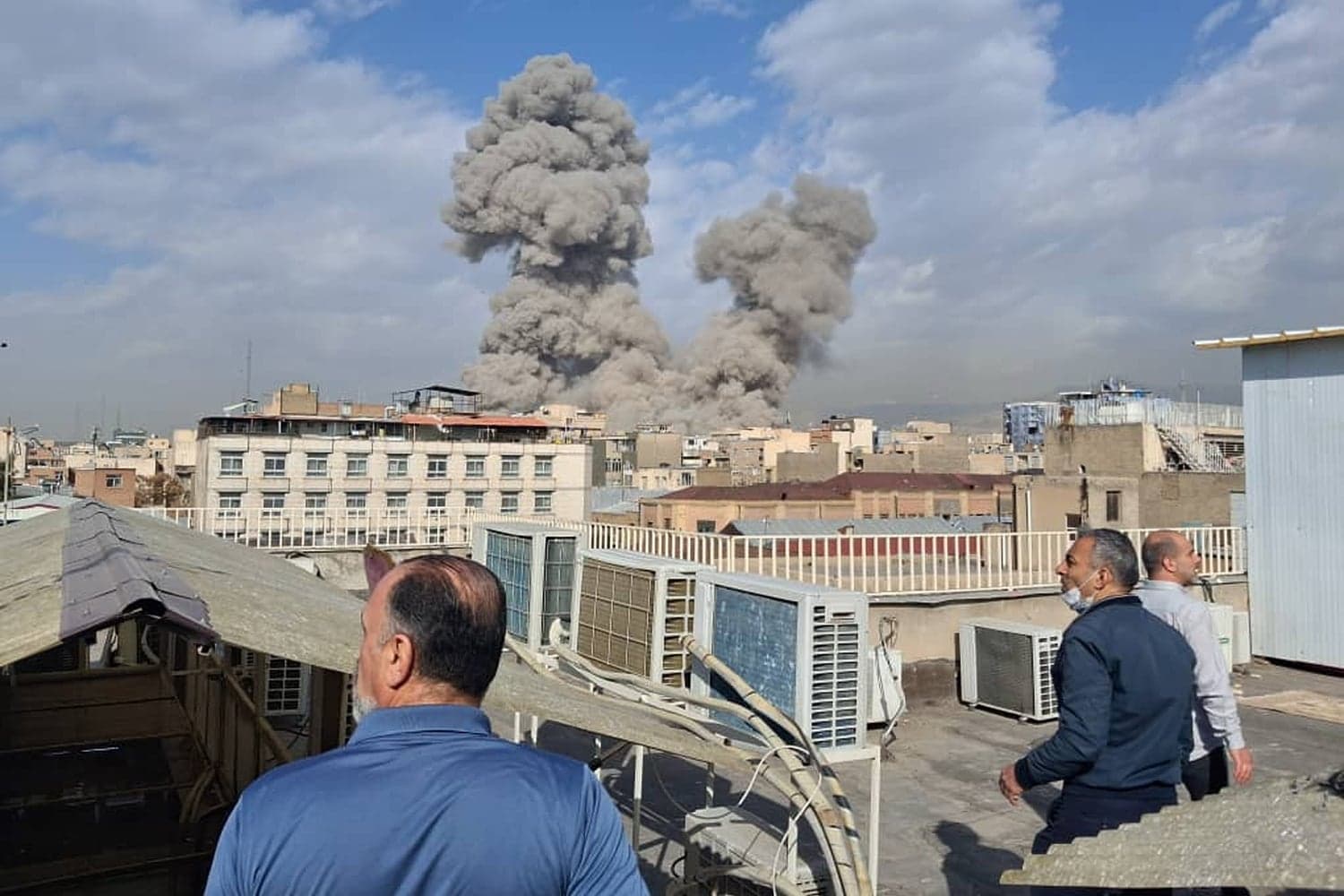
As the United States and Israel began to bomb Iran as part of Operation Epic Fury on Saturday, U.S. President Donald Trump declared a wide range of ambitious objectives that his administration would accomplish. Trump noted that “for 47 years, the Iranian regime has chanted ‘Death to America’ and waged an unending campaign of bloodshed and mass murder, targeting the United States, our troops, and the innocent people in many, many countries.” He then condemned Iran for killing tens of thousands of its own protesting citizens and funding “terrorist militias that have soaked the earth with blood and guts.” He also argued (with far less evidence to back him) that Iran is rebuilding its nuclear program, developing long-range missiles that “could soon reach the American homeland.” Trump promised to end all of these dangers, claiming that the United States would destroy Iran’s missile program and navy, end its support for terrorist proxies, and “ensure that Iran does not obtain a nuclear weapon.” Perhaps most consequentially, and most dangerously, the president told the Iranian people, “When we are finished, take over your government. … This is the moment for action.” As the United States and Israel began to bomb Iran as part of Operation Epic Fury on Saturday, U.S. President Donald Trump declared a wide range of ambitious objectives that his administration would accomplish. Trump noted that “for 47 years, the Iranian regime has chanted ‘Death to America’ and waged an unending campaign of bloodshed and mass murder, targeting the United States, our troops, and the innocent people in many, many countries.” He then condemned Iran for killing tens of thousands of its own protesting citizens and funding “terrorist militias that have soaked the earth with blood and guts.” He also argued (with far less evidence to back him) that Iran is rebuilding its nuclear program, developing long-range missiles that “could soon reach the American homeland.” Trump promised to end all of these dangers, claiming that the United States would destroy Iran’s missile program and navy, end its support for terrorist proxies, and “ensure that Iran does not obtain a nuclear weapon.” Perhaps most consequentially, and most dangerously, the president told the Iranian people, “When we are finished, take over your government. … This is the moment for action.” By presenting the entire laundry list of U.S. grievances against Iran, Trump has set the bar very high while avoiding the most difficult tasks of a wartime leader—choosing among competing objectives, allocating resources accordingly, and pursuing these objectives through diplomacy as well as force. Given the president’s unwillingness to lay out a clear vision for what the United States seeks, how can we judge the operation short of the complete collapse of the Iranian regime and its transformation into a pro-U.S. democracy? Below are six questions to ask in determining whether Epic Fury is a success or failure. Who will win the endurance contest? Epic Fury is off to a dramatic start. The United States and Israel have already tried to kill Iranian leaders and hit a wide range of military assets belonging to the Islamic Revolutionary Guard Corps (IRGC) as well as Iran’s missile program and navy. Yet the United States will find it difficult to sustain large-scale operations at a rapid pace. Despite the size of the U.S. buildup, it is still small compared with the forces assembled for the 2003 invasion of Iraq and seems more appropriate for a multiday bombing campaign than a long war. Before the strikes began, Gen. Dan Caine, the chairman of the U.S. Joint Chiefs of Staff, warned that the United States did not have enough air and missile defense munitions and systems and that a lack of full regional allied support would hinder operations. Iran, for its part, simply has to survive. That is no small feat, as Iran will lose facilities, military assets, and senior military leaders and clerics—perhaps including Supreme Leader Ali Khamenei himself. But the United States has not assembled a ground force. So if the Iranian regime loses half of its leaders and military assets, it can conceivably remain standing. What does destruction mean? When Trump talks about destroying Iran’s navy, missile programs, and nuclear infrastructure, it is not always clear what this means in practice. In some cases, such as Iran’s already weak navy, more ships at the bottom of the Persian Gulf is a clear indicator of success. For other U.S. goals, making judgments is trickier. Trump, of course, had repeatedly claimed that Iran’s nuclear program was “obliterated” by U.S. and Israeli strikes in June 2025, raising the obvious question of why it needs to be attacked again. The reality is that the program consists of many elements, including stockpiles of enriched uranium, centrifuges and other equipment, and the nuclear knowledge of Iran’s scientists, which is why Israel has repeatedly targeted them. The United States and Israel already destroyed much of this in their 2025 operation, and airstrikes, by themselves, will at best lead to small advances. Judging Iran’s support for its proxy groups, such as Hezbollah in Lebanon and the Houthis in Yemen, is particularly tricky. Iran sees these groups as part of its deterrent against U.S. and Israeli pressure, and Israel’s decimation of Hezbollah in 2024 was a major blow to Tehran. Iran also has a strong ideological bond with some groups, including Hezbollah but also some Shiite militias in Iraq. In extremis, Iran might agree to stop backing these groups, but its financial support in particular will be hard to track given its extensive illicit financing networks. Once pressure has ended, Iran might simply resume support if the regime does not change. Can Iran strike back? Iran is not completely defenseless, and it has already attacked Israel and U.S. partners in the Persian Gulf. When the United States and Israel attacked Iran last year, Tehran responded with missile and drone strikes against Israel—but only a token response against a U.S. target, telegraphing its strike to avoid escalation. U.S. bases and diplomatic facilities in the region are also likely targets by Iran or Iranian-backed groups, such as Kataib Hezbollah in Iraq, which Israel has already reportedly targeted. Iran may be cautious at first this time around, too, but the worse things get, the more likely it is to expand its target set beyond military facilities. Many of these proxies are in a tight spot, caught between populations exhausted by war, their own fears about being targeted extensively by the United States and Israel, and their financial and military ties to Iran. Perhaps Iran’s most important partner, Hezbollah, is weak after years of conflict with Israel and not eager for another round. Some of these groups, however, may respond to Iranian calls to act, which are particularly likely if the regime feels it is near collapse. Tehran also has operatives and networks throughout the world that might launch terrorist attacks: In the past, Iran has attacked and plotted against Israeli and Jewish facilities in Latin America, Southeast Asia, and Europe—as well as in the United States. Another extreme measure for Iran would be to attack shipping in the Gulf, using naval mines or small-boat attacks to go after tankers and otherwise trying to disrupt the global oil supply. Attacks that kill large numbers of Americans or allies, especially civilians, are risky for Iran, as are attempts to disrupt the oil supply. On the one hand, such operations allow the regime to show Iranians that it is striking back. Given lukewarm support for the war in the United States, Tehran may believe it can compel the United States to stop. On the other hand, such a strike is likely to lead, in the short term at least, to more support in the United States for the war, justifying continued military operations. Past attempts to disrupt the oil supply led to more U.S. military operations. Can the Iranian people rise up? Years of tyranny, corruption, economic mismanagement, and repression have made the regime unpopular among most Iranians. Polls showed weak support for the regime even before its brutal repression of protesters in January, which led its limited legitimacy to plummet further. Trump’s call for the Iranian people to rise up wrongly assumes that overthrowing the regime would be easy after military strikes. The opposition, however, is not armed or organized, and the regime has shown, repeatedly, that it will kill its way to survival. This war is not a surprise to anyone, especially Iranian leaders, and they are probably prepared for unrest. In addition, the regime is not universally hated—it is not a one-person dictatorship—and if Khamenei and other top officials are killed, there are many more to take their places. The result could be a bloodbath where the bad guys win. There are other instances when the United States called for people to resist their government but then stood by while the regime gunned down demonstrators in the streets, including Hungary in 1956 and Iraq after the 1991 Gulf War. Trump may not care about raising hopes and then dashing them, but this will make the Iranian people even more cynical about the United States. Who takes over if regime change works? For the Iranian people and for the United States, “What comes next?” is a vital question. Even if the regime falls, it is not clear who or what will take its place. Marc Lynch warns that a democratic republic is the least likely outcome should the clerical regime collapse: State fracture or, especially, a takeover by the IRGC is far more likely. A failed state in Iran would lead to far more death in the country, refugee flows, and other problems. The recent histories of Iraq, Libya, Syria, and Yemen are painful reminders of the horrors that civil wars unleash. An IRGC takeover would head off civil war but, in practice, would simply mean that Iran exchanged a dictator in
Share this story