Foreign Policy
Clustered Story
Oil Markets Brace for Disruption After U.S.-Israel Strikes on Iran
Foreign Policy · Feb 28, 2026 · Collected from RSS
Summary
The worries include strikes against regional oil production as well as crude flows from the Persian Gulf.
Full Article
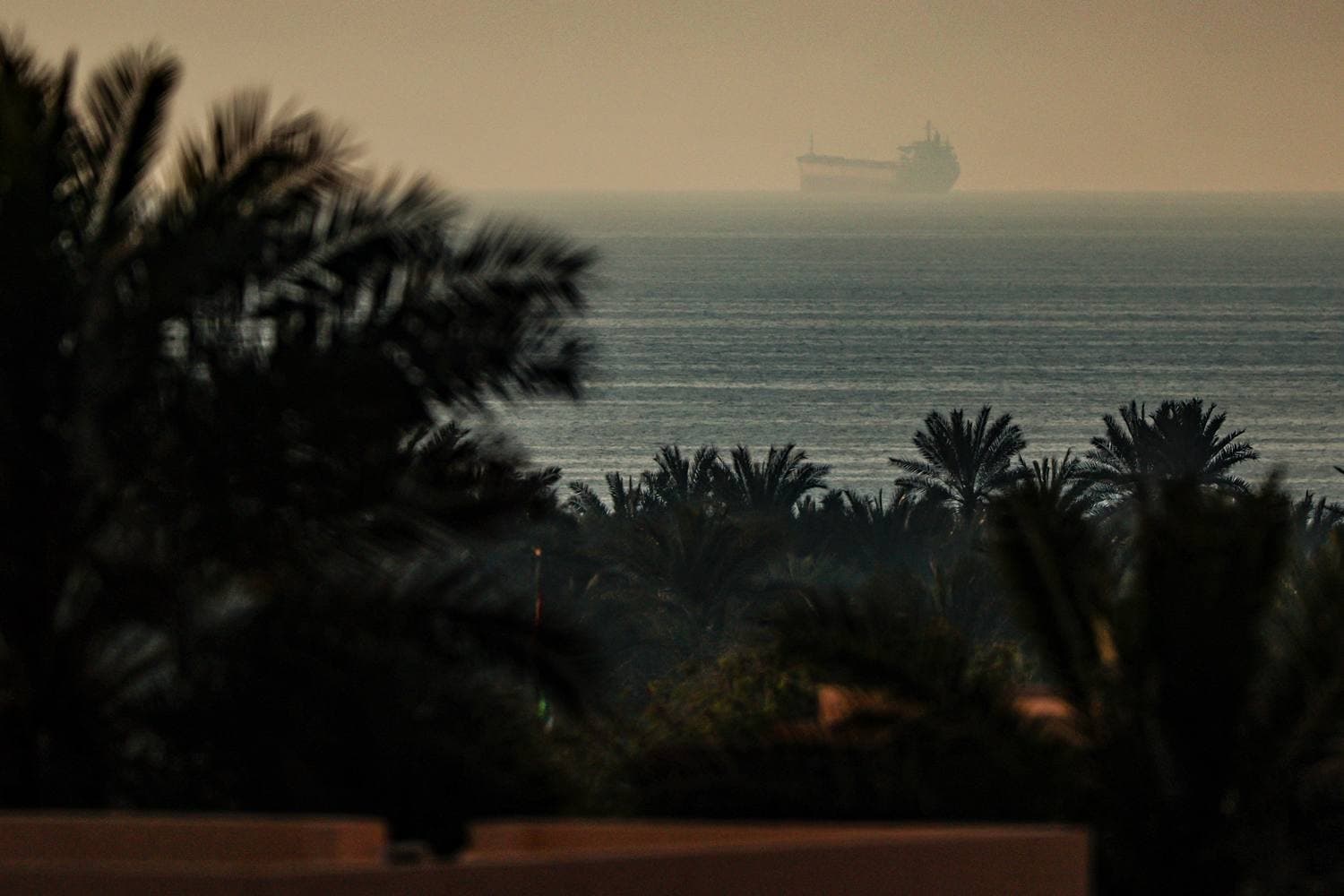
The worries include strikes against regional oil production as well as crude flows from the Persian Gulf. By Keith Johnson, a staff writer at Foreign Policy covering geoeconomics and energy. A tanker ship is seen at sea in the distance with palm trees in the foreground. A photograph taken from the town of Al Jeer in the northern emirate of Ras Al Khaimah, United Arab Emirates, shows a tanker passing through the Strait of Hormuz on Feb. 25. Fadel Senna/AFP via Getty Images Get audio access with any FP subscription. Subscribe Now ALREADY AN FP SUBSCRIBER? LOGIN February 28, 2026, 8:49 AM Energy markets are bracing for disruption after the start of major combat operations by Israel and the United States against Iran, especially because Tehran’s initial reprisals have been much broader than the symbolic strikes it launched against regional targets in the wake of last June’s attacks on its nuclear facilities. Oil prices had already crept up Friday over fears that the diplomatic track between Iran and the United States was yielding no fruit. Crude jumped almost 3 percent in both New York and London; markets will open Monday and will likely rise sharply at first, particularly if any Iranian response directly impacts regional oil production or transport. Energy markets are bracing for disruption after the start of major combat operations by Israel and the United States against Iran, especially because Tehran’s initial reprisals have been much broader than the symbolic strikes it launched against regional targets in the wake of last June’s attacks on its nuclear facilities. Oil prices had already crept up Friday over fears that the diplomatic track between Iran and the United States was yielding no fruit. Crude jumped almost 3 percent in both New York and London; markets will open Monday and will likely rise sharply at first, particularly if any Iranian response directly impacts regional oil production or transport. “We will likely see a jump on Monday, but after that, if there is no firm evidence that oil production is affected at scale, the market may move on,” said Richard Bronze, an oil geopolitics analyst at Energy Aspects in London. “More and more, the mindset among traders is: Show me the disruption.” Major oil producers may seek to calm markets before then. On Sunday, OPEC and its partners will meet to discuss possible oil supply increases. The cartel had already suggested it could increase its collective oil output by about 137,000 barrels a day starting in April, but Bronze said the group may offer a bigger increase to head off market jitters. “Given what is unfolding, they are going to want to do more. They want to signal that they are the responsible custodians of the oil market, so I suspect Saudi Arabia and others will take steps to ensure supplies with potentially a larger increase” than that already flagged, he said. Saudi Arabia and some other Gulf oil producers have already front-loaded oil markets ahead of brewing conflict in the region, with oil shipments reaching the highest levels in several years over the past month. Still, the quick and broad Iranian response to the U.S. and Israeli attacks—which U.S. President Donald Trump said were meant to eliminate Iran’s nuclear and missile programs and weaken its leadership as a possible prelude to regime change—points to a few specific risks for oil and gas markets. First, two unnamed senior officials from the Houthis, Iran’s proxy in Yemen, said on Saturday that they would resume targeting commercial shipping in the Red Sea, the chokepoint leading to the Suez Canal. Since 2023, the Houthis had severely disrupted shipping, including by tankers, on that route but had stopped attacking shipping last October following the cease-fire in Gaza. However, Bronze said the resumption of Houthi attacks would have a limited impact because shippers still had not returned to that route. Another potential chokepoint and threat to energy markets is the Strait of Hormuz, on the other side of Saudi Arabia. For years, if not decades, Tehran has threatened to close the strait—through which passes about one-fifth of the world’s oil supplies—if it felt pressured. Unlike the Red Sea and the Suez Canal, Hormuz does not have any real alternatives, making its potential closure more serious than what the Houthis have done. Those threats have never come to pass because such a step would be highly escalatory and would be met by a response by U.S. and regional navies, which have spent years preparing to keep the vital shipping lane open. The threat this time is that if the Iranian regime views the current conflict as an existential threat to its survival, it could finally play the Hormuz card. That is one reason why, in his video announcing the beginning of combat operations, Trump specifically called out the need to neutralize Iran’s navy, to preempt operations that could close the Strait. “The [Hormuz] threat stays a paper tiger until or unless the Iranian leadership feel they have nothing left to lose,” Bronze said. “The United States and Israel can degrade Iran enough so that it cannot sustain a closure of the strait, but they are less likely to completely remove the threat of one-off attacks or harassment of vessels.” Iran Middle East and North Africa Keith Johnson is a staff writer at Foreign Policy covering geoeconomics and energy. Bluesky: @kfj-fp.bsky.social X: @KFJ_FP Read More A large red and black oil tanker sits at the dock. In the background, an oil facility bearing the words "Persian Gulf" in both English and Farsi can be seen. U.S. Ratchets Up Pressure on Iranian Energy More sanctions on LPG and “shadow fleet” tankers indicate more maximum pressure on Tehran. Houthi rebel fighters inspect rubble from a U.S. airstrike. Trump’s War on the Houthis Is Going Nowhere The U.S. Navy can play whack-a-mole with the Houthis, but that changes nothing in the Red Sea. A protester is seen from below, silhouetted against the sky as they wave a green, red, and white flag in front of a skyscraper. Why No One Is Pushing Back on Trump’s Iran Threats A quarter century of “forever wars” has inured Democrats and even Europeans to U.S. aggression. Stories Readers Liked Go to slide 1 Go to slide 2 Go to slide 3 Go to slide 4 Go to slide 5 Go to slide 6 Go to slide 7 Go to slide 8 Go to slide 9 Go to slide 10 A photo illustration showing six classical Greek or Roman-style columns, plus a stack of televisions as the seventh pillar of populism. The TVs show images of Victor Orban, Narendra Modi, Recep Tayyip Erdogan, and Donald Trump. The Seven Pillars of Populist Foreign Policy By Lisel Hintz, Berk Esen, Tudor Onea Canadian Prime Minister Mark Carney delivers a speech during the World Economic Forum annual meeting in Davos, Switzerland, on Jan. 20. An illustration of a tombstone reading "RIP" appears in place of a globe on a circular stand. Central American migrant children play on a seesaw at a shelter in Ciudad Juárez, state of Chihuahua, Mexico. An illustration shows Donald Trump from the nose down with a red oil rig as a tie. The ‘Donroe Doctrine’ Makes No Sense By Stephen M. Walt An illustration shows one empty flagpole alongside the flags of multiple countries. The U.S. flag is seen at far right, untethered, flying out of frame. An illustration shows two men against a bright yellow background. One man wears a Western-style business suit and the other wears a black robe and white head covering. The men are shaking hands. Each holds a briefcase with money spilling out, the left man's briefcase shaped like the United States' and the right man's like the Arabian Peninsula. A man in a coat outside of a glass office building, with high rise buildings under construction in the background. China’s Tech Obsession Is Weighing Down Its Economy By Scott Kennedy, Scott Rozelle Photos of two men speaking each shown as a negative color inside a red and blue circle.
Share this story