Foreign Policy
The Russia-Ukraine War Enters Its Fifth Year
Foreign Policy · Feb 24, 2026 · Collected from RSS
Summary
Little progress has been made in ending Europe’s biggest conflict since World War II.
Full Article
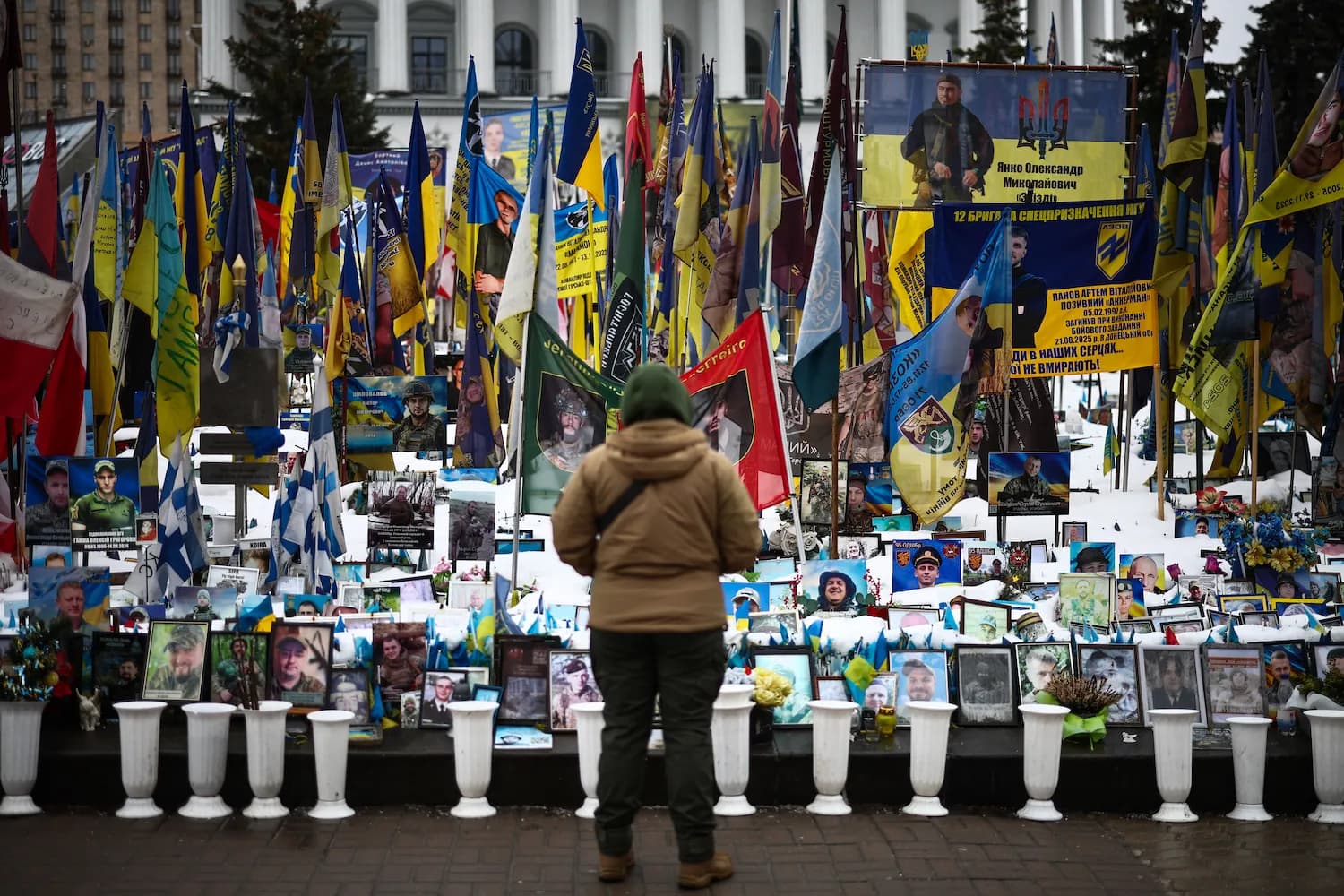
Welcome back to World Brief, where we’re looking at where the Russia-Ukraine war stands after four years, a diplomatic dustup between France and the United States, and the latest escalation in the monthslong China-Japan feud. Europe’s War On Feb. 24, 2022, Russian forces launched a full-scale invasion of Ukraine, kicking off Europe’s biggest conflict since World War II. Four years later, that war continues to rage. But despite staggeringly high casualties on both sides and intense U.S. pressure on Moscow and Kyiv to end the war, a peace deal remains elusive. Welcome back to World Brief, where we’re looking at where the Russia-Ukraine war stands after four years, a diplomatic dustup between France and the United States, and the latest escalation in the monthslong China-Japan feud. Sign up to receive World Brief in your inbox every weekday. Sign up to receive World Brief in your inbox every weekday. By submitting your email, you agree to the Privacy Policy and Terms of Use and to receive email correspondence from us. You may opt out at any time. Enter your email ✓ Signed Up Europe’s War On Feb. 24, 2022, Russian forces launched a full-scale invasion of Ukraine, kicking off Europe’s biggest conflict since World War II. Four years later, that war continues to rage. But despite staggeringly high casualties on both sides and intense U.S. pressure on Moscow and Kyiv to end the war, a peace deal remains elusive. “[W]e have defended our independence; we have not lost our statehood; [Russian President Vladimir] Putin has not achieved his goals,” Ukrainian President Volodymyr Zelensky said on Tuesday as the conflict entered its fifth year. “We have preserved Ukraine, and we will do everything to secure peace and justice.” Kremlin spokesperson Dmitry Peskov appeared to agree with Kyiv on Tuesday that Moscow has yet to fulfill all of its wartime ambitions. “The goals haven’t been fully achieved yet, which is why the military operation continues,” he told reporters. Over the course of four years, around 1.8 million Ukrainian and Russian soldiers combined (or 1.2 million Russian and 500,000-600,000 Ukrainian troops) are estimated to have been killed, wounded, or reported missing in action, according to a report last month from the Center for Strategic and International Studies, a Washington-based think tank. That does not include the tens of thousands of (largely Ukrainian) civilians who have been killed in the crossfire; Kyiv has repeatedly accused Moscow of targeting civilians, a claim that Russia denies. According to the U.N. Human Rights Monitoring Mission in Ukraine, last year was the deadliest for civilians in the country since 2022. Around 9.6 million Ukrainian civilians have also either fled the country or been internally displaced since the war’s onset. These numbers are expected to grow as Moscow capitalizes on the region’s harsh winter to escalate its attacks on energy facilities—cutting power and heating for millions. The high casualties are partly due to technological changes on the battlefield. A Latvian intelligence report revealed last month that drones were responsible for 70 percent to 80 percent of all deaths and injuries on both sides. The emerging prevalence of drone warfare has led Russia, Ukraine, and other European nations to invest in new counter-drone technology as part of their increased defense spending pledges. World military expenditures rose to $2.7 trillion in 2024, according to a Stockholm International Peace Research Institute report—their highest year-on-year rise since at least 1988. Experts believe that was largely due to fears of spillover violence from the Russia-Ukraine war. Such concerns have pushed NATO to increase its minimum defense spending requirement from 2 percent to 5 percent of each country’s GDP, and it pushed the alliance to finally admit Finland and Sweden into its ranks. But that is only the start of European spending habits during the war. Last year, European military aid to Ukraine rose by 67 percent above the 2022-2024 average, with nonmilitary aid increasing by 59 percent, according to the Kiel Institute’s Ukraine Support Tracker. Meanwhile, U.S. support for Ukraine has reversed course. Following U.S. President Donald Trump taking power in January 2025, total U.S. military aid allocations to Kyiv in 2025 were 13 percent below the 2022-2024 average. Trump initially vowed to resolve the Russia-Ukraine war within 24 hours of taking office. Yet, despite months of U.S.-brokered peace talks, little headway has been made. Moscow wants Kyiv to surrender vast swaths of its land in the Donbas region, including territory that Ukrainian troops still control. Zelensky has rejected a unilateral withdrawal of Ukrainian forces from the Donbas. Meanwhile, although Russian forces occupy nearly 20 percent of Ukraine’s territory, they gained less than 1 percent of Ukrainian territory in the past year. With another round of peace talks possible in the coming days, most analysts remain doubtful that negotiators will be able to resolve the impasse any time soon. Today’s Most Read The United States Is Dangerously Misreading Iran by Ali Hashem Four Years of War in Europe by FP Contributors Marco Rubio’s Munich Speech Is More Dangerous Than You Think by Howard W. French What We’re Following No show, no access. France’s diplomatic quarrel with the United States reached new heights on Tuesday, when French Foreign Minister Jean-Noël Barrot said U.S. Ambassador Charles Kushner would be barred from access to French government officials until he acquiesces to a summons order. “It will, naturally, affect his capacity to exercise his mission in our country,” Barrot said, adding that Kushner is only “bringing difficulties on himself.” The French Foreign Ministry summoned Kushner on Monday in response to Trump administration comments last week concerning the killing of a 23-year-old far-right French activist. “Violent radical leftism is on the rise and its role in Quentin Deranque’s death demonstrates the threat it poses to public safety,” the U.S. State Department’s Counterterrorism Bureau posted on X. Some right-wing French lawmakers have accused the hard-left France Unbowed party of bearing some responsibility in the attack, which France Unbowed has denied. This was the second time that Kushner has failed to respond to a formal summoning. Last August, Kushner was summoned over a letter he wrote to French President Emmanuel Macron accusing Paris of not doing enough to combat antisemitism, but Kushner sent his No. 2 instead. However, in a call later on Tuesday, Kushner promised Barrot that he would not “interfere” in France’s domestic affairs. According to a U.S. Embassy spokesperson, the two officials “spoke today in a frank and amicable call, reaffirming their shared commitment to working together, along with all other ministers and French officials, on the many issues that impact the United States and France, particularly as the two countries celebrate 250 years of rich diplomatic relations.” The two officials also agreed to meet in the coming days, a French diplomatic source told FP’s World Brief, on condition of anonymity because they were not authorized to comment on the record. Dual-use export controls. China’s Commerce Ministry announced on Tuesday that it will block exports to Japanese companies that have ties to the defense sector. The restrictions target the shipment of “dual-use” products (or those with both military and civilian purposes) to 20 Japanese entities, with another 20 corporations being placed on a watch list. It is unclear whether rare-earth exports will be subject to the ban. Beijing said the restrictions are in response to Japanese companies participating in “enhancing Japan’s military capabilities” following Japanese Prime Minister Sanae Takaichi’s warning in November that Tokyo could take military action if Chinese forces attacked Taiwan. Since then, Takaichi has vowed to increase defense spending and has floated amending the country’s pacifist constitution. “These measures aim to prevent Japan’s ‘remilitarization’ and nuclear ambitions and are fully justifiable, reasonable and lawful,” China’s Commerce Ministry said, marking the latest escalation in the two nations’ monthslong feud. Tokyo denounced the export controls as “absolutely unacceptable.” “The measures announced today will never be tolerated,” said Kei Sato, Japan’s deputy chief cabinet secretary. “This is deplorable indeed. We strongly protest to China and urge them to lift” the controls. Tariff confusion. A temporary 10 percent U.S. tariff on all foreign imports not covered by exemptions went into effect at 12:01 a.m. ET on Tuesday, according to a Customs and Border Protection (CBP) bulletin issued on Monday evening. These duties, which are effective for 150 days, fall under Section 122 of the 1974 Trade Act—rather than the previously used International Emergency Economic Powers Act (IEEPA)—and are imposed on top of sweeping U.S. levies already in place. The U.S. Supreme Court ruled on Friday that Trump had overstepped his executive powers when he used IEEPA to impose tariffs on virtually all of Washington’s trading partners. In response, Trump issued a presidential proclamation imposing new 10 percent duties under a different authority; a day later, Trump pledged to increase that rate to 15 percent. A U.S. official told the Financial Times on Tuesday that the 15 percent rate “is being worked on and will come later,” though the source did not offer a timeline for implementation. The CBP bulletin did not explain why the lower 10 percent tariff was being used instead. The Supreme Court ruling and new tariffs have sparked widespread uncertainty over how they may impact existing trade deals. The European Parliament was scheduled to ratify the U.S.-EU trade deal on Tuesday, but the body chose on Monday to postpone the vote amid concerns that the 10 percent levy violates the two powers’ already agreed-upon contract.
Share this story