economictimes.indiatimes.com
Clustered Story
Iran has already fired a warning shot amid US military build - up
economictimes.indiatimes.com · Feb 19, 2026 · Collected from GDELT
Summary
Published: 20260219T170000Z
Full Article
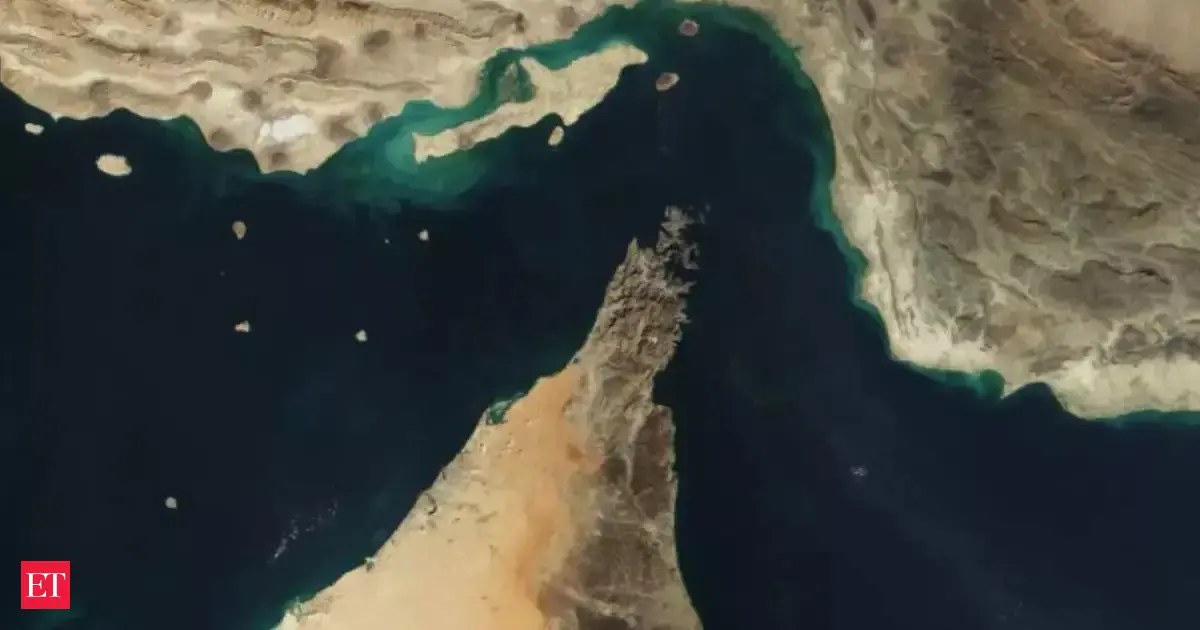
Rising military tensions between United States and Iran have once again drawn global attention to one of the world’s most strategically vital chokepoints: the Strait of Hormuz. As American military assets gather around Iran and nuclear negotiations continue in Geneva, Tehran has responded with a familiar show of force, a partial closure of the strait for military exercises. Though officially temporary and framed as a safety measure, the move underscores Iran’s longstanding strategy of leveraging geography to signal its capacity to disrupt global energy markets. Many will see this partial closure as a warning shot. Military posturing amid fragile diplomacyThe latest tensions come even as diplomatic engagement remains underway. Talks between American and Iranian representatives in Geneva over Iran’s nuclear programme have shown what the White House described as a degree of progress, though significant gaps remain. Washington expects Tehran to return with more detailed proposals.At the same time, American rhetoric has sharpened. JD Vance said Washington was weighing whether to continue diplomatic engagement or consider alternative measures. Donald Trump went further, warning that “bad things will happen” if a “meaningful deal” is not reached within the next 10 days. Speaking at a Board of Peace event in Washington on Thursday, Trump described the talks as constructive but cautioned that progress in negotiations with Tehran has historically been difficult.On the military front, the US has deployed additional warships and aircraft to the region. The arrival of the USS Gerald R. Ford near the mouth of the Mediterranean Sea, alongside other American naval assets, has reinforced the message that Washington retains credible military options. These deployments do not guarantee a strike on Iran, but they enhance the president’s ability to order one if he chooses.Simultaneously, Tehran conducted joint drills with Russia and launched live-fire exercises in the Strait of Hormuz. The partial closure of the waterway, described by Iranian media as lasting several hours for maritime safety, is widely interpreted as a calculated warning.The strait as strategic leverageIran’s use of the Strait of Hormuz as a pressure point is not new. The narrow passage at the mouth of the Persian Gulf handles roughly 20 million barrels of crude oil, condensate and fuels each day, about one-fifth of global oil supply and roughly a quarter of the world’s seaborne oil trade. The strait is indispensable for major Gulf producers including Saudi Arabia, Iraq, Kuwait, Qatar, the UAE and Iran itself. Much of the energy shipped through these waters is bound for Asia, particularly India, China, Japan and South Korea.Iran has frequently threatened to close the strait when facing sanctions or military pressure. During the Iran-Iraq “Tanker War” of the 1980s and again in 2012 amid sanctions disputes, similar warnings were issued, but Tehran has never fully followed through. A complete shutdown would not only provoke severe international backlash but also harm Iran’s own exports. Instead, Tehran appears to prefer calibrated disruptions which can be symbolic but potent reminders of its capacity to escalate.The latest partial closure fits squarely within this longstanding pattern. Even temporary restrictions demonstrate Iran’s ability to destabilise the global economy by targeting a chokepoint through which enormous volumes of energy flow.Global economic stakesThe economic consequences of any prolonged disruption would be profound. Nearly half of India’s crude oil and around 60 per cent of natural gas imports pass through the strait. China, Japan and South Korea are also heavily dependent on supplies shipped through these waters. A denial of access to giant tankers ferrying oil and gas from the Middle East to Asia and Europe would likely trigger a sharp spike in oil prices. Fuel costs, manufacturing expenses and transport charges worldwide would rise, fuelling inflation and slowing growth.Although Saudi Arabia and the UAE have developed pipeline infrastructure that bypasses the strait, analysts note that these alternative routes can only handle a fraction of the volumes that normally transit Hormuz. The chokepoint’s centrality to global trade remains unmatched.Oil markets reactFinancial markets have already begun pricing in geopolitical risk. Reuters reported that oil prices rose on Thursday amid concerns of potential military conflict. Brent futures climbed $1.13, or 1.6 per cent, to $71.48 a barrel, while U.S. West Texas Intermediate crude rose $1.16, or 1.8 per cent, to $66.35. After advancing more than 4 per cent the previous day, Brent hovered near its highest level since last August, while WTI hit a six-month high. The rise reflects what Saxo Bank analyst Ole Hansen described as an expanding geopolitical risk premium as “the world’s most important oil artery again sits within striking distance of conflict.”The mere possibility of escalation, even without an actual blockade, is enough to rattle energy markets.While the immediate focus is on Gulf producers and Asian consumers, the US would not be insulated from the fallout. A sustained surge in global oil prices would push up fuel costs domestically, contributing to inflationary pressures. Higher transport and production costs would ripple through the American economy. This interdependence illustrates why the Strait of Hormuz remains a global concern rather than a regional issue. Even energy producers can suffer when volatility undermines economic stability.Risks to global shippingBeyond oil prices, heightened tensions directly threaten shipping companies. Security risks in the Persian Gulf could increase insurance premiums, alter shipping routes and disrupt schedules. Sanctions or retaliatory measures could further complicate maritime trade.Sharp swings in freight rates would affect not only energy shipments but also broader trade flows, compounding the economic impact.Iran's familiar but dangerous playbookBy partially closing the Strait of Hormuz during military drills, Iran is deploying a familiar pressure tactic. The move stops short of full closure, which would be a dramatic escalation, but it reinforces Tehran’s message that it possesses the capacity to disrupt a waterway critical to global energy supplies.Whether this remains symbolic or signals a deeper escalation will shape the trajectory of US-Iran relations and the stability of the global economy. As negotiations continue in Geneva, both sides are balancing diplomacy against deterrence. For now, the strait remains open but its vulnerability has once again been laid bare.(With inputs from agencies)
Share this story