Gizmodo
First Film to Depict a Robot Discovered in Michigan
Gizmodo · Feb 28, 2026 · Collected from RSS
Summary
Created in 1897, it's over two decades older than the term "robot."
Full Article
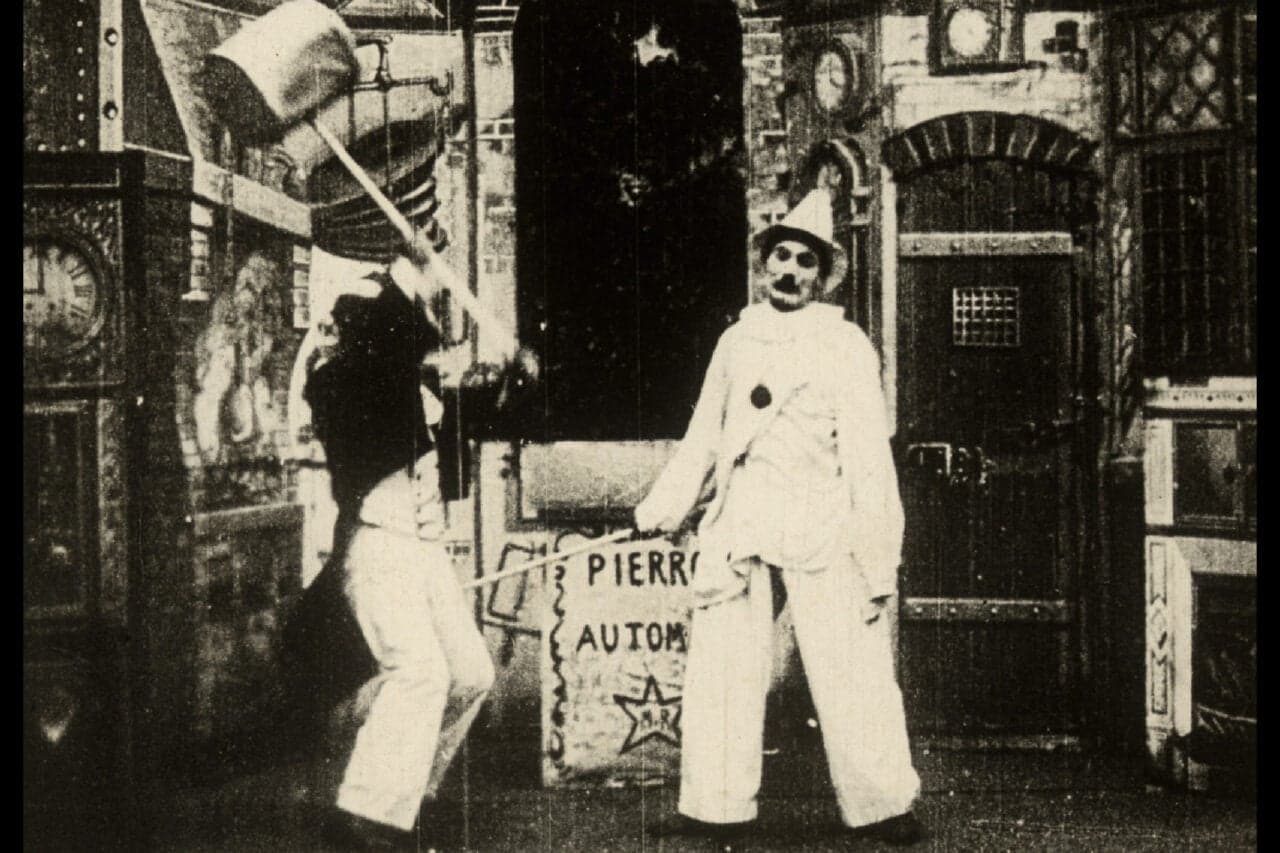
A long-lost silent film that’s believed to be the first depiction of a robot in motion pictures was rediscovered in Michigan. And it’s a great reminder for film history fans that you shouldn’t give up hope just because a film has been deemed lost. The film, titled “Gugusse and the Automaton,” is just 45 seconds long and was created in 1897 by French film pioneer Georges Méliès. It shows a magician named Gugusse turning a large crank to control Pierrot Automate, a child-sized robot. The robot grows bigger and bigger until it’s an adult. Once full size, the robot does a little dance before hitting Gugusse over the head with a stick. Gugusse brings the robot down from his pedestal and then shows him what’s what. Gugusse hits the robot over the head with a gigantic mallet, each swing making the mechanical man a little smaller until he’s back to his child-like size. Another swing makes the robot a small doll and then it’s just one more mallet slap before the robot disappears completely. With that, the film is over. It’s a short film with a goofy, slapstick premise. But it’s also an artifact that can be interpreted similarly to so much robot-focused media that would come later in the 20th century. The robot harms a human, the human needs to destroy the robot. We see anti-robot stories pop up especially during difficult economic times, like the 1930s and 1970s, something I’ve written about before at length. And if you’re wondering whether there were hard economic times in France during the 1890s, there certainly were—in the form of a double dip recession, no less. But putting aside the potential message of the film (and the risk of taking it too seriously as a sign of broader social frustrations), the story of how this film was rediscovered is fascinating. Bill McFarland of Grand Rapids, Michigan, drove a box of films that belonged to his great-grandfather to the Library of Congress’s National Audio-Visual Conservation Center in Culpeper, Virginia so that experts could take a look at what he had. McFarland’s great-grandfather was a man named William Delisle Frisbee who had worked jobs as a school teacher and a potato farmer in Pennsylvania, according to a blog post from the Library of Congress. But he also worked nights as a “traveling showman,” according to the Library. “He drove his horse and buggy from town to town to dazzle the locals with a projector and some of the world’s first moving pictures,” the Library explains. “He set up shop in a local schoolroom, church, lodge or civic auditorium and showed magic lantern slides and short films with music from a newfangled phonograph. It was shocking.” Frisbee died in 1937 and two trunks of his possessions were passed on through generations until they made their way to McFarland, who was unable to screen the movies from himself because of their condition. The Library posted a video to Instagram talking about their acquisition of the film and how remarkable it is that such an old film was found. It’s estimated that as much as 90% of films made before 1930 are lost to history. Other films in the trunks included another Méliès film from 1900 titled “The Fat and Lean Wrestling Match,” fragments of a Thomas Edison movie called “The Burning Stable.” Library technicians scanned the films in 4K to preserve them for future generations. The word “robot” wasn’t coined until 1920 for the Czech play R.U.R. by Karel Capek. But visions of artificial men date back centuries. And it’s incredible to see a robot from the 1890s depicted on film for the first time. Even if it’s just 45 seconds long. Don’t give up hope if you’re longing to watch some movie that’s believed to be completely lost. You never know what someone may have in a dusty old trunk in Michigan.
Share this story