newstatesman.com
Britain is in denial on defence
newstatesman.com · Feb 17, 2026 · Collected from GDELT
Summary
Published: 20260217T150000Z
Full Article
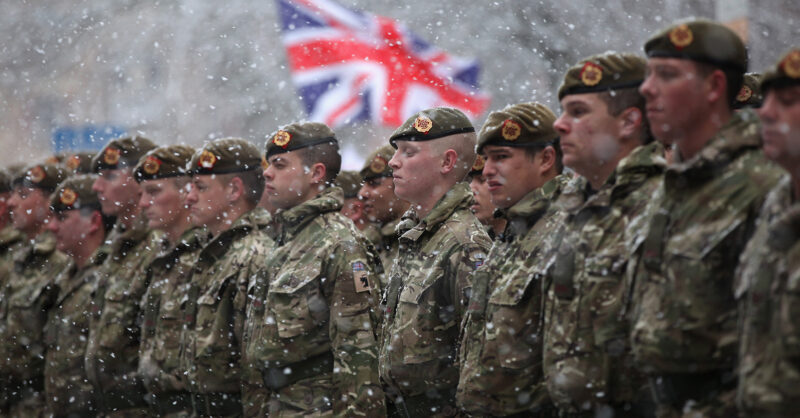
Photo by Christopher Furlong/Getty Images For 30 years the peace dividend was a happy fact of economic life. In 1980, when the threat of a hot war between the US and the Soviet Union was still real, the UK spent 5 per cent of GDP on defence. By the mid-1990s this had fallen to 3 per cent before settling at 2 per cent a decade later. Successive Conservative and Labour governments enjoyed the luxury of treating defence as a second-order issue. Did we know then how lucky we were? Underpinned by the longest economic expansion in history, health spending doubled from 4 per cent to 8 per cent and the welfare state grew without a corresponding rise in taxes. But this bargain has now unravelled in every sense. A revanchist Russia and a reluctant US will force Europe to take more responsibility for its own security – and to make new sacrifices. Politicians everywhere acknowledge this truth. The “Cold War peace dividend that we had all believed in and hoped for has gone,” declares Yvette Cooper with an air of tragic realism. Subscribe to the New Statesman today for only £1 a week. Russia’s military posture, warn the defence chiefs of the UK and Germany, has “shifted decisively westward”. Its forces, they add, “are rearming and learning from the war in Ukraine, reorganising in ways that could heighten the risk of conflict with Nato countries”. Keir Starmer, it appears, is listening. “On defence spending, we need to go faster,” he said yesterday, words that were interpreted as a commitment to raise funding to 3 per cent before the next election (and subsequently downplayed by No 10). Not for the first time, to Labour MPs’ familiar frustration, the government gives the impression of willing the end but not the means. Kemi Badenoch, who demands higher defence spending in one breath and lower taxes in the next, is yet worse. There have been numerous opportunities in this parliament to confront voters with the trade-offs that flow from higher defence spending. Rachel Reeves could, as Ed Balls advocated, have loosened her fiscal rules last year for this purpose or, as some cabinet ministers wanted, introduced a hypothecated “defence tax”. Instead, as it flirted with a rise in income tax last year, the government toyed with the rhetoric of shared sacrifice before swiftly abandoning it. And so Britain remains in the realm of fiscal fantasy. A cakeist public favours greater European autonomy but not the higher taxes or higher borrowing needed to pay for it. At some point, most likely at a moment of Donald Trump’s choosing, reality will intrude. And our politicians will then find themselves playing a dangerous game of catch-up. This piece first appeared in the Morning Call newsletter; receive it every morning by subscribing on Substack here [Further reading: There is no working class party] Related
Share this story