newstatesman.com
Clustered Story
Why Farage picked Robert Jenrick for Reform shadow chancellor
newstatesman.com · Feb 18, 2026 · Collected from GDELT
Summary
Published: 20260218T131500Z
Full Article
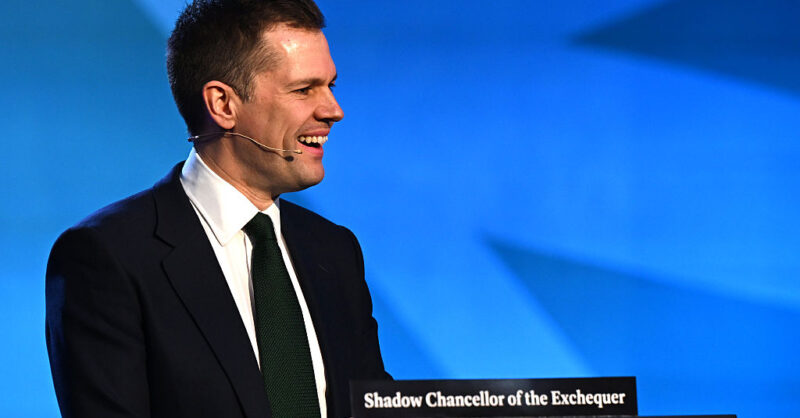
Photo by Leon Neal/Getty Images Robert Jenrick has started his tenure as Reform’s Treasury spokesperson by announcing plans to restore the two-child benefit cap. Yesterday Farage unveiled his “shadow cabinet”, branding Jenrick’s role “shadow chancellor” in an attempt to make Reform government-ready. Six months ago the prevailing wisdom in Westminster was that Jenrick might end up as Farage’s chancellor in a Reform-led government. The thinking went like this: he would at some point take over from Kemi Badenoch as leader of the Conservative Party and then enter coalition with Reform as the junior partner, with Farage as Prime Minister. Now that Jenrick has defected to Reform, he is lined up for the same job. This looks a bit like running to stand still, and I’m not sure that we can say a month on that Jenrick’s defection to Reform was a smart move from the point of view of career advancement. On current projections, Reform is unlikely to win an outright majority at the next general election. Its only way of getting into government will probably be through forming a coalition with the Conservatives. Leading Reform figures such as Zia Yusuf (the new “shadow home secretary”) continue to dangle the possibility of such an alliance. Subscribe to the New Statesman today for only £1 a week. The deputy prime minister role has already been carved out by Richard Tice (along with a new shadow trade, business and energy brief) – and what Tory leader would want that job anyway, after the experience of Nick Clegg? So what will the Tories demand as the price of such an arrangement? Oh I don’t know, probably control of the Treasury. This is the Tories after all. The crushing humiliation of being made the junior right-wing party in British politics after two centuries at the top would only be alleviated by the chance to continue their control of economic policy. That would leave little room for Jenrick. And his former party, vindictive as it can be to turncoats, will enjoy the spectacle of humbling him. Jenrick’s own pitch for the Treasury is not wholly distinct from what a future Tory chancellor might offer: homilies about the need for deregulation and the encouragement of the entrepreneurial spirit, combined with reassurances on the sanctity of Bank independence and the continuing power of the OBR. Now we wait to see how the relationship between Farage and Jenrick develops. The successful opposition leader/shadow chancellor relationships of recent times – Tony Blair and Gordon Brown, David Cameron and George Osborne – proceeded on the basis of a united political strategy, and a pretty clear devolution of economic policy making to the shadow chancellor’s team. The early signs are not great. Jenrick’s declaration that Reform will restore the two-child benefit cap in full runs contrary to Farage’s changing line, first that he would abolish it, then that he would abolish it for British parents. At the first press conference announcing his top team on Tuesday, Farage said that he would “speak for Robert” on the issue of the two-child cap. Then on Wednesday morning in his own press conference, Jenrick said he would restore it in full. That brings Reform even more closely into line with the Conservatives – who until Wednesday morning were more hawkish on welfare than Reform (their only other major points of division now are on the Online Safety Act and social media bans for children, as well as quite how punitive they would be to legal migrants living in Britain). If Jenrick is to continue to enjoy this much room for manoeuvre on economic and social policy, we might be looking at something a bit closer to the Ed Miliband/Ed Balls tug of war. Will it also end in tears? A reminder that in terms of electoral outcomes under first past the post, Reform’s current polling average of 28 per cent is equidistant between squeaking over the line with a majority (just about possible with 31 per cent of the vote) and eating up 25 per cent of the vote but ending up with just a few dozen seats, the fate of the challenger Social Democratic Party in the 1983 election. [Further reading: Starmer humiliated Wormald – but his problems with the Blob remain] Related
Share this story