Foreign Policy
Why No One Is Pushing Back on Trump’s Iran Threats
Foreign Policy · Feb 27, 2026 · Collected from RSS
Summary
A quarter century of “forever wars” has inured Democrats and even Europeans to U.S. aggression.
Full Article
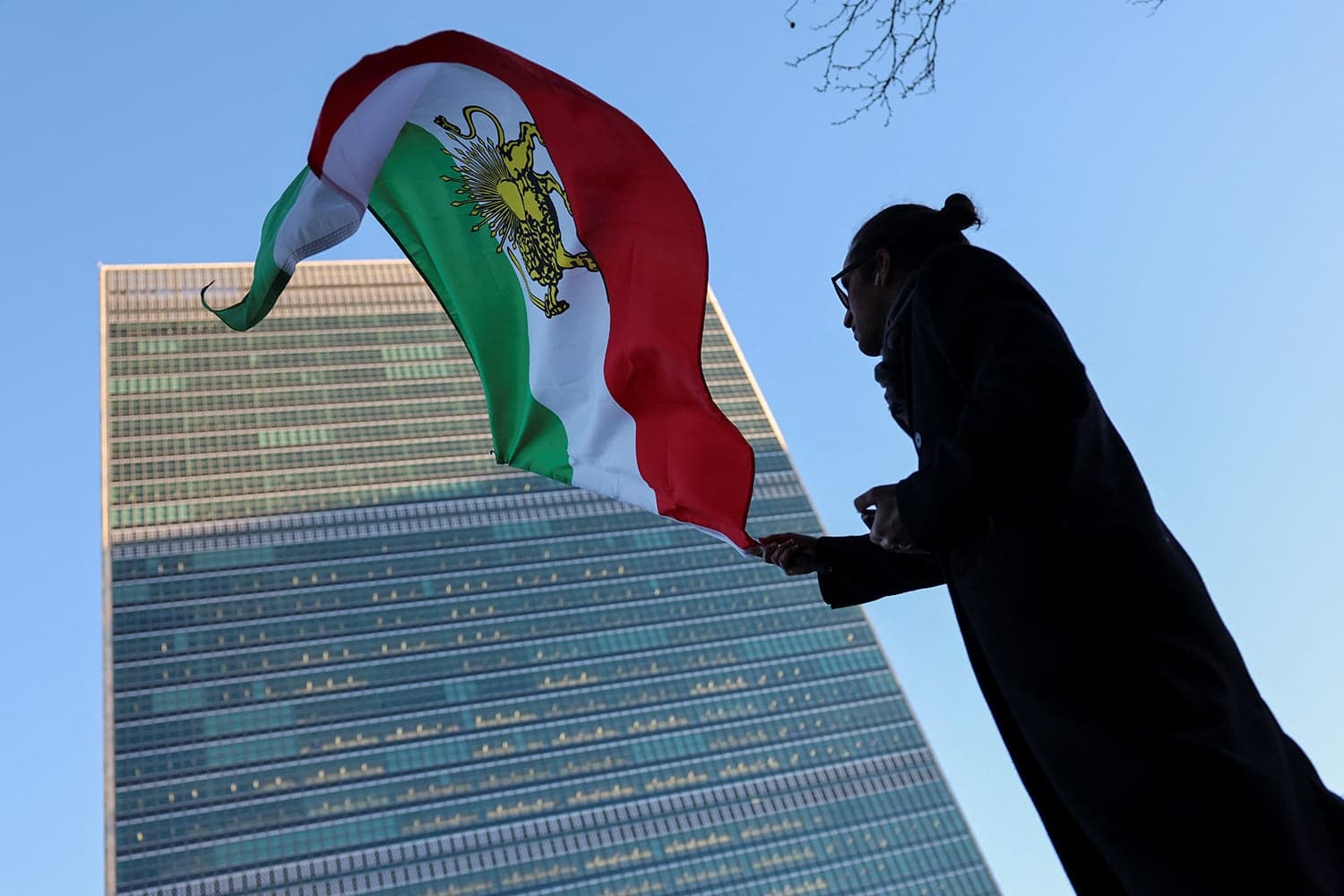
How much difference nearly a quarter century can make. Twenty-three years ago, then-U.S. President George W. Bush repeatedly sent his secretary of state, Colin Powell, into the U.N. Security Council to do rhetorical battle with key allies, as well as Russia and China, over his planned Iraq invasion. Bush, mind you, was a staunch unilateralist who had little affection for the U.N., or Europe, or NATO. (“Preserve the myth, and laugh,” one Bush official said then of the trans-Atlantic alliance.) But Bush felt compelled to invoke international law and win over skeptics at home and abroad—who were strident, and often eloquent, in their opposition to his “preemptive” Iraq war. “In this temple of the United Nations, we are the guardians of an ideal, the guardians of a conscience,” France’s foreign minister, Dominique de Villepin, perorated before the invasion, calling on Washington “to give priority to peaceful disarmament” of Iraq. Powell, a man in a dark business suit and red tie, holds up a small vial while he speaks. In front of him is a microphone on a tabletop with papers and pencils, a water glass, and a placard that reads "United States." U.S. Secretary of State Colin Powell addresses the U.N. Security Council in New York on Feb. 5, 2003, urging the council to say “enough” to what he said was Iraq’s defiance of international attempts to destroy its chemical and biological weapons. Timothy A. Clary/AFP via Getty Images Today, U.S. President Donald Trump appears to be planning what is, if anything, an even more flimsily justified preemptive war than Bush’s invasion was, having dispatched aircraft carriers, fighter jets, and surveillance planes against Iran in the biggest display of U.S. force since the Iraq War. But the silence from across the Atlantic is nearly deafening. The Europeans seem to be so snakebit over Trump’s threats to invade Greenland and abandon Ukraine—the two issues they’ve fought Trump hardest on—that they’re fearful of voicing too many objections about Iran. European officials have urged diplomacy and restraint but have not openly condemned the possibility of a U.S. attack. “The Europeans are gun-shy. They don’t want to get into yet another fistfight with Washington,” said Charles Kupchan of Georgetown University, an expert in transatlantic relations and former national security official in the Clinton and Obama administrations. “I think part of it is that nobody is bothering to call them, so the Europeans have no idea what Trump is up to. In 2003, there was an enormous amount of diplomatic engagement.” The U.N., meanwhile, is seen less as a “temple” than a leper colony—at least by the White House. Trump appears to pay no attention to the Security Council, where his exiled former national security advisor, now-U.N. Ambassador Mike Waltz, delivers little-publicized statements out of the headlines. “I don’t need international law,” Trump said in January, and he has repeatedly dismissed the U.N. as all but useless while more recently setting up a dubious “Board of Peace” as an alternative, with himself as lifetime chairman. Democrats are, for the most part, rather meekly demanding more details about and justifications for what Trump plans. But at the same time, few of them are seriously questioning the legality of the imminent Iran war or turning it into a major issue—even though the midterm elections are just eight months out. Senators complain that the Trump administration has provided little information to justify the recent buildup of naval forces and air assets, but the language has been mostly mild. “We’ve had no real briefing, information or anything else. So it’s hard to justify something without rationale,” said Democratic Sen. Jack Reed, the ranking member of the Senate Armed Services Committee. Another Democratic senator, Tim Kaine, and a small group of House members are pushing for a measure to force Trump to seek congressional approval, but its prospects are questionable. During Trump’s State of the Union on Tuesday, many Democrats (even uber-progressive, anti-war Sen. Elizabeth Warren) stood to applaud the president’s threatening remarks against Iran. Donald Trump is seen from behind, gesturing with his arms held wide to each side as he faces toward members of Congress in a large chamber. U.S. President Donald Trump delivers the State of the Union address during a joint session of Congress at the Capitol in Washington on Feb. 24.Jessica Koscielniak-Pool/Getty Images Senators, some with hands on their heads or faces in apparent exasperation, others listening stoically, sit at a dais as a man with his back to the camera speaks in a Senate chamber. U.S. senators, including (from left) Democrats John Kerry, Christopher Dodd, and Joe Biden, listen to former National Security Advisor Robert McFarlane testify on Iraq during a hearing in Washington on Sept. 25, 2002. Mark Wilson/Getty Images While many leading Democrats went along with Bush’s Iraq War in an environment of heightened patriotism after 9/11, there was at least an intense debate at the time. Among those who led it was then-Sen. Joe Biden, who—working in bipartisan fashion with Republican Sen. Richard Lugar of Indiana—pushed hard for a resolution in the run-up to the war that would have required the Bush administration to delay the use of force until the U.N. approved a new resolution. All in all, it is a measure of how much our world has changed, how degraded our political debate has become, and how—after nearly a quarter century of “forever war”—we appear to be inured to the idea that U.S. presidents will do as they please with the military, without checking with Congress or allies. More than ever, the United States seems to view itself as “judge, jury and executioner all rolled into one,” as former State Department counselor Rosa Brooks wrote presciently in her 2016 book, How Everything Became War and the Military Became Everything. Trump, of course, has turbocharged this trend with a series of unilateral strikes beginning last summer, when he joined Israel’s attacks on Iran’s nuclear sites while demanding “unconditional surrender” from Iranian Supreme Leader Ayatollah Ali Khamenei. Following that, Trump authorized an operation to capture Venezuelan leader Nicolás Maduro. And even then, European and congressional reaction was muted. Things were very different 23 years ago. “Not only did Bush work hard to build a substantive case, domestically and internationally, the administration sought to develop domestic and international legal justifications,” said William Wohlforth, an international relations expert at Dartmouth College. He also noted that the Bush team went to great lengths to establish new international legal criteria for preemptive war. Bush and his chief cheerleaders for the Iraq War, Vice President Dick Cheney and Defense Secretary Donald Rumsfeld, were probably as unilateralist and arrogant—especially in their dismissive attitude toward U.S. allies—as the Trump team is. But they felt constrained by constitutional and international norms, all of which appear to be fading fast today. Bush sought an Iraq War resolution from Congress—and in October 2002, the “Authorization for Use of Military Force Against Iraq Resolution” gave him a bipartisan mandate, passing the House with a 296-133 vote and the Senate 77-23. And while he strained (and ultimately failed) to establish any links between Iraqi dictator Saddam Hussein and al Qaeda—the true culprits of 9/11—Bush still made a compelling case that the United Nations could not permit its resolutions against Saddam to be defied. In November 2002, Bush won a 15-0 U.N. Security Council vote forcing Iraq to open up to U.N. inspection and surrender any weapons of mass destruction (WMD). Stunningly, all five permanent members, including Russia and China, supported it. Bush, wearing a suit, looks over his shoulder as he stands among European leaders. The word "NATO" and flags of the coalition are on the wall in front of him. U.S. President George W. Bush arrives for a NATO summit meeting in Brussels on Feb. 22, 2005, during his trip to mend fences with European counterparts two years after the start of the Iraq War. Patrick Kovarik/AFP via Getty Images Today, “it’s a new normal,” Kupchan said in an interview. “The contrast between what Bush did in 2003 and what Trump is doing now underscores just how much norms have changed, because even though the Bush people were unilateralists, they still operated in an America and a world where there was at least a pretense of doing it by the book. That means going to Congress, discussing the issue in the U.N., and working behind closed doors with allies. And those days are gone. “It’s not just Trump. I think there’s been a gradual erosion over time that stems both from the change in the international environment, and the degree to which lots of different countries are turning their backs on institutionalized multilateralism,” Kupchan added. “Until Trump, there was at least acknowledgement that the system was eroding. There was regret about the many uses of force under the name of counterterrorism. But Trump revels in turning his back on norms.” Despite the dubious intelligence cooked up by the Bush administration’s Iraq War hawks in 2002 and 2003, the whole process actually worked well for a while. The moment when Bush went wrong came when even after Saddam caved to the pressure—giving U.N. inspectors free run of his palaces and sites, though they found little indication of WMD (and their assessments proved far more accurate than the CIA’s)—the president decided to invade anyway. That was when, in the eyes of the world, U.S. power went from being legitimate to illegitimate. It was also, arguably, one of the most catastrophic moves in the history of U.S. foreign policy—and it played a big role in discrediting the Republican establishment and helping to pave the way for Trump, who ironically rose to power mocking the Iraq War. By mistaking
Share this story