spectator.org
When Democracies Turn on Faith | The American Spectator
spectator.org · Mar 1, 2026 · Collected from GDELT
Summary
Published: 20260301T070000Z
Full Article
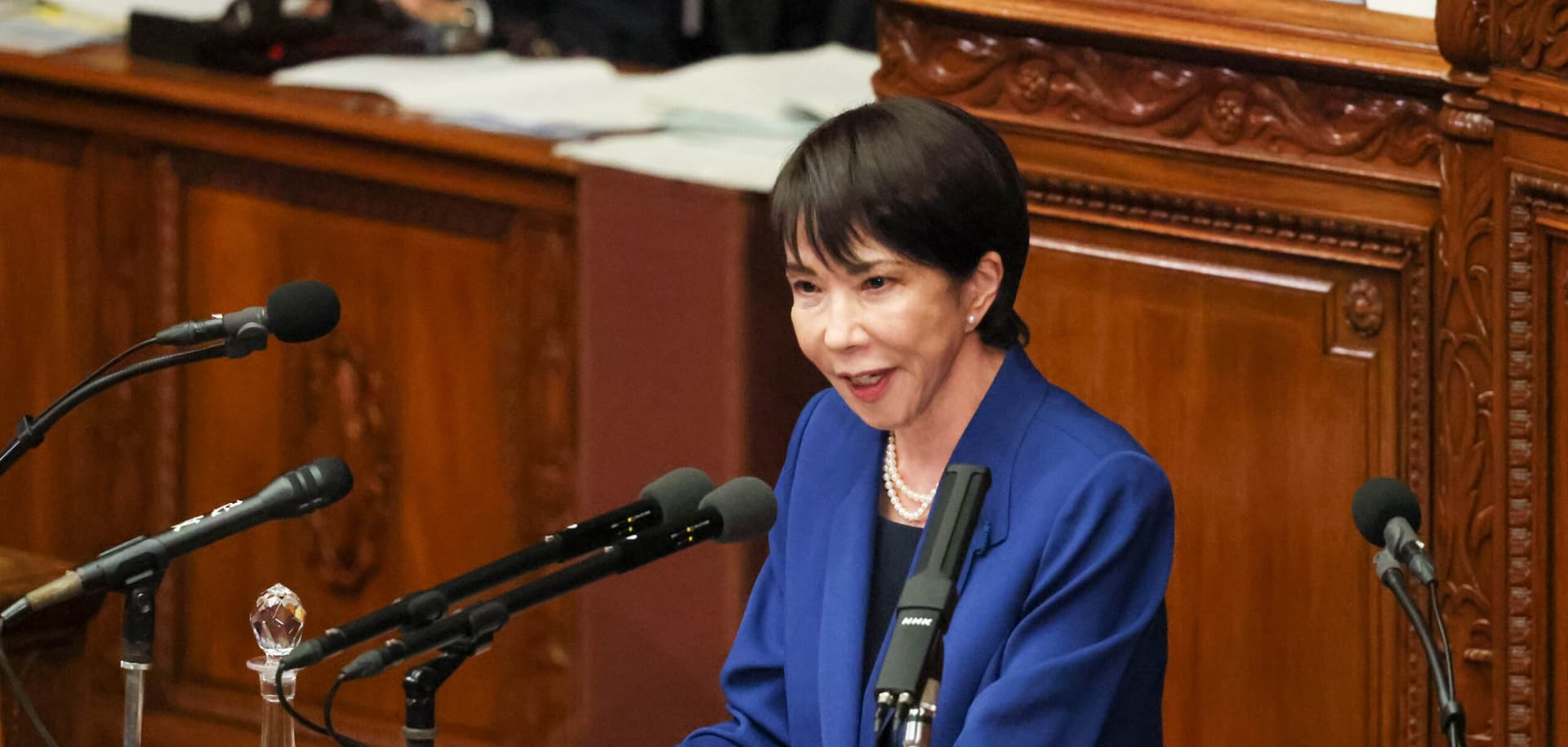
Religious persecution takes many forms. Most hostile to all people of faith, other than fans of secular saints, tend to be authoritarian, especially communist, states. Muslim-majority nations focus their ill attention on believers in other religions. For instance, China is hostile to anyone who places God before party dictates. Saudi Arabia targets anyone not a Sunni.However, religious intolerance is spreading among Western democracies as well. Canada, Australia, the United Kingdom, and other European states, historically Christian states all, increasingly are banning even private expressions of Christian beliefs that have fallen out of political favor.Of course, the hostility towards religion in these cases still pales compared to that of, say, North Korea and Afghanistan. Nevertheless, increasingly one hesitates to call countries that arrest people for their most fundamental religious convictions “free.” Unfortunately, joining these states is Japan, which has been descending into the basement, if not yet dungeon, of religious persecution.So far, the Tokyo government has left major faith groups alone. In its most recent review of Tokyo’s policy, the State Department reported:The constitution provides for freedom of religion and prohibits religious organizations from exercising any political authority or receiving privileges from the state. According to the Agency for Cultural Affairs (ACA), there are approximately 180,000 registered religious organizations with corporate status that received government tax benefits.However, the Japanese government has launched an assault on two groups long seen as outside the mainstream. One is Jehovah’s Witnesses, a small Christian sect that decades ago faced pressure from Washington because its members refused to effectively idolize the state, most dramatically refusing to salute the flag or take the pledge of allegiance. In doing so they ultimately helped expand the protections of the First Amendment for everyone. Today JWs, as even they call themselves, are full and free participants in American society.Elsewhere things are not so welcoming, alas. Russia has treated the faith as a dire threat, prosecuting and imprisoning numerous believers. Even Vladimir Putin once admitted that he did not know why his own officials did so much to punish beliefs that posed no threat to the Russian state. Now Japan also has turned hostile.JWs have been active in the island state for more than a century. They seem well-integrated in Japanese society, having provided a welcome helping hand after recent natural disasters. However, the government has targeted JWs for transmitting their beliefs to their children, so-called “child religious abuse.” It is hard to see this as anything but singling out a faith that earned special state sanction because it refused to show the state outsize devotion.Tokyo is challenging what most parents elsewhere view as normal family life, sometimes requiring children to behave against their wishes. This approach could be applied to many different faiths. Explained Italian sociologist Massimo Introvigne, the authorities “targeted a wide range of educational practices by conservative religion in general, from teaching children that those who commit serious sins and do not repent may go to hell to preventing them from watching cartoons and reading comics their parents regard as immoral, and counseling minor daughters against abortion.Some provisions targeted specifically the Jehovah’s Witnesses without naming them. They mentioned, for example, not celebrating birthdays and other festivities and refusing blood transfusions, which are practices typical of the Jehovah’s Witnesses and not found among the other groups singled out by the anti-cult campaigns.” Four United Nations Special Rapporteurs—for religion, education, expression, and association—expressed concern that “several parts of the guidelines appear to set a lower threshold for the establishment of abuse in religious as opposed to non-religious contexts” and limit “the diversity of manifestations of religion or belief which are inherent to its free exercise.”Controversial and even despised faiths deserve the same legal respect and protection as other beliefs.Even more threatening is Tokyo’s assault on the Unification Church, now known as the Family Federation for World Peace and Unification. The faith long has been controversial for its doctrines and practices. Unlike Jehovah’s Witnesses, it moves beyond Christianity. It also has been attacked as a cult, allegedly ensnaring the unwary and impoverishing the faithful. The church came under particular criticism in Japan after the 2022 murder of former Prime Minister Shinzo Abe by Tetsuya Yamagami, the son of a church member.The ruling Liberal Democratic Party, under attack for being too close to the church, decided to sacrifice Family Federation members in an attempt to enhance its electoral prospects. In October 2023 the ministry responsible for culture sought a court order to dissolve the church. Last March a district court agreed, but the Unification Church appealed. With the Tokyo High Court set to rule on March 4, Tokyo is on the verge of shutting down the church, lifting its tax exemption and, more important, seizing its assets. Although the Family Federation could pursue one more, final appeal of the High Court’s ruling, the dissolution could be enforced in the meantime.The ongoing campaign against the church makes little sense. The Unification Church long ago acknowledged problems, changed its fundraising practices, and returned some of the monies collected. Yamagami’s complaint dates back two decades and his mother remains a church member, evidently rejecting his views. He waited decades after the actions he complains of to commit murder, which he apparently viewed as a perverted form of redress, based on the erroneous claim that Abe was uniquely close to the church. (Yamagami was sentenced to life imprisonment after unsuccessfully seeking leniency based on, yes, “child abuse rooted in religion.”)Particularly worrisome is the government’s use of civil claims to justify shutting down a legitimate faith organization with a global membership under a law that previously required a showing of criminal conduct. Indeed, the effort to dismember the church has been led by a largely left-wing bar that dislikes the church’s history of opposing communism. Journalist Masumi Fukuda explained that the objectives were “eliminating the funding base for the anti-espionage law and simultaneously destroying the right-wing new religions they regarded as enemies.” A communist journalist essentially admitted the charge: “From the Communist Party’s point of view, this is the final war against the Unification Church.” To which Kazuo Shii, head of the Japanese Communist Party, responded: “It has been a long struggle.”The uniquely draconian nature of the sanction requested has generated significant criticism elsewhere in the world, and especially in the U.S. Of course, abusive behavior by or in any church should be investigated and, if proven, punished. However, applying a legal death sentence to any organization should require both solid evidence and of significant crimes. The issue is particularly sensitive when the target is a church facing unique opprobrium for being different, even heretical, at least from a Christian perspective. While Tokyo also is going after Jehovah Witnesses, it is not seeking to close down their ministry and acquire their property — as Russia has done. In short, Tokyo has adopted explicitly authoritarian tactics against the Family Federation.However, Prime Minister Sanae Takaichi’s dramatic election victory, four months after she became the country’s first female government leader, provides Tokyo with an opportunity to back away from the brink. Her predecessor, Fumio Kishida, led a minority government and targeted the church out of desperation in an attempt to win back public support. However, his attempt to divert public attention failed. Last year he quit under pressure, facing multiple scandals, after “one survey by the Mainichi Shimbun newspaper showed a historic high in public disapproval toward the cabinet, at 79%.”In contrast, Takaichi need not sacrifice the principle of religious liberty as well as the fundamental interests of Federation members to bolster her political position. In fact, the LDP won two-thirds of the Diet’s seats, its largest majority ever. She has the political room to make the right decision, based both on legal precedent and moral principle.Unfortunately, South Korea’s government appears to have looked at Japan as a model, proposing legislation to allow the dissolution of religious organizations. President Lee Jae-myung denounced “religious interference in politics,” while Prime Minister Kim Min-Seok contended that “Pseudo-religions are social evils that need to be eradicated.” In Introvigne’s view, the proposal threatens “a structural shift in the relationship between the state and religion — one that directly contradicts the International Covenant on Civil and Political Rights (ICCPR), to which South Korea is a party, and which imposes strict limits on when and how governments may restrict religious freedom.”Controversially, Seoul has charged Hak-ja Han, widow of Rev. Sun-Yung Moon, founder of the Unification Church, with various crimes involving alleged political activities. Convicted but given a suspended sentence for violating the “Public Official Election Act” was Rev. Son Hyun-bo of the Segeroh Presbyterian Church.It is difficult to disentangle the legal and political issues and judge what is true in such cases, but politics in Seoul is particularly vicious. In this case, partisan hostility apparently underlies the willingness to undercut fundamental religious liberties. In such an atmosphere it would be especially dangerous to allow the government to decide which faiths are legitimate and which are “pseudo-religions
Share this story