spectator.org
Head of State , Not Head of Faction | The American Spectator
spectator.org · Mar 1, 2026 · Collected from GDELT
Summary
Published: 20260301T070000Z
Full Article
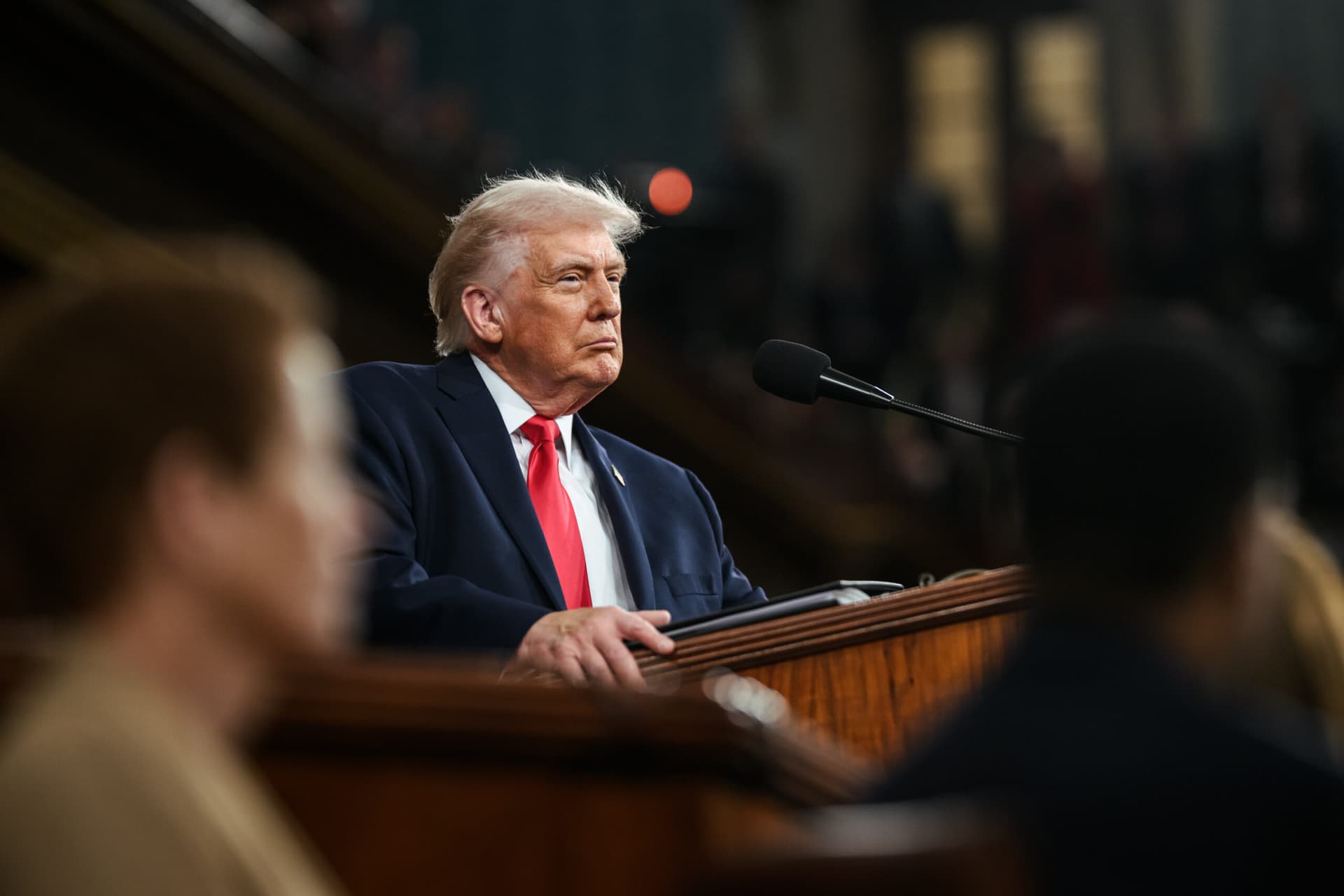
Several outlets ran with a story last week of an iftar meal being held in Israel. This being the month of Ramadan, observant Muslims who fast each day break their fast at nightfall, often gathered together with others in a convivial atmosphere.It is not newsworthy that such gatherings are held in Israel, since freedom of worship has been observed scrupulously since Israel became independent. Perhaps it should be newsworthy just in itself, because, with the notable exceptions of the UAE and Bahrain, the Middle East has headed in the opposite direction in recent years. The ancient Jewish communities in Iraq and Syria are gone. The ancient Christian communities in Syria, Iraq, and Egypt are greatly diminished. Even in the tiny country of Lebanon, which for many years ensured Christians enough political power to ensure their religious freedom, things have deteriorated ever since Iran’s heavy hand made itself felt.So it ought to be noted that even under the continuous threat of annihilation by radical Islamists, despite the attempt by many claiming the authority of Islam to destroy Israel’s sovereignty, iftar is publicly celebrated in Israel.But what made this noteworthy was that the break-fast meal was celebrated in the home of Israel’s president, and it has been a yearly feature of Israel’s public life, just as Chanukah has been regularly celebrated at the White House over the past few decades. The photos accompanying the story showed a large gathering with many community leaders, religious figures, and public servants of Israel’s Muslim community in attendance as well as foreign diplomats. The posture of the people conveyed a sense of comfort and conviviality, typical of iftar meals around the world.Note that this took place in the home of Israel’s president, not its prime minister. Like the president in the U.S. and in France, Israel’s president is the Head of State. Unlike the presidents in the U.S. and France, he is not the head of the government. The role model was that of the mandated power that preceded Israel as the ruler of the Holy Land, the UK.English monarchs used to be the chief political power in the land. But gradually, and sometimes with a lurch forward, political power moved away from the monarch to the Parliament, and in particular to the Commons, which itself became ever more representative of all the people. By the time of Israel’s independence in 1948, the monarchy was a model of political restraint, serving at its best as an embodiment of the nation as a whole, and so necessarily refraining from political controversy.Israel set itself up following the parliamentary model, in which the main power is invested in the elected body of lawmakers who then decide on the prime minister who will be the leader of the executive. As in Britain, the prime minister and his executive must maintain the confidence of the Knesset, Israel’s parliament, and can be removed if they do not.Elections in Israel are hard-fought. There is much controversy and all major political figures have fierce opposition as well as passionate support. The country has many political divisions and although someone will win the vote, their attempts to unite the country are understood by their opponents as attempts to solidify support for their continued power.Not king, but the statesman capable of leading the whole country.The President of Israel, however, is expected to refrain from the controversy which prevents political combatants from being effective uniters. They allow a patriotism with which all can feel comfortable. Of course, some presidents were better at it than others, just as some British monarchs have been as well.Here in America, we took another course. The president is a political figure, and because of the gigantic power of the office, inevitably at the center of controversy. This has become true even when the president gets involved with sports. Yes, Herbert Hoover was booed when he went to a baseball game, but the teams weren’t booed.Now, even when the president as the chief magistrate of the country congratulates our gold medal hockey team, the Jacobin left has descended on yesterday’s heroes as if they were political heretics deserving a date with Dr. Guillotine’s machine. One representative of the lickspittle press runs with the headline “U.S. men’s hockey skates on thin ice with fans” and only in the body of the article do they qualify it to “some fans.” — the projection of what they want their activist journalism to bring about onto a world they believe is just waiting for them to manipulate it.This ultra-partisanship may not have been the idea of the Founders. The president was chosen indirectly, to have more deliberation and less chance for demagoguery. The president would be fit to be the face of the nation, the chief magistrate, even without the full panoply of kingly powers.Certainly, the presidency of George Washington had near unanimous acclaim at its start. He brought together, at least for a while, a wide range of views in his cabinet, and he conducted himself as one above the fray. As Washington described himself in a letter to Thomas Jefferson, “I was no party man myself, and the first wish of my heart was, if parties did exist, to reconcile them.”John Adams also aimed to be above the fray, but the party system already had a terrible grip on the country. This is testified to by the bitter 1800 campaign that featured not only Republican versus Federalist, but an internal Federalist feud that probably lost the election for their own candidate. It also marked the last time the Federalists were serious contenders for national power — their own factional split doomed them.James Madison had already grasped the partisan reality of American politics before Washington was elected. In the Federalist, he wrote: “Liberty is to faction what air is to fire.” He was a champion of liberty, even though he believed that under it, partisanship would thrive.But did we ever dream it would reach such a peak as it has today?Who is a fan of extreme controversy? Extremists, who use it to have outsized influence. The radical left has used it to make it near impossible for any old-style Democrat to get their party’s nomination for almost any position.Donald Trump has been described as an extreme partisan in the same way, certainly by his enemies. Yet he is most effective as a politician when he takes the role of the Defender of the Normal People. Face to face, he effectively contrasts himself with the loonies who are the face of his opposition. Trump knows how to champion issues that are 80-20 and let the loonies be exposed in their looniness.When that happens, he has found his providential niche, like crazy George Patton finally given a chance to let loose the Third Army against the Wehrmacht. He stands as the champion, the one with the guts to joyously take on the loonies and win.Ben Shapiro reviewed Trump’s SOTU speech in this light. Issue after issue, he was on the side of the vast majority.The first job of the American government is to protect the American citizen — 80–20.The Olympic hockey teams deserve national and presidential recognition — 80-20.Minors should not be undergoing surgery that will mean they will never be able to procreate or have sexual pleasure — 80-20.The country should stand and recognize the grief of the mother of someone murdered by a repeat offender known to be mentally ill but left to wander the streets — 80-20.—In the second book of Tolkien’s trilogy, the good wizard Gandalf is trying to awaken the King of Rohan to the danger enveloping his kingdom. But the king has been mesmerized by his advisor Grima, who is a slick mouthpiece for the evil forces working for Rohan’s downfall. Grima, known to those who see through him as Wormtongue, tries to get the king not to listen to Gandalf. He calls him Gandalf Stormcrow, and accuses him of trafficking in trouble, to the kingdom’s detriment. Gandalf replies to him: “In two ways may a man come with evil tidings. He may be a worker of evil; or he may be such as leaves well alone and comes only to bring aid in time of need.”When an emergency arises, we must be equal to the task; think of Lincoln suspending habeas corpus to foil the plot of Maryland legislators to secede and so deliver the capital city of the country into rebel hands.Yet, as William Pitt cautioned Parliament, “Necessity is the plea for every infringement of human freedom. It is the argument of tyrants; it is the creed of slaves.”A true dilemma.Pitt suggested the solution during his confrontation with Napoleon’s mortal threat:“The amount of our danger, therefore, it would be impolitic to conceal from the people. It was the first duty of ministers to make it known, and after doing so, it should have been their study to provide against it.”In other words, if there is an emergency, show it to the people and get their backing. This he did successfully.How can that be done now, when the media itself is hopelessly divided along partisan lines?By demonstration. In front of a massive live audience, he effectively contrasted what he stands for with what his opponents sat for. No argument — Trump allowed the craziness of his opposition to set the context for his agenda, which suddenly, astonishingly, looked sane and even moderate.Trump is not always that effective. On his own, he conceals and moderates very little. He hurts himself frequently.But contrasted on live TV with the bizarre and extreme politics he has dedicated his life to face and stop, he was the Champion of the Normies. He was the one representing the united nation against the self-regarding performative shrillness of his opponents’ contempt for moderation and the Americans who yearn for it.Not king, but the statesman capable of leading the whole country.On Tuesday night, he had the Democrats to thank for showing him in that light. Trump took full advantage, and trusts that Americans could see and he trusts them to make up their own minds
Share this story