middleeasteye.net
US stonewalling requests by Gulf states to replenish interceptors , sources say
middleeasteye.net · Mar 2, 2026 · Collected from GDELT
Summary
Published: 20260302T204500Z
Full Article
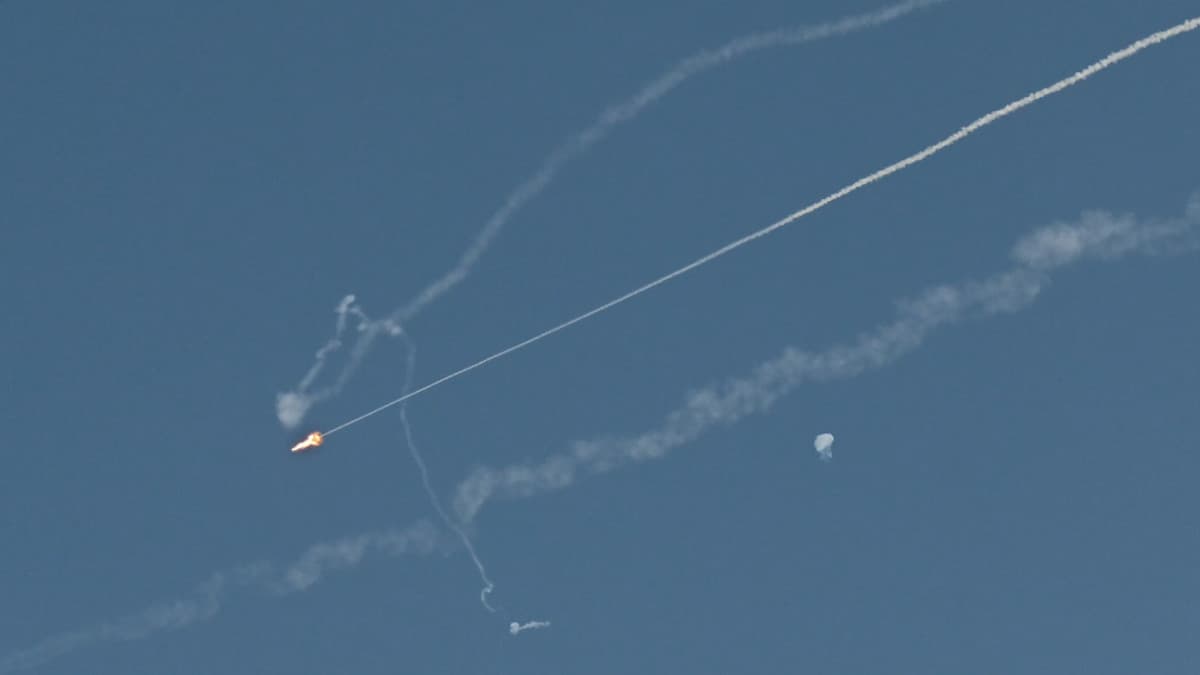
One Gulf state sought reassurances on the US commitment to its air defence when discussing access to bases, source says Explosions from the interception of an Iranian projectile are seen in the sky over Dubai in the UAE, on 1 March 2026 (Giuseppe Cacace/AFP) Published date: 2 March 2026 19:07 GMT | Last update: 2 hours 6 min ago The US is “stonewalling” requests by some Gulf states to replenish their air defence interceptors as pressure mounts on them to join the US and Israel in their war on Iran, one western official and one former US official familiar with the matter told Middle East Eye. At least one Gulf state that has come under attack from Iran asked US officials about replenishing supplies that have been depleted since the joint US-Israeli attack on Iran, but was brushed off, the former US official familiar with the discussions said. In a separate case, another Gulf state responded to US requests to use air bases in their country with enquiries about the US’s commitment to their air defence systems, a western official familiar with the matter told MEE. But the former US official familiar with conversations in the administration told MEE that Gulf states would be left wanting if they expect new supplies of interceptors. “Whatever munitions were produced in the last couple of months, we have shot several years' worth of production in the last few days,” the former official said. New MEE newsletter: Jerusalem Dispatch Sign up to get the latest insights and analysis on Israel-Palestine, alongside Turkey Unpacked and other MEE newsletters Saudi Arabia, Kuwait, the UAE, Qatar, and Bahrain have all been targeted with Iranian ballistic missiles and drones, but the countries closest to Iran -Bahrain, Qatar and the UAE - have borne the brunt of the assaults. Qatar announced on Monday that it shot down two Iranian Su-24 fighter jets. The UAE said on Monday it had destroyed 814 of the 871 drones, ballistic missiles and cruise missiles fired at it since Saturday. As a general rule, defenders are expected to fire two to three interceptors to down an incoming missile. Lindsey Graham met Saudi leader to 'bring him on board' a week before Iran attack Read More » The UAE operates Terminal High Altitude Area Defence (Thaad) ballistic missile defence systems as well as Patriot Pac-3 surface-to-air missile systems. The UAE also has South Korean, Russian and Israeli air defence systems, as well as a domestic short-range air defence system called Skynight. The UAE's interception rate is above 90 percent, according to the government’s tally, but Thaad and Patriot interceptors are costly and take years to make. “The UAE has now burned through a significant chunk of an interceptor stockpile that took years to build,” Kelly Grieco, an expert at the Stimson Center, wrote on X. US President Donald Trump held a phone call with his Emirati counterpart, Mohammed bin Zayed, on Monday. An Emirati readout of the call said the two discussed “the blatant Iranian attacks” on the UAE and other Gulf states. Bahrain says it has intercepted and shot down at least 45 ballistic missiles and drones. Neither the former US nor western official said there have been formal denials, but that Gulf states have been discouraged from asking for refills. Firas Maksad, the Middle East director at the Eurasia Group, told MEE, citing US sources, that the USS Gerald R Ford aircraft carrier was leaving the Mediterranean on Monday en route to the Gulf. That movement would suggest the Trump administration may be trying to address some of the Gulf states security complaints. Middle East Eye delivers independent and unrivalled coverage and analysis of the Middle East, North Africa and beyond. To learn more about republishing this content and the associated fees, please fill out this form. More about MEE can be found here.
Share this story