middleeasteye.net
Clustered Story
Mike Huckabee lifts the veil on US backing for Israeli expansionism
middleeasteye.net · Feb 26, 2026 · Collected from GDELT
Summary
Published: 20260226T090000Z
Full Article
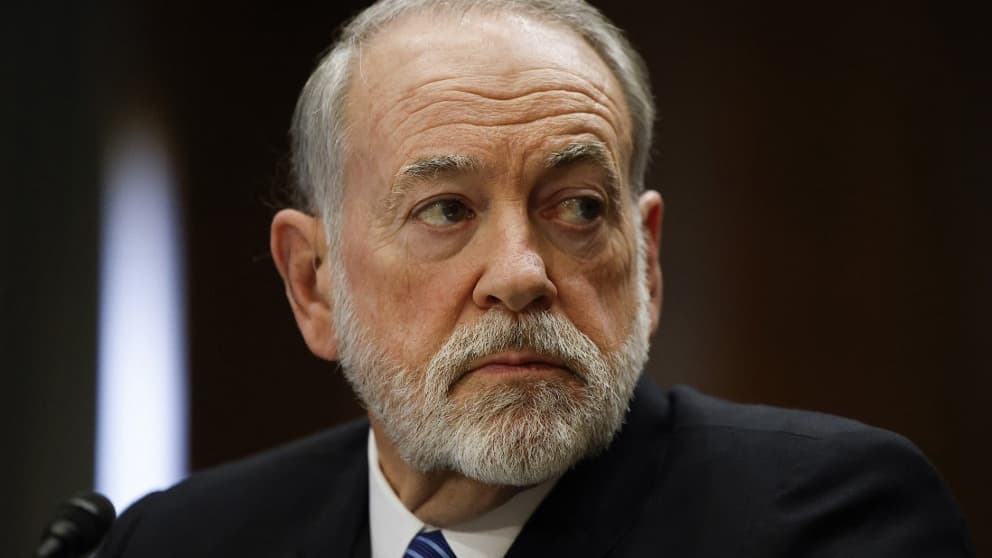
When Tucker Carlson recently interviewed the US ambassador to Israel, Mike Huckabee, their exchange did more than expose policy differences. It revealed something more consequential: not merely an ambassador misrepresenting history, but a vision of Israel’s place in the Middle East, and of Washington’s role in enabling it. A pattern emerged quickly. When confronted with inconvenient historical facts or legal complexities, Huckabee professed uncertainty. But when repeating familiar Israeli government positions, his confidence was unwavering. Precision disappeared only when it complicated the narrative. Consider his claim that Christians are “thriving” in the Holy Land. He cited 34,000 Christians in Israel in 1948 and 184,000 today, figures intended to suggest steady growth and protection. But numbers without context are a distortion. In December 1946, the United Nations estimated that there were approximately 145,000 Christians in Palestine, representing around eight percent of the country’s total population. New MEE newsletter: Jerusalem Dispatch Sign up to get the latest insights and analysis on Israel-Palestine, alongside Turkey Unpacked and other MEE newsletters During the 1948 Nakba, Jewish militias expelled or drove out hundreds of thousands of Palestinians, including roughly 90,000 Christians. Only around 39,000 remained in their homes within 1948 borders, the nucleus of today’s Palestinian Christian minority inside Israel. Jerusalem’s demographic trajectory is equally stark. Christians constituted around 20 percent of the city’s population in 1946. Since then, their numbers have declined significantly; by 2006, they accounted for roughly two percent of the city’s population, according to demographic data published by the Jerusalem Institute for Policy Research. To describe this as “thriving” obscures the increasingly precarious position of Palestinian Christians within a state that defines itself in explicitly Jewish national terms, and where ultra-nationalist currents have grown more assertive. Defining moments The evasiveness extended beyond demography. Huckabee claimed that Britain controlled Palestine at the time of the 1917 Balfour Declaration. It did not. The declaration preceded the mandate system and carried no binding force in international law; it was an imperial pledge, not a legal instrument. He further implied that Arabs initiated the 1956 Suez War. The record is unequivocal: Israel invaded Egypt in coordination with Britain and France. Former US President Dwight D Eisenhower publicly opposed the invasion and forced their withdrawal, contributing to the resignation of his British counterpart, Anthony Eden. In 1982, during Israel’s invasion of Lebanon and the bombardment of Beirut, former US President Ronald Reagan deliberately used the word “holocaust” in a call with Israeli leader Menachem Begin, warning that the assault endangered the future of relations between Washington and Tel Aviv. The 'Greater Israel' vision implies the displacement of tens of millions of people. Such upheaval would not stop at the borders of the Middle East These are not marginal details. They are defining moments in American foreign policy. Misrepresenting them does not merely obscure history; it reshapes political memory. It was equally striking to watch Huckabee cite Gaza health ministry figures - numbers he elsewhere disputes - to argue that the civilian toll there is the lowest in modern urban warfare, and that Israel has done more than anyone, even the US military, to avoid civilian casualties. The measurable record complicates that claim. By early last year, Israel had dropped on Gaza approximately 275 tonnes of explosives per square kilometre. By comparison, the US dropped roughly 15 tonnes per square kilometre in Vietnam. The density in Gaza exceeded Vietnam’s by a factor of 18, even before subsequent months of continued operations. A University of Bradford world affairs expert described the destruction as “equivalent to six Hiroshimas” and “unparalleled in the post-Second World War era”. Independent monitor Airwars reported that in the first 25 days of Israel’s assault on Gaza, around four times more civilians were killed than in the deadliest month it recorded during the US-led campaign in Iraq in 2017. When an American ambassador portrays the Israeli army as more restrained and more humane than the military of the country he is sworn to represent, the issue ceases to be statistical. It becomes political. 'Fine if they took it all' When pressed on whether biblical geography implied sovereignty beyond Israel’s current borders, Huckabee responded: “It would be fine if they took it all.” That sentence is not incidental. It encapsulates a worldview. Beneath his selective invocation of international law lies Christian Zionism: the belief that Israel’s legitimacy rests not on negotiated sovereignty or contemporary legal norms, but on biblical covenant. Some interpretations envision borders extending from the Nile to the Euphrates, encompassing territory in Lebanon, Syria, Jordan, Egypt, Iraq and Saudi Arabia, countries that together are home to hundreds of millions of people. How Zionist evangelicals seek to erase centuries of Palestinian Christianity Read More » This is no longer fringe theology. It increasingly intersects with political power. The modern Israeli leadership has largely emerged from European immigrant communities. The father of Benjamin Netanyahu, Israel’s longest-serving prime minister, was born in the Polish capital Warsaw, changing his surname from Mileikowsky to Netanyahu after emigrating to Palestine. In fact, the official language of the First Zionist Congress, held in Basel in 1897, was German, not Hebrew; a telling detail about the European origins of the political movement that would later claim indigenous exclusivity. Like many settler-national movements, Zionism drew upon a mythic civilisational link to legitimise return and settlement. The Bible became both inspiration and instrument. But Palestine was not empty. It was inhabited for millennia by Semitic peoples who variously embraced Judaism, Christianity and Islam, remaining rooted in the land through its transformations. In Huckabee’s framing, Palestinians scarcely register, appearing as obstacles in a land promised long ago to the Jewish people. Yet they exist: as Christians, as Muslims, and as heirs to continuous presence. They cannot be erased by theological abstraction. Systemic destabilisation Even within the Abrahamic tradition, claims of exclusive covenant are contested. Jews trace descent from Abraham through Isaac; Muslims trace descent through Ishmael and regard Islam as a restoration of Abraham’s monotheism. If sacred genealogy becomes the basis of sovereignty, competing claims become inevitable, and politics collapses into theology. Scripture cannot function as a contemporary land registry. The danger lies in the fusion of theological certainty with military supremacy. The “Greater Israel” vision implies the displacement of tens of millions of people. Such upheaval would not stop at the borders of the Middle East. Europe would bear a profound share of the resulting instability and displacement. The project does not promise security, but rather cascading insecurity: regional, continental and global. Walking blindly behind maximalist Zionism and its evangelical Christian partners does not lead to stability. It leads to prolonged conflict and systemic destabilisation. Huckabee is not a private preacher. He is a US ambassador. Arab and Muslim states formally objected to his remarks, but the response from Washington was notably muted. Instead of forcefully disavowing the substance of his claims, US officials described the remarks as being taken “out of context”. Such phrasing reads less like correction than containment. If his remarks misrepresented American policy, a clear rebuttal would have followed. None did. Balance of power This raises a larger question: is this merely Huckabee’s theology, or the strategic posture of the current US administration? The convergence between Netanyahu’s government and Trump-era evangelical politics has shifted the regional calculus. The language of biblical entitlement is no longer confined to religious rhetoric; it increasingly overlaps with strategic doctrine. The impending confrontation with Iran must be viewed in that light. Iran represents the principal regional counterweight to Israeli military dominance, and its removal would dramatically alter the balance of power. When biblical maximalism aligns with superpower backing, the implications extend far beyond Palestine The last major regional reconfiguration followed the 1991 Gulf War. The Madrid Conference and the Oslo process emerged in its wake, producing a framework that consolidated Israeli control while projecting the appearance of Palestinian self-governance. Today, the ambition appears broader. What the Abraham Accords sought to normalise diplomatically - regional acquiescence to Israeli primacy - may now be pursued through coercive leverage. Netanyahu has repeatedly declared that Israel was “changing the Middle East” and that its war on Gaza would “echo for generations”. This is not rhetorical flourish; it is strategic signalling. The Huckabee interview did not merely expose a diplomat’s worldview. It illuminated a regional project. When expansion is framed as destiny, when regional war becomes prelude, and when biblical maximalism aligns with superpower backing, the implications extend far beyond Palestine. And when such a vision is articulated by a US ambassador without meaningful correction, the question is no longer about theology. It is about policy. The views expressed in this article belong to the author and do not necessarily reflect the editorial policy of Middle East Eye.
Share this story