dw.com
Clustered Story
US allows staff to leave Israel as Iran tensions soar
dw.com · Feb 27, 2026 · Collected from GDELT
Summary
Published: 20260227T184500Z
Full Article
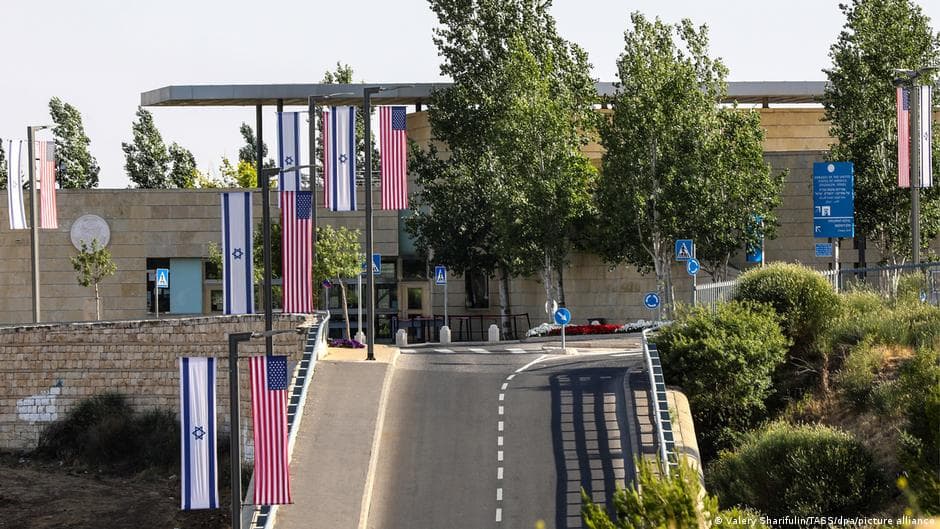
The United States on Friday authorized part of its embassy staff in Israel to leave "due to safety risks," amid escalating tensions in the Middle East. The US Embassy in Jerusalem said non-emergency staff and family members of embassy employees would be able to leave Israel following approval from the US State Department. It also said US citizens should consider leaving Israel while commercial flights are still available. US President Donald Trump has repeatedly threatened to strike Iran if ongoing negotiations on curbing its nuclear program fail and has sent a massive fleet of warships and aircraft to the region. Trump said Friday that he was frustrated by Iran's position in talks but added he had not decided whether to carry out an attack. "I'm not happy with the fact that they're not willing to give us what we have to have," the president told reporters on Friday. "I'm not thrilled." Iran has threatened to target American bases in the region if it is attacked. Tehran would also likely launch missile strikes against US ally Israel.Countries issue updated travel advice for Israel, Iran A number of countries have started withdrawing nonessential staff from parts of the Middle East and advising citizens not to travel to Iran. Germany's Foreign Ministry on Friday "urgently" advised against travel to Israel. "Travel to Israel and east Jerusalem is urgently discouraged," the ministry said on its website. The French Foreign Ministry also urged its citizens not to travel to Israel given the security situation. China's embassy in Israel advised its citizens to remain highly vigilant, "familiarize themselves in advance with nearby bomb shelters" and avoid going out, according to state media. China also told its citizens to evacuate from Iran "as soon as possible." Meanwhile, the UK Foreign Office said Friday that its embassy staff had been temporarily withdrawn from Iran. What's happening with the US-Iran talks? Trump said on February 19 that Iran must make a deal on its nuclear program in 10 to 15 days, otherwise "really bad things" would happen. Omani Foreign Minister Sayyid Badr Albusaidi, who is serving as mediator, was expected to meet with US Vice President JD Vance in Washington on Friday after a third round of nuclear talks ended in Geneva with no sign of a breakthrough. Iranian Foreign Minister Abbas Araghchi said that "success in this path requires seriousness and realism from the other side and avoidance of any miscalculation and excessive demands." He told state TV the talks "made very good progress" and that the next round would take place in "perhaps less than a week."US special envoy Steve Witkoff (C) and Jared Kushner hold a meeting with Oman's foreign minister in Geneva, who is mediating the nuclear talks with IranImage: Omani Foreign Ministry/AFP The US wants cuts to Iran's missile program and support for armed groups to be part of discussions. It also wants Iran to give up all uranium enrichment. Iran, meanwhile, is seeking the lifting of US sanctions, but says it has the right to enrich uranium. US Secretary of State Marco Rubio is scheduled to travel to Israel early next week for talks on Iran, according to the State Department. Additionally, technical talks at the UN's nuclear agency are expected to begin in Vienna on Monday. A previous attempt at negotiations collapsed in June last year when Israel and the US bombed several key nuclear facilities in Iran. At the time, Trump said the US strikes "obliterated" Iran's nuclear capabilities. He has not elaborated on whether the strikes were not as effective as he claimed or how Iran could have rebuilt any such nuclear capabilities in less than one year. US, Iran ramp up military posture amid Geneva nuclear talksTo view this video please enable JavaScript, and consider upgrading to a web browser that supports HTML5 video UN nuclear watchdog urges Iran to grant access to sites Meanwhile, a confidential report from the International Atomic Energy Agency (IAEA) said Friday that it had not been able to access Iran's nuclear sites that were affected by the US and Israeli attacks last June. That means the UN watchdog has not been able to confirm the size of Iran's stockpile or whether Iran has stopped its enrichment, according to the report. The IAEA's report named Isfahan as a place of interest because of a new enrichment plant thereImage: Planet Labs PBC/REUTERS The report urged Iran to allow inspections at sites where enrichment took place "without any further delay," saying it was "indispensable and urgent." The IAEA estimates that Iran had 440.9 kilograms (972 pounds) of uranium enriched to up to 60% purity — a technical step away from weapons-grade levels of 90% and well beyond the level needed for civilian energy production. That stockpile could allow Iran to build as many as 10 nuclear bombs, should it decide to weaponize its program, according to the IAEA. Tehran has always insisted its program is for civilian purposes. Edited by: Sean Sinico
Share this story