Foreign Policy
Trump’s Iran Battle Plan
Foreign Policy · Feb 24, 2026 · Collected from RSS
Summary
David Petraeus on the military options and intelligence likely being presented at the White House.
Full Article
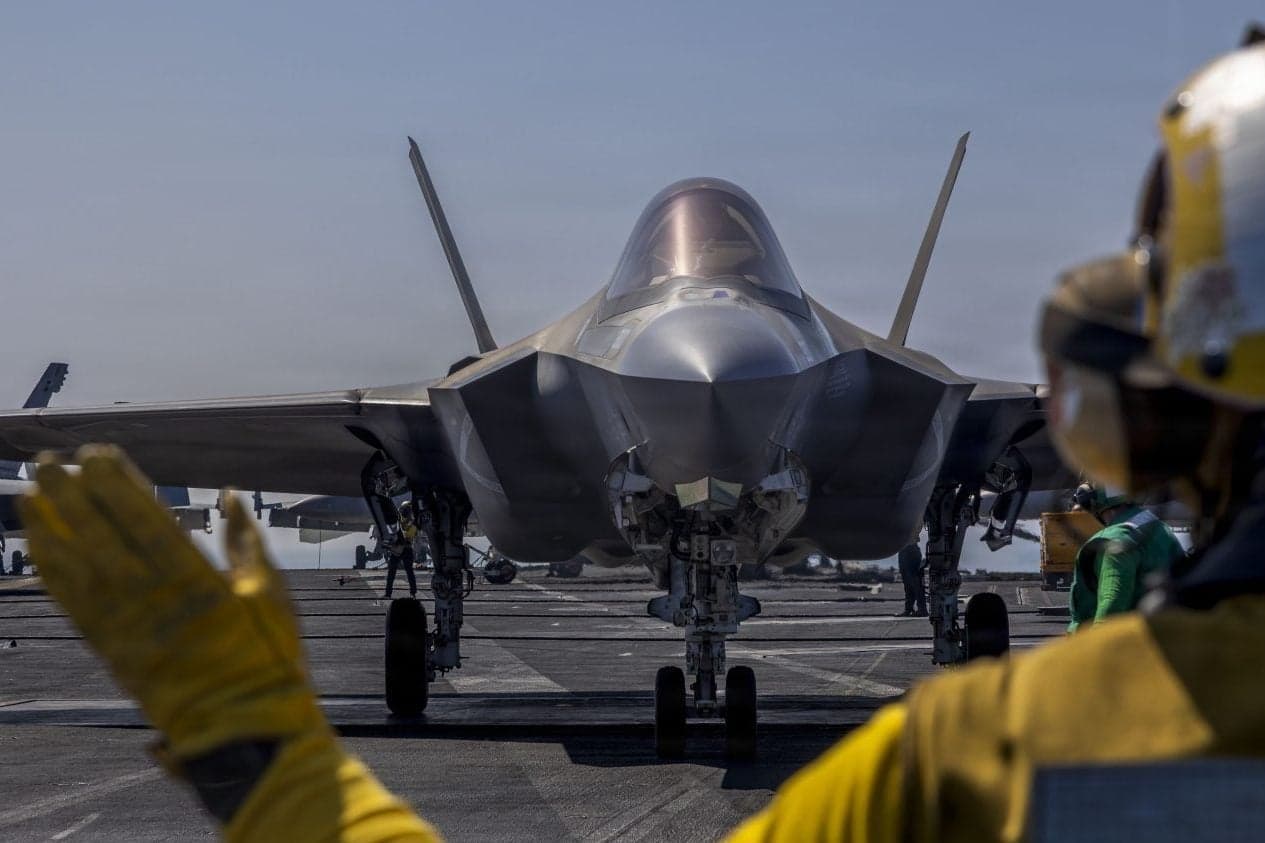
After a successful mission—militarily, at least—to capture Venezuela’s dictator last month, U.S. President Donald Trump is keeping the world guessing about whether he’ll launch a second attack within two months, this time on Iran. On the latest episode of FP Live, I explored the military options that Trump is likely receiving from his top advisors, with retired four-star Gen. David Petraeus, who ran U.S. and allied forces in the wars in Iraq and Afghanistan and later served as the director of the CIA. Subscribers can watch the full discussion on the video box atop this page or download the FP Live podcast. What follows here is a lightly edited and condensed transcript. Ravi Agrawal: Something quite unusual is playing out in the media this week. On Monday, Trump said that Gen. Dan Caine, the chairman of the Joint Chiefs of Staff, thought that U.S. military action on Iran would be “something easily won.” That spurred the New York Times and other outlets to report that Caine, in fact, has been saying there’s a high risk of American casualties and that a U.S. attack could negatively affect U.S. weapons stockpiles. What does it tell you that this kind of disagreement is playing out in public? David Petraeus: It tells us that somebody is leaking very sensitive conversations, and that’s interesting, because so far, this administration has been pretty disciplined about this. What it really tells us is that the chairman of the Joint Chiefs is doing his job, which is not to recommend whether to do an operation or not, but to provide options for achieving the president’s various objectives and identifying the risks associated with each of those options. In this case, he’s singling out uncertainty about something called the missile math: how many missiles and launchers the Iranians have left. And, of course, where are they? Because we’re going to have to go after them if we do a large strike. How many interceptors do we have left? We have used a lot of interceptors; we’ve given a number to Ukraine; we used a lot during the 12-day air war that Israel carried out, which we joined on the final day. Reportedly, one terminal high altitude air defense battery, a THAAD battery positioned in Israel and operated by American soldiers, shot $1.2 billion worth of interceptors because the Iranians were just hammering Israel with those. So there’s a concern about that. There’s a concern that one could get through. About 5 percent of the missiles aimed at Israel did get through. And I think there’s a concern that one could get through and hit one of our bases, a barracks or some location where the soldiers aren’t fully protected. There’s a concern about proxies in the region, that Hezbollah might do something in Lebanon. And of course, keep in mind that yesterday, we withdrew nonessential personnel from our embassy in Beirut. I suspect we may do the same in Baghdad, maybe Bahrain, other locations which might be targets. The Iraqi Shia militia supported by Iran have said they will take action against Americans, possibly against Israel as well. So there’s a number of unknowns here. And to be candid, we’ve been both exceedingly good in our military operations and, to some degree, lucky in what we’ve done. The [Nicolás] Maduro operation in Venezuela was much dicier than people realized because we had no one killed. We’ve not had a “Black Hawk down” kind of scenario so far, or a Desert One or Marine barracks blown up, as happened in Beirut in ‘83. All of these have been disasters in the past. And again, sometimes it’s just fortune that determines whether that takes place or not. Now the Iranians are essentially defenseless against air and missile attack. We believe the Israelis very impressively took down all of their sophisticated Russian-provided S-300 missile defense systems and many of the air defense batteries. Their air force is old—left over from the shah’s days. So if you fly above heavy machine-gun fire, probably 12,000 or 15,000 feet, what they have left should not be able to touch you. RA: So the U.S. military has been exceedingly good, as you put it, and yet you’re worried because fortune is important and luck could run out. That feels significant to me. I want to look at some of the military options that Trump is being presented with. You’ve advised the White House on these kinds of things before. Given that the U.S. has two aircraft carriers in the region, with some 200 fighter jets, all the missile defense systems you were describing, what are the options currently available with regard to Iran? DP: You could do a demonstration strike, to show them what they could receive if they don’t agree to a nuclear deal. You could conduct, or at least attempt, a decapitation strike to take out the supreme leader or other leaders. In fact, Israel did that quite impressively during the 12-day campaign. You could carry out a sustained air campaign to take down the missile force that they’ve tried to reconstitute, to go after anything that’s left over from the nuclear strikes, any place that they’re trying to rebuild. You could go after the mine-laying boats, because mining the Strait of Hormuz is another one of the contingencies for which we have to be prepared, or even drone locations from which they’ll launch drones across the strait or the Gulf. There’s a number of different actions that can be taken to do real damage to what military capacity they have left after the very impressive 12-day operation. Of course, keep in mind that there are 200 aircraft of all types: airborne early warning, jammers, command and control, refuelers, stealth fighters, F-15s. And you have ships in the Gulf as well that have hundreds of Tomahawk cruise missiles. So this is a very, very potent force that can do a lot of damage. What I’m not sure it can do, though, is bring about regime change. And of course, that’s the other element to this; President Trump said that help was on the way before the Iranian regime just crushed the demonstrators. This is an enormous regime. It’s not just the police, which are very robust. It’s the regime protection forces of the Islamic Revolutionary Guard Corps, Army, Navy, Air Force. They have the Basij militia, with national, provincial, district, municipality headquarters, and these are hundreds of thousands, maybe over a million, of essentially thugs and pipe swingers who will shoot the people. And we don’t see the cracks yet. There’s no figure stepping away from the regime who has the capacity to bring others with him. You have the son of the shah who is a bit of a rallying figure, but as a surrogate for “anything but this regime.” If we do go big, we need to go after their capabilities to retaliate, because that has the most catastrophic potential. But keep in mind that we don’t have the normal bases available to us for this operation. Gulf states are not that keen to see this happen. In fact, they have cautioned us. They’re happy that the Iranian capabilities were taken down, but they’re leery about what could happen even if the regime did fall. Everybody might applaud, but then what happens? How many millions of refugees will be on their doorstep? How much extremism will be exported? So you have a lot of unknowns and potential risks. RA: We’ve discussed some of the military options being presented to Trump. Put on your old CIA director hat for a minute. What kind of intelligence might the White House be relying on to inform it about Iran’s weaknesses? And what blind spots are they assessing at this moment? DP: All sources of intelligence. Agencies in our intelligence community will be mining every single type of intelligence: human intelligence, signals intelligence, cyber intelligence, even open-source intelligence, because everyone out there is a journalist. If they have a smartphone, they can take a photo or a movie and upload it onto social media. You’re trying to mine all that. You’re inside chat rooms, if you can be. There’s GEOINT [geospatial intelligence]. There’s all types of intelligence. Of course, I’m sure that we are very close with our Israeli counterparts: Mossad and Unit 8200, the cyber force. They did such an extraordinary job of setting up drone bases inside Iran during the 12-day air campaign which very precisely took out senior leaders of many of the security services and over a dozen of Iran’s most important nuclear scientists. So there’s that level of intelligence. But the unknown is: Where are the mobile launchers? Where are the missile stocks? Where are the missiles going to be launched from? You can trust that there’s a very networked air and ballistic missile defense picture that has been established. In that regard, our partners in the region—everyone works together. RA: Back when you were running U.S. and allied forces in the region, there were two aircraft carriers there. You commanded a very big military presence, and I imagine you’ve had to think about whether the U.S. military writ large is trying to be in too many theaters at once. When you see this current posture in the Middle East, what is your sense of how stretched the military is? DP: This is a very substantial portion of our ready naval forces, for example. They can’t be in all places for all people. We used to call this “allocating shortfalls.” There are certain assets that are “high demand, low density,” which run everything from aircraft carrier task forces to missile defense systems. The very important drones used to be on that list. The Pentagon’s job is to do a global assessment of where the needs are and then to allocate accordingly while noting that you never have all that you need to have, even on the best of days. There’s always a shortfall somewhere. I’ll bet you that even the Central Command commander is saying we need more of this or more of that. You’d have to look at his overall package. I’m sure that air refueling tankers are a very, very precious commodity because of the distances the aircraft will have to fly. Rat
Share this story