Gizmodo
Tesla Cybercab Program Manager Exits, Brags About Pushing the Boundaries of Safety
Gizmodo · Feb 26, 2026 · Collected from RSS
Summary
Elon Musk's xAI has also seen a number of departures.
Full Article
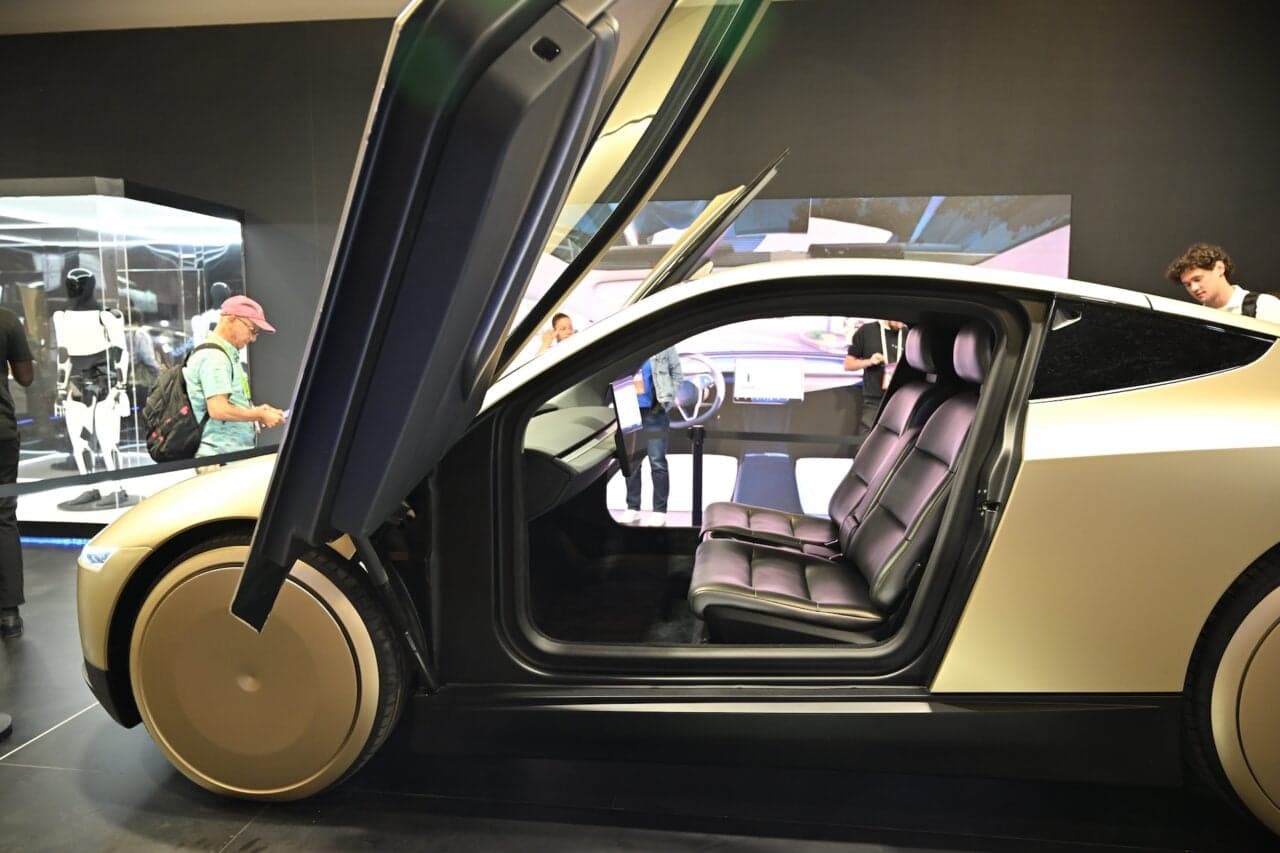
The program manager for Cybercab, Tesla’s autonomous taxi program (not to be confused with the Robotaxis already on the street), is leaving the company, according to a post on LinkedIn. His parting message is kind of funny, though probably not intentionally so. Victor Nechita wrote that after six years, he’s leaving to “start a new chapter back on the east coast,” in a LinkedIn post from Feb. 13. “What a journey it’s been, from interning on the Model 3 production line back in 2017 to becoming the Vehicle Program Manager of Tesla’s first purpose-built AV, the Cybercab,” wrote Nechita. But then Nechita’s post got a little weird. “Leading the team through the development of Cybercab has been a humbling experience, watching so many dedicated individuals develop a product that has pushed the boundaries of efficiency, safety, and affordability,” wrote Nechita. The phrase “pushed the boundaries” isn’t something that you’d typically want to hear when talking about safety. And it’s not really clear what it means to push the boundaries of efficiency and affordability. When was the last time you heard someone say their car was radically affordable? Nechita didn’t immediately respond to questions emailed on Thursday. Nechita’s departure notice occurred just three days before Tesla’s X account posted a photo of the first Cybercab rolling off the line on Feb. 17. The LinkedIn post from Nechita went largely unnoticed until it was spotted by EV news site Electrek on Thursday. Electrek notes that Tesla has had several high-profile departures in recent months, including Cybertruck program manager Siddhant Awasthi and Model Y program manager Emmanuel Lamacchia in late 2025. Elon Musk’s xAI has also seen many people leave recently, including at least half of the AI company’s 12-person founding team. Musk insisted the departures were due to a restructuring and that the structure of any company “must evolve just like any living organism.” But any time a prominent person leaves a company, there will inevitably be questions about why—especially when you’ve got a moonshot project like Cybercab. The Cybercab is Musk’s vehicle that only works if Tesla has solved the problem of completely autonomous driving. And there’s no evidence that it has done so yet. The Cybercab doesn’t have a steering wheel and lacks pedals, meaning that it must drive completely by itself. Or, under a less ambitious setup, it must be driven remotely. Musk’s Cybercab was first unveiled as a concept car in late 2024, and the billionaire insisted the vehicle would be available in 2-3 years. We’re hitting that timeline right now, and Tesla rolled its first Cybercab off the production line last week, albeit in a photo that obscures the actual car in a highly suspicious way. What’s going on with this photo? Were they trying to hide the vehicle? First Cybercab off the production line at Giga Texas pic.twitter.com/kY8vCqtrCA — Tesla (@Tesla) February 17, 2026 Even with a single car rolling off the production line, actually selling a Cybercab to a paying customer is another matter entirely. Electrek reports that the Cybercab is being built on AI4 hardware, which hasn’t been able to achieve unsupervised self-driving. The AI5 hardware won’t be available until mid-2027. Another big hurdle for selling the Cybercab to the public could be the hodgepodge of state and city rules about driverless cars that require a company like Tesla (or Waymo) to get certified for operation. Even if you received permission to drive your Cybercab in Austin, Texas, for example, what if you wanted to drive your car into a neighboring state? Would you run the risk of getting pulled over in neighboring New Mexico? The U.S. Department of Transportation is reportedly working on setting up a unified set of national regulations to streamline the process, but there’s still likely to be local pushback. We’ve seen that in places like San Diego, California, where Waymo wants to launch, while the local transit board unanimously voted to oppose it. Many Americans are concerned about the safety of autonomous cars, especially since a recent study showed that Tesla’s robotaxis are crashing at a rate four times higher than humans. But that’s with nothing more than souped-up Teslas driving along with human minders. The Cybercab is an entirely new thing altogether, and Musk promises it will be revolutionary. The question, as always, is whether Musk can actually deliver.
Share this story