Gizmodo
Sam Altman’s Creepy Eyeball-Scanning Verification Service Is Coming to a Gap Store Near You
Gizmodo · Feb 26, 2026 · Collected from RSS
Summary
Keep your eye out for the orb.
Full Article
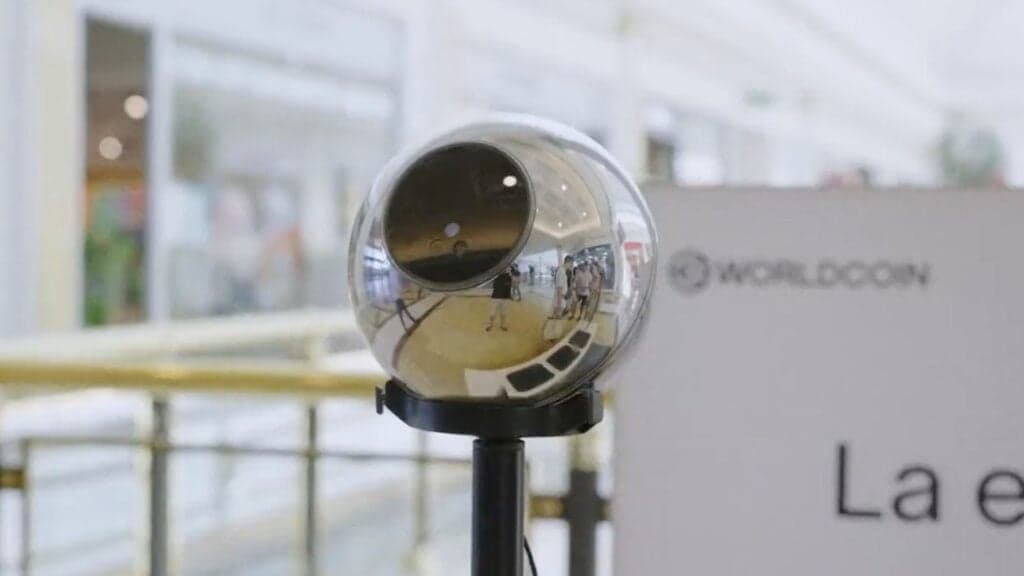
Worldcoin, aka World Network, aka World, is trying to take over the… well, the world. Up until now, the creepy verification tool that requires people to scan their eyeballs to confirm their identity has mostly toiled on the very outer edges of mainstream awareness. But, according to the Wall Street Journal, the Sam Altman project believes the startup has reached something of a tipping point and expects that the retail and brand partnerships it has inked in recent years will launch it to prominence as the go-to tool for people to prove they are human. As a refresher, World’s pitch is that it will provide “universal proof of human” by scanning a person’s iris and turning their eye scan into a unique identifier. That personalized proof of humanity, called World ID, would then be used to confirm identity in any scenario in which that might be necessary—like at a bank or when signing onto a social media platform. (Has Sam Altman created a solution to a problem he also caused by proliferating AI? Yes. Yes, he has.) There is also a crypto element, called Worldcoin, that has been used as an incentive to get people to sign up for the platform, though it has mostly been sidelined in the company’s pitch. World has quietly been amassing customers, forming partnerships with platforms like Tinder and pitching itself to Reddit. But, per WSJ, it seems its real asset in adoption is going to be retailers. According to the report, a Gap store in San Francisco has started signing people up for World IDs in-store, having them scan their eyes in one of World’s trademark orbs at checkout. Trevor Traina, chief business officer at World, told the Journal, “I think we’re right at the precipice right now of the moment where we don’t have to say anything, where our partners are going to do all the talking.” In other words, World is going to hang out in the background and let other companies use the trust they’ve built with their customers to get them on board. That’s probably a better strategy than putting World front and center, because the general response to the service has generally been that people are creeped out by it. Living in a world where AI is good enough at mimicking human behavior that it’s hard to differentiate between the two, but that alone is not enough to make most people willing to hand over an eyeball scan to a corporation. Up until now, World has reportedly amassed more than 33 million users, about 18 million of whom have verified their identity and received a World ID. But just 1.1 million of those users are in North America, according to WSJ. That’s because World initially targeted people in developing nations to sign up for the app, promising them Worldcoin if they trade their eye imprint—a practice that some of the people first asked to sign up for the platform called exploitative and deceptive. It’s not hard to see why they would think that. One way to view World’s scheme is that they will incentivize you to sign up by offering cryptocurrency. Another would be that you are selling your unique biometric identifier to a faceless corporation in exchange for an effectively valueless virtual coin. That one seems like sort of a hard sell.
Share this story