Foreign Policy
From Bad to Worse in Northeast Syria
Foreign Policy · Feb 25, 2026 · Collected from RSS
Summary
Some 20,000 Islamic State members and families are now at large, and no one has a plan for what to do about it.
Full Article
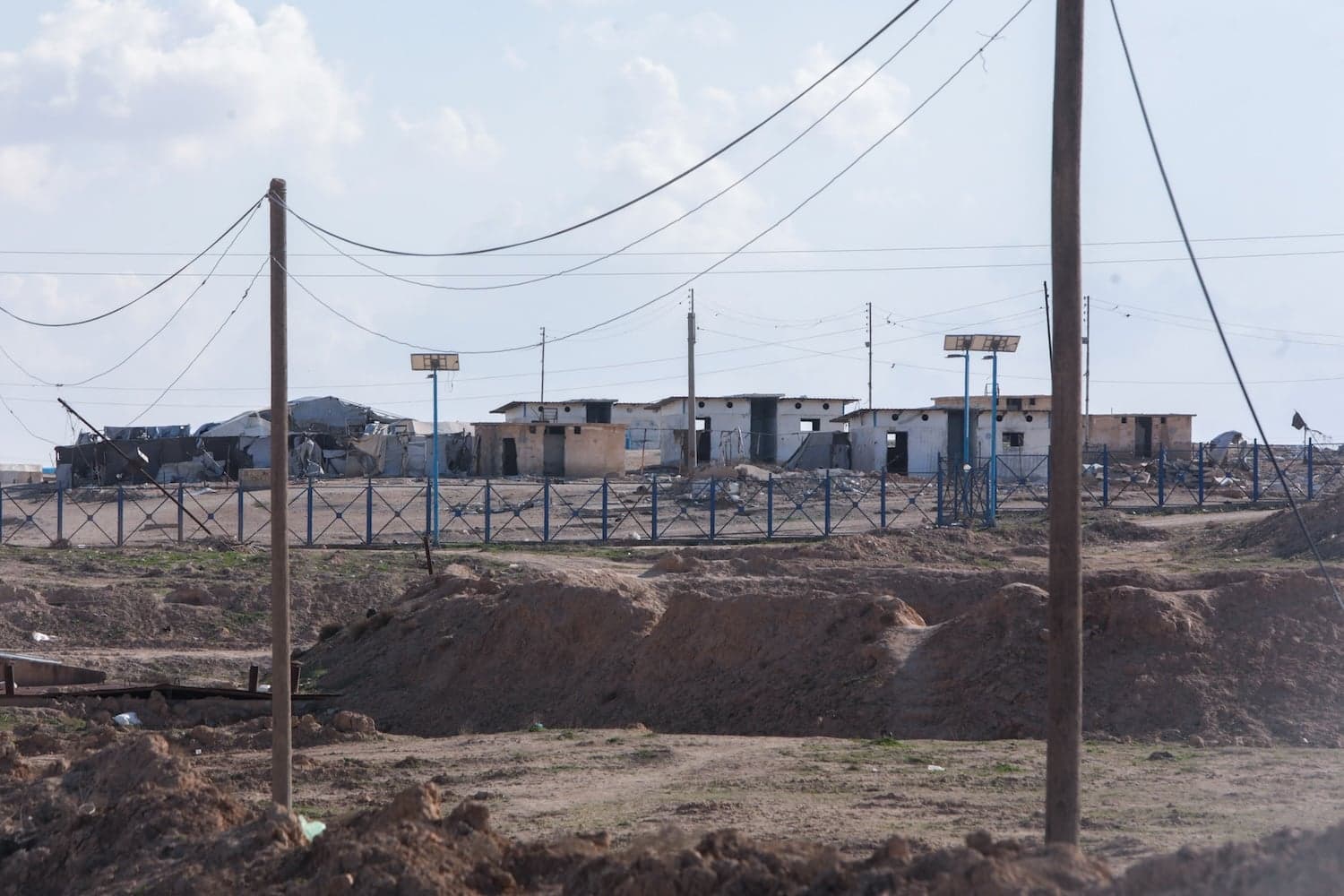
Syria has just witnessed a great escape. Just weeks after a breakout from an Islamic State detention facility in the country’s northeast, more than 20,000 people from al-Hol detention camp, which is known for holding Islamic State-affiliated families, are now unaccounted for. The delayed responses of the Global Coalition Against Daesh, the Syrian government, and the United Nations—all of which helped operate al-Hol—have done little to quell mounting security and humanitarian concerns. The absence of transparency about this fiasco threatens not only regional stability but also the lives and futures of those whose whereabouts remain unknown. The threat posed by these 20,000 escapees varies. Many were victims of the Islamic State, women and children who were swept up in its rapid rise. Some are committed radicals, eager to resurrect the caliphate. Others fall somewhere in between. Now, all of these people are either abandoned or at large. The Syrian government, which is now nominally responsible for their fate, has not provided any sort of documentation or offered clear repatriation or reintegration plans. Among other things, this means that thousands of foreign citizens who may be subject to criminal charges in their home countries will likely quietly make their way back home in the coming months—or simply disappear. If international actors don’t take action, and there is every reason to fear that they won’t, the result will be a humanitarian disaster for many civilians and a growing terrorist threat from a smaller number of radicalized individuals. How did we get here? In 2014, the Islamic State declared its self-styled caliphate in Iraq and Syria. Across the region, thousands of people either willingly joined the group or were forced into taking some role within its so-called state. More than 40,000 foreigners traveled to join the group from across the world or were born there after a parent’s arrival. Then, following the caliphate’s collapse in 2019, the Syrian Democratic Forces (SDF)—backed by the Global Coalition Against Daesh—implemented a series of emergency detention measures. Some 10,000 men and some teenage boys were moved into detention facilities funded by the U.S. Defense Department. Separately, tens of thousands of mostly children and women were moved into detention camps. Most ended up at al-Hol camp, which swelled to 70,000, with a small number later being transferred to Roj camp. For the past seven years, these detention sites operated under what the U.S. military bluntly calls SNAFU: Situation Normal: All F*cked Up. The detention facilities and camps existed in a prolonged state of legal and political limbo, managed by the SDF, a nonstate actor with neither the legal authority to deport foreign nationals nor the capacity to conduct credible trials. Many governments around the world were slow—or unwilling—to repatriate their citizens, leaving tens of thousands in indefinite detention without charge or trial, and children suffering for the sins of their parents. As conditions steadily deteriorated across detention sites, including al-Hol, both the security risks and the humanitarian suffering deepened. Throughout it all, the Global Coalition Against Daesh continued to fund and support the system without articulating a clear or lawful endgame. The collapse of the Assad regime at the end of 2024 presented the incoming Trump administration with an opening to advance a long-signaled objective: withdrawing from Syria. After cutting funding to counter-Islamic State activities, President Donald Trump’s team encouraged the U.N. to assume administrative control of al-Hol and Roj camps while pressing for reconciliation between the SDF and the new government in Damascus. Simultaneously, Washington urged the Syrian government not only to formally join the Global Coalition to Defeat Daesh—which it ultimately did—but also to assume responsibility for Islamic State detention facilities and camps, despite the new regime having expressed neither the capacity nor the willingness to do so. Even under ideal circumstances, a handover from the SDF to Damascus of detention facilities holding thousands of men accused of Islamic State affiliation, as well as al-Hol and Roj detention camps, would have been extraordinarily complex. What actually happened was close to a worst-case scenario. After weeks of fighting, there was a prison break at al-Shaddadi prison on Jan. 19. Roughly 200 militants escaped, though a majority were later recaptured. Separately, Syrian army forces moved on al-Hol on Jan. 20, prompting the SDF to abandon its positions under fear of escalating violence. That created a vacuum between the SDF’s withdrawal and Damascus’s consolidation of its own control. Misinformation swirled around this hourslong gap. In exclusive statements given to one of the authors, a U.S. Central Command spokesperson—Navy Capt. Tim Hawkins—said, “The U.S. military closely monitored the situation at Al-Hol and observed no displaced persons or detainees departing the camp prior to Syrian government forces arriving.” Yet other sources suggested that hundreds may have escaped in this transition. Confronted with the risk of further breakouts, the U.S.-led coalition moved 5,700 male detainees from SDF-run facilities to Iraq rather than risking losing them altogether. This population included Syrians, Iraqis, and foreign nationals, creating a host of legal complications. Meanwhile, the coalition failed to articulate a strategy for the approximately 25,000 individuals who remained in al-Hol and Roj. After taking control of al-Hol, the Syrian government announced plans to close it, leaving the status of their inhabitants dangerously undefined. As a result, the situation on the ground has gone from SNAFU to FUBAR, or F*cked Up Beyond All Recognition. Reports in recent days indicate that al-Hol is empty. Not in a systematically organized way, but through chaos. Videos circulating online have shown vehicles arriving at al-Hol and leaving with families of suspected militants, with no guards in sight. Reports have circulated describing documents of residents being destroyed. Fighting broke out in the camp on Feb. 11 between remaining residents, forcing the U.N. and other nongovernmental organizations to suspend operations. By Feb. 15, Gonzalo Vargas Llosa, the U.N. refugee agency representative in Syria, belatedly stated, “UNHCR has observed a significant decrease in the number of residents in Al-Hol camp in recent weeks.” This is an understatement, as it is now estimated that up to 20,000 people previously held in al-Hol are gone. For years, the SDF, U.N., and U.S. government have called on countries to address indefinite detention in northeast Syria—and warned of the consequences of neglecting this issue. The chaos of the past few weeks was both predictable and preventable. Occurring on the watch of the Syrian government, it raises serious questions about whether this release was the result of intent or ineptitude. Both scenarios are worrisome. While not everyone in al-Hol was a committed Islamic State extremist, many were. Still more have been exposed to a harsh, heavily radicalized environment for seven years, and these civilians will likely require some support transitioning back to their homes. Two divergent regional approaches have emerged in this regard. Syria has seemingly focused on thrusting its citizens back into society in a haphazard manner. Many Syrians previously held in al-Hol have already reportedly returned to their families without proper documentation or support. Iraq has emphasized a formalized rehabilitation and reintegration program for its citizens. Some Iraqis also remained in al-Hol camp. The Iraqi government—which has been in the process of bringing back more than 22,000 of its citizens since 2021—repatriated 191 nationals who wanted to go home last week. Which national approach will be more effective in the long term is yet to be seen, but Iraq’s undoubtedly looks more promising at this stage, even if imperfect. For the few hundred residents—Syrians and Iraqis—that did not leave the camps, the Syrian government implemented a plan this week to send them to a repurposed camp for internally displaced people called Akhtarin in Aleppo province. The UNHCR is supporting this effort, which ultimately aims to reintegrate this population. But it is not clear what will happen to those at Akhtarin who do not voluntarily return to their homes. Already 1,200 Iraqis have reportedly said they do not want to go to Iraq due to outstanding warrants. As for the approximately 20,000 people who disappeared from al-Hol, they have simply been forgotten. These include citizens from 40 countries, many of whom have reportedly moved around Idlib and Aleppo. Some foreigners are trying to return home. Others who might be facing criminal charges in their home countries are unlikely to return. Finally, those who are still committed to the Islamic State may try to rejoin local jihadi groups or even move internationally to other hotbeds of jihadi activity. There is a long history of foreign fighters (and in some cases, their families) moving from conflict to conflict. Unfortunately, there is no shortage of jihadi hot spots in the world today to consider. The smaller Roj camp—which is still under the control of the SDF—also holds around 2,000 foreigners, including many Westerners. Questions remain over the future of these populations, but some are taking their fate into their own hands. A group of 11 Australian families in Roj camp attempted to return home with assistance from their relatives, but they were returned back to the camp due to what news reports described as a “coordination problem” with Damascus. Australia said it would not help in their repatriation but would likely have to act if its citizens arrived at an embassy, or indeed back in Australia. One Belgian woman who recently arrived in her home country unexpectedly was immediately ar
Share this story