bursa.ro
Clustered Story
Fiscal austerity and debt - financed investment : the economy starts the year amid protests and external borrowing
bursa.ro · Feb 26, 2026 · Collected from GDELT
Summary
Published: 20260226T003000Z
Full Article
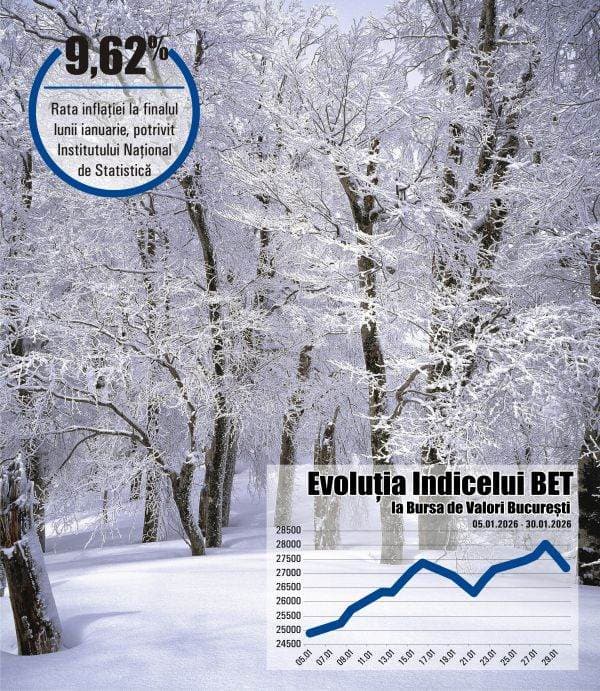
The new year started under the pressure of the fiscal measures taken by the Bologna government in 2025 and according to which, from January 1, 2026, local taxes and duties increased. According to the property and vehicle tax reform, these taxes increased everywhere in the country by 70-80%, with the mention that the amounts collected from this year remain entirely in the local budget, because the state budget can no longer support transfers in an economy suffocated by deficit. The increase in local taxes and fees has sparked new social unrest, which has resulted in protests by citizens in cities and communes across the country, dissatisfied with the fact that they have to pay almost double this year for real estate and cars they own. At the same time, in the first month of the year, the Government took measures to boost investments financed from European funds, also encouraged by the budget deficit recorded at the end of last year, of 7.65%, compared to 8.4% negotiated with the European Commission, but it also took measures to prevent fraud in allocations from the National Recovery and Resilience Plan (PNRR), through corrections, recoveries and short reporting deadlines to DLAF, OLAF and the European Public Prosecutor's Office. However, in the background, the macroeconomic picture remained tense: huge public investments, increasingly financed by grants and PNRR, but a still large deficit, high interest rates, still painful inflation in bills and services, of 9.62% at the end of January, prudence on the part of the National Bank of Romania and an open competition of the state for the savings of the population through the Treasury and Fidelis, a sign that the need for financing still remains quite high. We mention that, following the first Fidelis edition of this year, the state budget acquired revenues of 1.87 billion lei in January.The main good news of January was the approval by the European Commission of the projects proposed by the Government for financing through the SAFE mechanism, from which our country has been allocated the amount of 16.68 billion euros. These are not grants, but loans with the guarantee of the European Commission, which benefit from an AAA rating. The loans are for 45 years, with a grace period of 10 years, but the amount must be spent quickly, by the end of 2030, given that the rules governing the projects are strict regarding joint procurement, transparency, speed of contracting and localization.• The Government explained the new local taxation systemOn January 11, the Government came forward with information on the property tax reform and the new local taxes. According to the data presented, until that moment, our country collected only 0.55% of GDP from property taxes, compared to 1.85%, the EU average, there were large disparities between localities, and for individuals the tax did not take into account the market value; over a third of the amounts were not collected, and the failure to update with inflation further eroded revenues. Therefore, in 2026, the application of the new amounts brings an estimated increase in property tax revenues of approximately 3.7 billion lei, i.e. over 30% compared to 2025, broken down as follows: an increase of 1.42 billion lei for buildings, an increase of 1.09 billion lei for land and an addition of 1.18 billion lei for cars, motorcycles or motor vehicles, with the mention that all this money remains in local budgets.According to the reform in the field of local taxes and fees, the tax on buildings and land is built as an accelerated transition to taxation at market value, announced as a target for January 1, 2027. Until then, the tax base was recalibrated, by eliminating outdated historical values, and increased by approximately 70%, with a uniform technical reference: 2,677 lei/sqm, taxable value (approximately 535 euros/sqm), described as a realistic national average construction cost for a home with standard finishes, without land, VAT or developer's margin. Unfortunately, the increase estimated by the Government at 70%-80% represents only an average, in practice there are occasional cases where the increase in taxes and fees has far exceeded this level, due to the disappearance of the reduction coefficients that thinned the tax base for old buildings and the disappearance of the additional reduction for apartment buildings. Moreover, according to the legislation in force, there is the possibility for a local council to increase local taxes and fees up to 100% (compared to 50% previously), based on economic, social, urbanistic criteria.• The ceiling of the "Medium Term Notes" Program, increased to 99 billion eurosBeyond taxation, the rest of January shows a Government that divides its agenda between punctual social measures, forced digitalization, investments, stricter rules and external repositioning.On January 14, because the National Palliative Care Program was not implemented, the Executive decided on a 12-month transitional period, so that patients would not be blocked, allowing palliative care at home, in outpatient and/or day hospitalization, through the basic package. In the same meeting, the daily food allowance for vulnerable categories in social services increased from 22 lei to 32 lei per day, an increase that, in real terms, recognizes the inflationary pressure and the operating costs of the social system.In parallel, the Government established prioritization criteria for transfers from the "Anghel Saligny" National Investment Program in 2026, relying on the 20% co-financing assumed by the beneficiaries and on the acceleration of advanced projects, and approved the indicators for the connectivity road between A8 and DN28, the Podu Iloaiei bypass option, connectivity financed with 141.2 million lei, with VAT, through the 2021-2027 Transport Program and the state budget.In the meeting of January 30, the Government decided to increase Romania's capital at the Black Sea Trade and Development Bank by 100,256 shares, for a total value of 115,294,400 euros, with the payment of the paid-up capital (34,588,320 euros) in 8 installments, starting with 2027, in order to maintain voting power.The Executive also adopted the transposition of the DAC directive into the Fiscal Procedure Code for automatic exchange of information and the implementation of GloBE reporting for groups with consolidated income of at least 750,000,000 euros and clarified the 50% reduction in property tax for residents of the Danube Delta and Apuseni Mountains Biosphere Reserve (for the home, the related land and a single means of transport), with regularization mechanisms for those who had already paid.In the same meeting, the members of the Bolojan Cabinet came to the support of individuals with commercial activities and established a transition period for RO e-Factura until June 1, 2026, for those identified for tax purposes by CNP, plus the debureaucratization of the registration of secondary offices and rules for designating a "main" secondary office for tax payment. Also on January 30, the Government ordered new measures against PNRR fraud, establishing percentage reductions and financial corrections proportional to the severity of the violations, including for private beneficiaries without the obligation of public procurement, corrections of 5,000-15,000 lei, recovery of amounts and obligations of immediate reporting to DLAF, OLAF, the European Prosecutor's Office and a 10-day deadline for updating management and control procedures.Another measure approved in that meeting was the introduction, in the field of urban planning, of requests and opinions communicated electronically, with a certain date, the elimination of unjustified fees for public works opinions, as well as rules against arbitrary refusals and numerical limitations, including on digital platforms, in an attempt to reduce administrative blockages that suffocate investments.And, because the need to finance the deficit is increased for the state budget, the Government increased the ceiling of the "Medium Term Notes" Program from 90 to 99 billion euros, explaining the need for flexibility and constant presence on foreign markets.• The state borrows from the populationThe financial balance was fragile in the first month of the year and strained by the ambition of public investments, inflationary pressure and the prudence of monetary policy, and the signals transmitted by the Ministry of Finance, the National Institute of Statistics and the National Bank of Romania outlined the image of an economy that is moving forward, but with the handbrake partially pulled.The Ministry of Finance has drawn attention to the need for financing this year, since January 9, when it published the list of significant public investment projects, prioritized for the current year, a list that includes 195 projects, valued at 457.7 billion lei, focused on road, railway, health, urban transport and water management infrastructure. The A7, A1 Sibiu-Piteşti and A8 motorways, the Caransebeş-Timişoara-Arad and Braşov-Sighişoara railway modernizations, regional emergency hospitals, the extension of Metro Line 6 to Henri Coandă International Airport and coastal protection works are presented as engines of development, and the message sent by the Ministry of Finance is clear: investments must become the main vector of economic growth and structural modernization. The same logic of resource mobilization is found in the Ministry of Finance's offensive on the government securities market for the population. This year's first edition of the Tezaur program was launched on January 12, with non-taxable annual interest rates of up to 7.40% for maturities of 1, 3 and 5 years, in a context in which bank yields remain under pressure and classic savings are losing ground to inflation. Just two days away, the first edition of the Fidelis program in 2026 raised the stakes: interest rates of up to 7.50% in lei and 6.20% in euros, accessible to both
Share this story