federaltimes.com
Bills seek to improve VA benefits for 9 / 11 survivors , other exposures
federaltimes.com · Feb 24, 2026 · Collected from GDELT
Summary
Published: 20260224T003000Z
Full Article
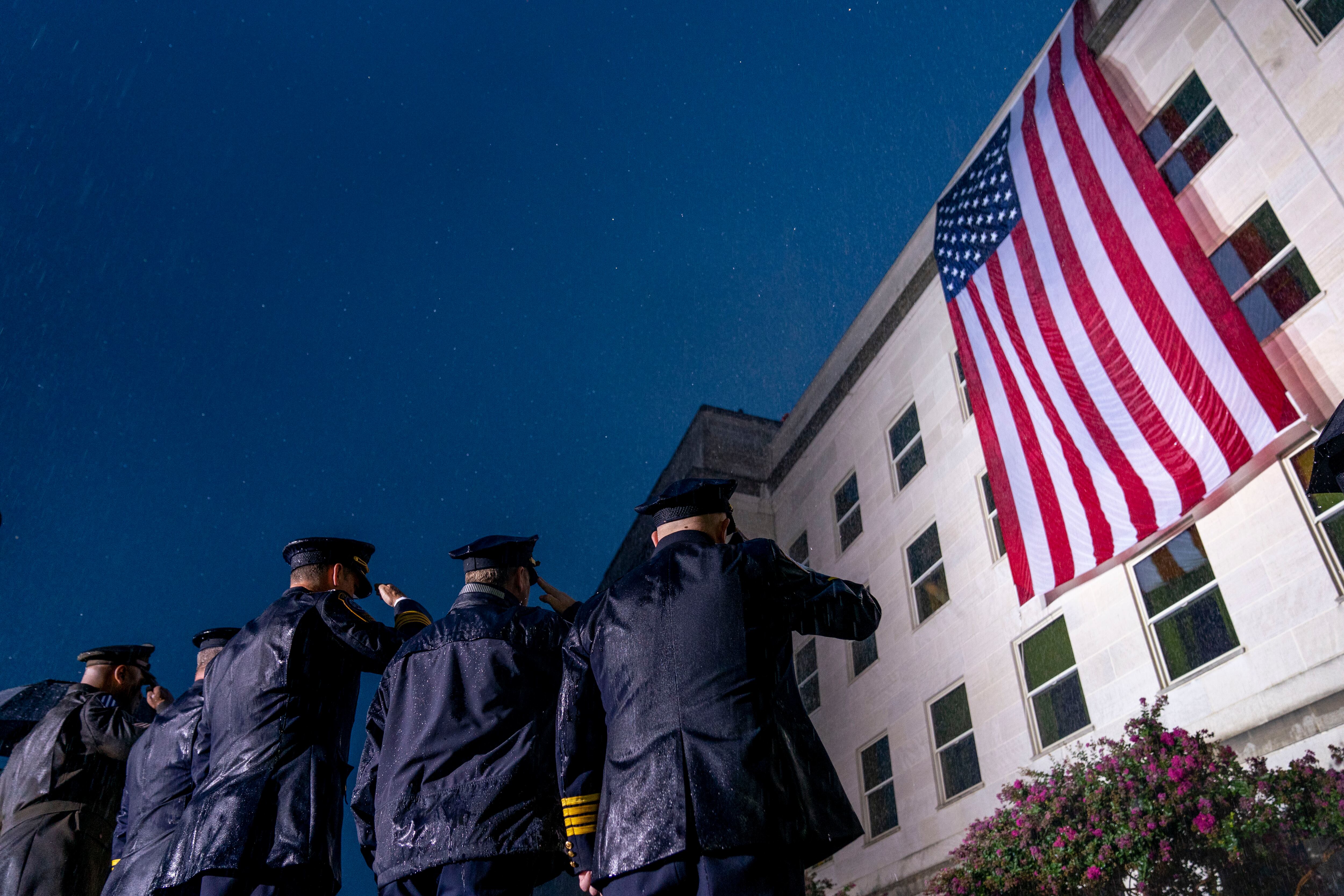
Service members sickened by hazardous exposures at the Pentagon on 9/11, as well as some exposed to radiation while serving — without related documentation — would be eligible for broader access to Veterans Affairs benefits under several bills being considered by Congress. A House subcommittee on Tuesday discussed proposed legislation on illnesses linked to service-connected exposures as well as extended benefits for spouses whose veteran dies from service-connected conditions. The legislation discussed by the House Veterans Affairs Subcommittee on Disability Assistance and Memorial Affairs included: H.R. 5339: A bill that would expand health care and compensation to service members who reported to duty on and after Sept. 11, 2001, through November 2001, when the building was declared safe.H.R. 4469: A proposal that would prohibit the Department of Veterans Affairs from requiring veterans to provide a documented dosage amount for radiation exposure.H.R. 1685: A plan to extend compensation to surviving spouses of veterans with amyotrophic lateral sclerosis, or ALS. If approved, the bills could provide thousands of veterans and spouses with access to VA health care and disability compensation. The Pentagon 9/11 bill, known as the Susan E. Lukas 9/11 Servicemembers Fairness Act, would extend PACT Act benefits to those in the building in the weeks following the terrorist attack. Lukas, a retired Air Force lieutenant colonel, has chronic respiratory issues and fibromyalgia linked to exposure to asbestos, dust and other matter dispersed during the impact and fireball when American Airlines Flight 77 crashed into the building’s E Ring. During an interview with Military Times on Wednesday, Lukas recalled going into work on Sept. 12 and leaving footprints in the fine dust distributed throughout the building by the ventilation system. “We obviously understood, there was the fire, there was the jet fuel, there were the plastics, there was the asbestos,” Lukas said. “We did realize that there were things burning, but we really didn’t think about toxic exposures, whether we should be wearing masks.” The bill, which has bipartisan support from six lawmakers, would provide affected veterans an expedited pathway to receive VA health care, if they don’t already have it, and disability compensation for conditions connected to exposure. The cohort of service members, which Lukas estimates number roughly 10,000, do not qualify for compensation under the World Trade Center Health Program or the PACT Act, the landmark legislation that extended health care and benefits to more than a million veterans exposed to hazardous materials while serving in Iraq, Afghanistan and elsewhere overseas. The bill that would prohibit the VA from requiring veterans to provide a dose estimate for their exposure to radiation, the PRESUME Act, is sponsored by Rep. Dina Titus, D-Nev. Geared toward veterans of the Cold War who participated in classified testing, the bill would eliminate the requirement that these “atomic veterans” prove a certain radiation dose to access benefits. “Veterans were often exposed without their knowledge and today they are asked to furnish documentation that is controlled entirely by the government,” Titus said during the hearing. “When the government controls all the evidence, veterans shouldn’t bear the burden of proving the impossible.” The Justice for ALS Veterans Act, H.R. 1685, would extend VA Dependency and Indemnity Compensation to surviving spouses of all veterans who die from the devastating disease. According to bill sponsor Rep. Brian Fitzpatrick, R-Pa., service members are twice as likely as the general population to get the illness and die within two to five years of diagnosis — short of the eight-year disability threshold required to receive DIC from the VA. “It’s imperative we close this loophole that has prevented surviving families from obtaining support,” Fitzpatrick said during the hearing. VA officials at the hearing addressed the legislation. On the Justice for ALS Veterans Act, the VA supports it, provided there is a way to pay for it, according to Jennifer Bover, executive director of the Veterans Benefits Administration. But, Bover added, the department takes issue with part of the bill that would provide DIC benefits for other unnamed conditions with mortality rates similar to ALS. “The concept of ‘high mortality rate’ lacks a standardized government definition as there is not a universal set of metrics to define this concept,” Bover said. The VA also does not support the PRESUME Act, because, officials said, proving dosage is not a requirement for the VA to grant service connection. According to James Smith, the VA’s deputy executive director for policy and procedures for compensation service, a veteran who can prove they participated in a radiation risk activity and has a diagnosed radiation-related illness would qualify. The VA also does not support the Pentagon 9/11 exposures bill, according to Smith, because the covered conditions listed in the legislation are “too broad.” “We could be more specific with the conditions that potentially have been caused by whatever toxic [substances] may have been present ... in that space,” Smith said. “As an organization we support identifying those exposures and making sure we are taking care of veterans. However, there needs to be more research in this area.”Subcommittee chairman and former Navy SEAL Rep. Morgan Luttrell, R-Texas, noted that the PACT Act spells out a list of illnesses that are connected to airborne environmental hazards. “I expect movement on this one,” Luttrell promised. “This is absolutely ridiculous, first and foremost. As far as the Global War on Terror, they were the first ones to feel it. And for them to not be included...”The pieces of legislation debated by the subcommittee on Tuesday have a way to cover their costs. Luttrell promised to work with the sponsors to offset cost so they could advance the bills to the House Veterans Affairs Committee. About Patricia KimePatricia Kime is a senior writer covering military and veterans health care, medicine and personnel issues.
Share this story