Climate Cooling Paradox
High Confidence
The Cooling Trap: How Air Conditioning Will Accelerate Climate Action Demands Through 2050
7 predicted events · 12 source articles analyzed · Model: claude-sonnet-4-5-20250929
The Emerging Crisis: A Self-Reinforcing Climate Feedback Loop
A groundbreaking study from the University of Birmingham has revealed a troubling paradox that will likely dominate climate policy discussions for the next quarter-century: the very technology designed to protect people from rising temperatures may significantly accelerate global warming itself. According to research published in Nature Communications and reported across multiple sources (Articles 1-12), air conditioning usage could generate up to 8.5 billion tonnes of CO2 by 2050 in the worst-case scenario—exceeding the current total annual greenhouse gas emissions of the United States (5.9 billion tonnes CO2-equivalent). Even under a moderate emissions reduction scenario (SSP2-4.5), cumulative emissions from cooling systems between 2010 and 2050 could reach 113.3 billion tonnes of CO2-equivalent.
Current Situation: Rising Temperatures Meet Rising Demand
The study led by Yuli Shan identifies a dangerous feedback mechanism now unfolding globally. As climate change increases average temperatures and the frequency of heat waves, more individuals, businesses, and institutions are installing air conditioning systems. This trend extends beyond residential settings—offices, factories, and workshops worldwide are increasingly being equipped with cooling technology (Articles 4, 7, 9). The research combined multiple datasets and all five IPCC emissions scenarios to project the climate impact of this cooling surge. Critically, the study reveals that temperature rise alone doesn't fully explain the proliferation of air conditioning—economic development and changing lifestyle expectations also drive adoption (Articles 3, 5, 10).
Key Trends Pointing Toward Future Developments
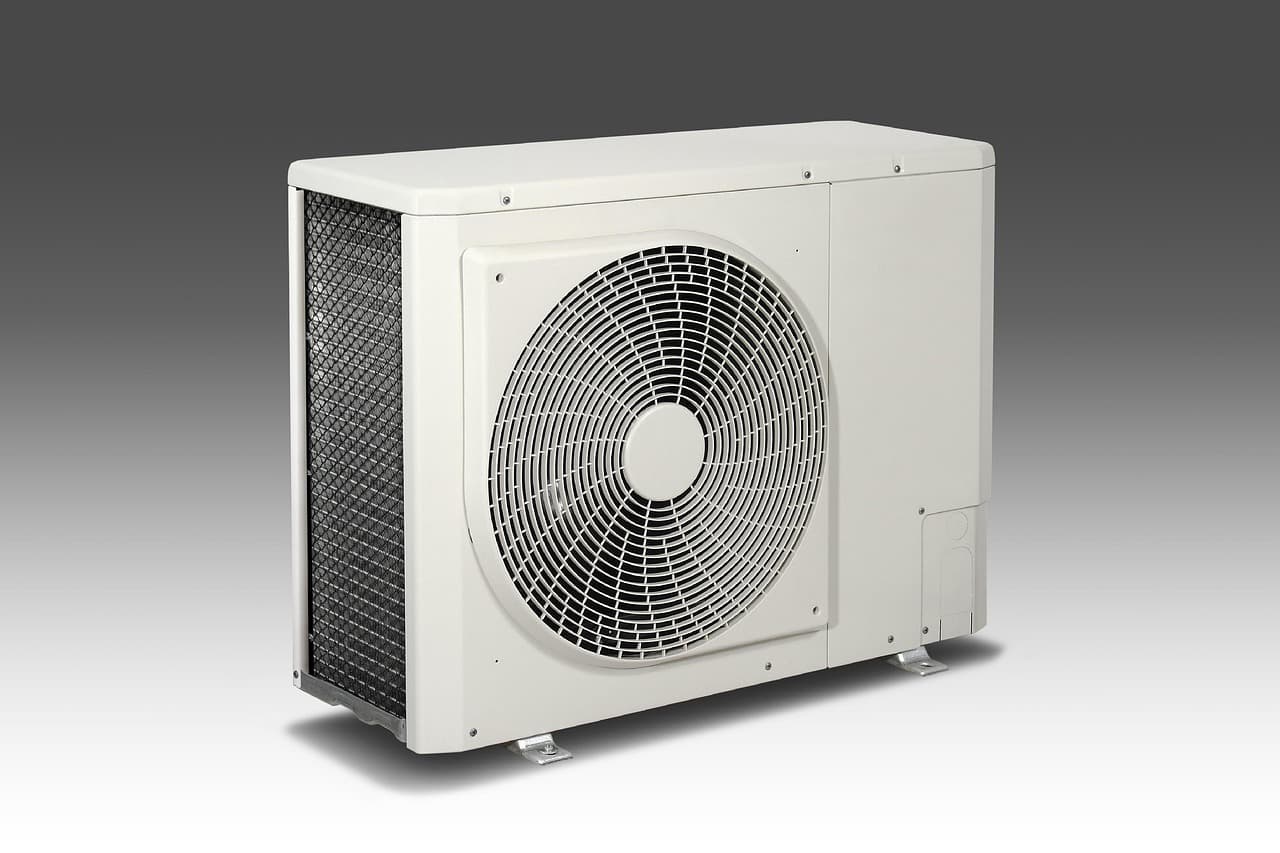
### 1. The Geographic Shift in Cooling Demand The image accompanying several articles (1, 4, 6) showing air conditioning units on the Economic Ministry building in New Delhi is no accident. Emerging economies in hot climates—particularly in South Asia, Southeast Asia, Africa, and Latin America—represent the frontier of air conditioning adoption. As these regions develop economically, hundreds of millions of people will gain access to cooling technology for the first time. ### 2. Energy Grid Stress and Peak Demand Challenges Air conditioning creates concentrated energy demand precisely when it's hottest—creating summer peak load challenges that will strain electrical grids increasingly powered by intermittent renewable sources. ### 3. The Technology Efficiency Race The enormous projected emissions range (from moderate to worst-case scenarios) suggests that technology efficiency improvements and energy source transitions will be critical variables determining actual outcomes.
Predictions: What Will Happen Next
### Short-Term (2026-2028): Policy Recognition and Initial Responses The publication of this research in early 2026 will catalyze immediate policy attention. International climate negotiations—particularly at COP meetings—will begin explicitly addressing cooling as a standalone climate challenge rather than a peripheral concern. Expect to see: - **New cooling efficiency standards** proposed by major economies and international bodies - **"Cooling action plans"** incorporated into Nationally Determined Contributions (NDCs) under the Paris Agreement - **Increased research funding** for alternative cooling technologies, passive cooling architecture, and district cooling systems The timing is significant: with the 2030 climate targets approaching, policymakers will recognize that unmanaged cooling demand could undermine emissions reduction efforts across all other sectors. ### Medium-Term (2028-2035): Regulatory Transformation and Market Disruption As summer heat records continue breaking and cooling demand surges, governments will implement increasingly stringent interventions: - **Mandatory efficiency standards** will eliminate the least efficient air conditioning units from markets, similar to the phase-out of incandescent light bulbs - **Building codes** will be revolutionized to require passive cooling design, superior insulation, and heat-reflective materials as prerequisites for construction permits - **Time-of-use electricity pricing** will become standard, financially penalizing air conditioning use during peak demand periods - **Refrigerant regulations** will accelerate, targeting not just energy consumption but also the high global-warming-potential gases used in many current systems Developing nations will face particular pressure and will likely demand **technology transfer mechanisms and financial support** for cooling transitions as part of climate justice frameworks. ### Long-Term (2035-2050): System-Level Transformation By the 2040s, the cumulative impact of policy interventions, technological innovation, and climate reality will produce fundamental changes: - **District cooling networks**—similar to district heating systems in cold climates—will become standard in new urban developments, using waste heat, geothermal energy, or industrial process cooling - **Passive and hybrid cooling systems** incorporating traditional architectural wisdom (courtyards, wind towers, thermal mass) combined with smart technology will reduce mechanical cooling dependence - **Grid-integrated cooling systems** will provide demand-response services, essentially functioning as thermal batteries that pre-cool buildings when renewable energy is abundant - **Radical architectural shifts** in hot-climate construction will emerge, potentially reviving and modernizing pre-air conditioning building traditions
The Critical Variable: Speed of Energy Transition
The study's range of outcomes—from moderate to catastrophic emissions scenarios—hinges primarily on how quickly electrical grids transition to zero-carbon sources. If renewable energy deployment accelerates faster than cooling demand, the climate impact could be managed. If not, air conditioning could consume the remaining carbon budget for limiting warming to 1.5°C or 2°C.
Geopolitical Implications
This issue will create new North-South tensions. Developed nations with near-universal air conditioning access will face accusations of hypocrisy if they attempt to limit cooling access in developing countries. Conversely, the climate impact of unmanaged cooling expansion could trigger calls for binding international cooling agreements—essentially limiting what many view as a basic adaptation necessity.
Conclusion: An Unavoidable Reckoning
The Birmingham study has illuminated a climate challenge that cannot be ignored. Unlike many climate issues that remain abstract for average citizens, the tension between staying cool and preventing further warming will become tangibly personal for billions of people. This immediacy will drive both innovation and conflict. The next 24 months will reveal whether policymakers treat this as the urgent systemic challenge it represents or allow it to become another casualty of short-term thinking. The stakes—potentially 113 billion tonnes of CO2-equivalent emissions—demand the former.
Share this story
Predicted Events
High
within 6-12 months
International climate bodies and national governments will announce new cooling efficiency initiatives and policy frameworks
The publication in Nature Communications in March 2026 provides scientific legitimacy that typically triggers policy responses within 6-12 months, particularly with COP climate meetings occurring annually
High
within 1-2 years
Major economies will propose or implement stricter minimum efficiency standards for air conditioning units
Efficiency standards are established policy tools with proven effectiveness; the scale of projected emissions (8.5 billion tonnes annually by 2050) creates clear justification for regulatory action
High
within 1-2 years
Developing nations will demand cooling technology transfer and financial support as part of climate justice negotiations
The equity dimension—developed nations having universal cooling access while developing nations face restrictions—creates predictable climate justice demands within existing negotiation frameworks
Medium
within 2-4 years
Building codes in major cities will be revised to incorporate passive cooling requirements and heat-reflective materials
Building codes change more slowly than appliance standards, but the clear connection between building design and cooling demand will drive regulatory updates, particularly in heat-vulnerable cities
High
within 1-3 years
Investment in alternative cooling technologies (district cooling, passive systems, thermal storage) will increase substantially
The identified market opportunity—serving growing cooling demand with lower emissions—will attract both public research funding and private capital seeking climate technology investments
Medium
within 2-5 years
Summer electricity grid failures will increase in developing countries experiencing rapid air conditioning adoption
The combination of increasing heat waves, growing cooling demand, and infrastructure limitations creates predictable grid stress, particularly in South Asia and Africa
Medium
within 3-7 years
Time-of-use electricity pricing specifically targeting cooling demand will become standard in major markets
Smart meter deployment and the clear peak-demand problem created by air conditioning will drive adoption of differentiated pricing, though implementation requires both technology and political will