timesofindia.indiatimes.com
Who was Lise Meitner , the physicist who explained nuclear fission but was denied a Nobel Prize |
timesofindia.indiatimes.com · Feb 16, 2026 · Collected from GDELT
Summary
Published: 20260216T111500Z
Full Article
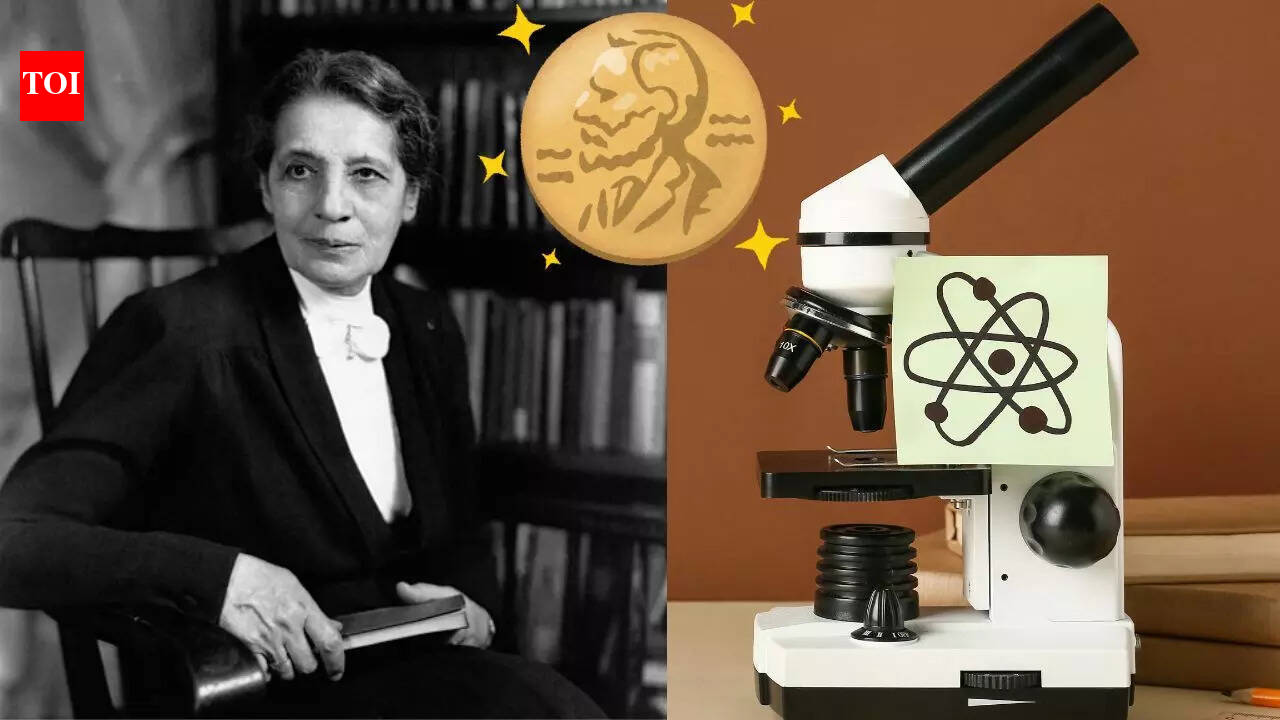
Who was Lise Meitner, the physicist who explained nuclear fission but was denied a Nobel Prize (Image Source - Wikipedia)Work on nuclear physics in the early twentieth century moved across borders, institutes and private letters. Lise Meitner was part of that movement for decades, first in Vienna, then in Berlin, later in Stockholm. Trained as a physicist, she built a career in radioactivity and atomic research at a time when few women held senior academic posts. Her name is now closely associated with the 1938 explanation of nuclear fission, a discovery that revolutionised modern science and shaped wartime policy. However, only her long-time collaborator received the 1944 Nobel Prize in Chemistry for her work on fission. The decision has remained a point of debate within the history of science. She refused to work on the Manhattan Project at Los Alamos, declaring, “I will have nothing to do with a bomb!” Her epitaph on her gravestone, written by her nephew Otto Frisch, reads, “Lise Meitner: a physicist who never lost her humanity.”Lise Meitner: A physicist who never lost her humanity Born in Vienna in 1878, Meitner became the second woman to earn a doctorate from the University of Vienna in 1906. She soon moved to Berlin, attending lectures by Max Planck and beginning a long collaboration with Otto Hahn. In 1917 the pair identified the element protactinium, work that brought her recognition within German scientific circles.By 1926 she had become the first woman in Germany to hold a full professorship in physics at the University of Berlin. Her research turned towards the structure of the atom and the possibility that uranium might release large amounts of energy under certain conditions. At that stage the idea was theoretical, discussed in laboratories rather than newspapers.Exile disrupted her research in GermanyThe political climate changed sharply after 1933. Although Meitner had Austrian citizenship, her Jewish background placed her at risk under Nazi rule. In 1938 she fled Germany, crossing into the Netherlands before settling in Sweden. She left her position at the Kaiser Wilhelm Institute and most of her belongings behind.From Stockholm she remained in contact with Hahn. Later that year he and Fritz Strassmann reported puzzling experimental results after bombarding uranium with neutrons. During a visit from her nephew Otto Robert Frisch, Meitner helped interpret the findings. They concluded that the uranium nucleus had split into two smaller parts and named the process fission. Their explanation was published in Nature in February 1939.Nobel recognition excluded her contributionIn 1944 the Nobel Prize in Chemistry was awarded to Hahn for the discovery of nuclear fission. Meitner was not included. Historians have pointed to wartime separation, disciplinary boundaries between chemistry and physics, and possible gender bias as factors in the decision.She declined an invitation to join the Manhattan Project, stating she would have nothing to do with a bomb. After the war she continued her scientific work in Sweden and later in Britain, receiving honours such as the Max Planck Medal and the Enrico Fermi Award. Element 109, meitnerium, now carries her name; the Nobel Prize did not, and that absence still draws attention.
Share this story