dw.com
Clustered Story
Where do the US and Israel differ on Iran strategy ?
dw.com · Feb 16, 2026 · Collected from GDELT
Summary
Published: 20260216T181500Z
Full Article
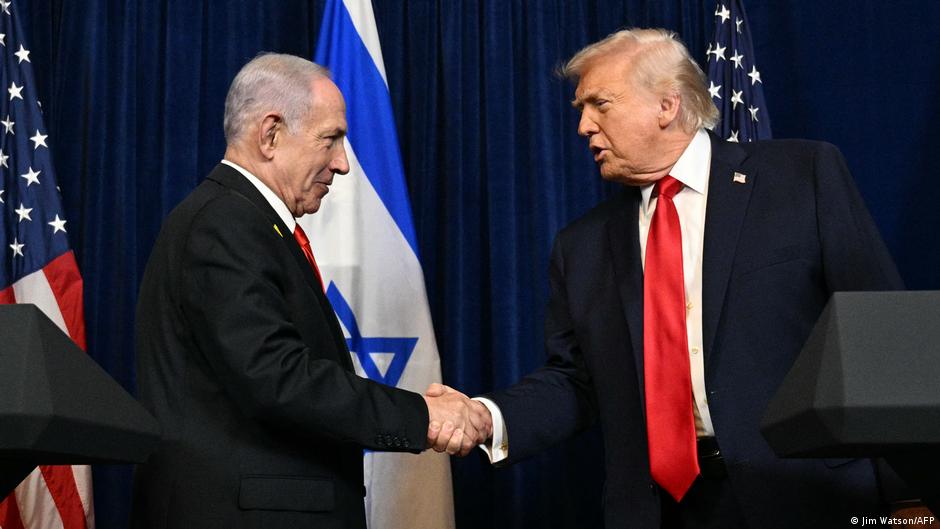
Ties between the United States and Israel are close, but strategic and tactical differences still crop up when it comes to dealing with the Islamic Republic of Iran. With US President Donald Trump pushing Iran towards a new nuclear deal, the two nations are set foranother round of talks in Geneva this week. Oman is mediating the process, which involves US Special Envoy for the Middle East Steve Witkoff, Trump's son-in-law Jared Kushner, and Iranian Foreign Minister Abbas Aragchi. The US and Israel both want to prevent Iran from becoming a nuclear power, while keeping Tehran from expanding its regional influence and proxy militias. Iran insists that its nuclear program is peaceful, and has bristled at attempts of limiting its influence. Its leaders, however, might be willing to make concessions to avoid open conflict in light of last year's 12-day war. Trump looking for a deal For Trump, the main priority is to reach a new "deal" with Iran, political analyst Reza Talebi told DW. Washington is pursuing this goal through a strategy of "maximum pressure," which combines economic sanctions with military deterrence. Israel, on the other hand, attaches significantly less importance to any agreement with Tehran and fundamentally doubts the viability of any deal with the regime, according to the analyst. Israel's government questions if Iran would adhere to agreements in the long term. US taking away regime's 'breathing space' Security analyst Shukriya Bradost told DW that it is clear the Trump administration right now is geared towards making a deal with Tehran. "To force Tehran to the negotiating table, Washington is relying on massive economic sanctions, especially against Iranian oil sales," she said, adding the aim is to systematically dry up the regime's sources of income and deny it any economic "breathing space." This policy is intended to force Iran to capitulate, or at least make far-reaching concessions, without triggering a major regional war. The threat of military action plays a supporting role in this strategy, the expert said, pointing to the recent deployment of US aircraft carriers to the Middle East. US sends largest aircraft carrier to Middle EastTo view this video please enable JavaScript, and consider upgrading to a web browser that supports HTML5 video Although Trump has publicly speculated about possible "regime change," according to expert Bradost, a large-scale military strike is Washington's last resort. The US is wary of reengaging in protracted wars and, in her view, has no concrete plan for a forced change of power. From the US perspective, a limited agreement with Iran can buy some time and avoid major conflicts, even if it does not address all of Israel's security concerns. Also, while weighing up Israel's security interests, Washington must also keep an eye on its European allies, global energy markets, and the risk of military escalation in the region.What does Israel want from a US-Iran deal? In Israel's estimation, Iran represents an existential threat, and the Israeli government continues to emphasize that any deal with Iran's regime must credibly remove the country's ability to project force. Last Wednesday, Israel's Prime Minister Benjamin Netanyahu met with Trump at the White House for private talks on the ongoing US-Iran nuclear negotiations. In brief remarks to reporters after the meeting, Trump shared few details other that he had "insisted" negotiations with Iran continued to see if a deal could be reached.Possible US strikes on Iran — Balancing act in the Gulf To view this video please enable JavaScript, and consider upgrading to a web browser that supports HTML5 video On Sunday, during a speech at a conference in Jerusalem, Netanyahu reiterated Israel's position that any deal with Iran must call for dismantling Iran's nuclear infrastructure and the removal of existing enriched uranium. "There shall be no enrichment capability — not stopping the enrichment process, but dismantling the equipment and the infrastructure that allows you to enrich in the first place," Netanyahu said at the annual Conference of Presidents of Major American Jewish Organizations. Netanyahu added he is "skeptical" that Iran would honor any deal with Trump. Israel has also said that US talks with Iran must also address the country's ballistic missiles and Tehran's support for regional proxies. During Israel's 12-day war with Iran in June 2025, the US bombed several Iranian nuclear sites. Trump claimed repeatedly that the strikes had "completely obliterated" Iran's nuclear capabilities, however, this was never independently confirmed. Recent satellite photos of nuclear sites in Iran have shown signs of activity. A satellite view dated on February 1, 2026, of Iran's Isfahan nuclear site shows a new roof over a previously destroyed buildingImage: Planet Labs PBC/REUTERS The situation on the ground remains unclear as Iran stopped cooperating with the International Atomic Energy Agency (IAEA) after the June strikes. Iran denies it is developing nuclear weapons, but the IAEA has previously assessed that Iran has enriched uranium far above the level required for civilian use. This uncertainty over Iran's nuclear program and its plans for the future is likely the cause for yet another difference between Israel and the Trump administration — the two allies disagree on the timeline for resolving the issue. Washington is focusing on gradually increasing pressure. Netanyahu, however, fears that a possible change of course under a future US administration could strengthen Iran's position. Israel therefore wants the US to intervene more decisively and directly, and be ready to resort to military force if necessary. This article was translated from German.
Share this story