mynorthwest.com
Weakened by war and protests , Iran could still inflict pain in response to a US attack
mynorthwest.com · Feb 26, 2026 · Collected from GDELT
Summary
Published: 20260226T091500Z
Full Article
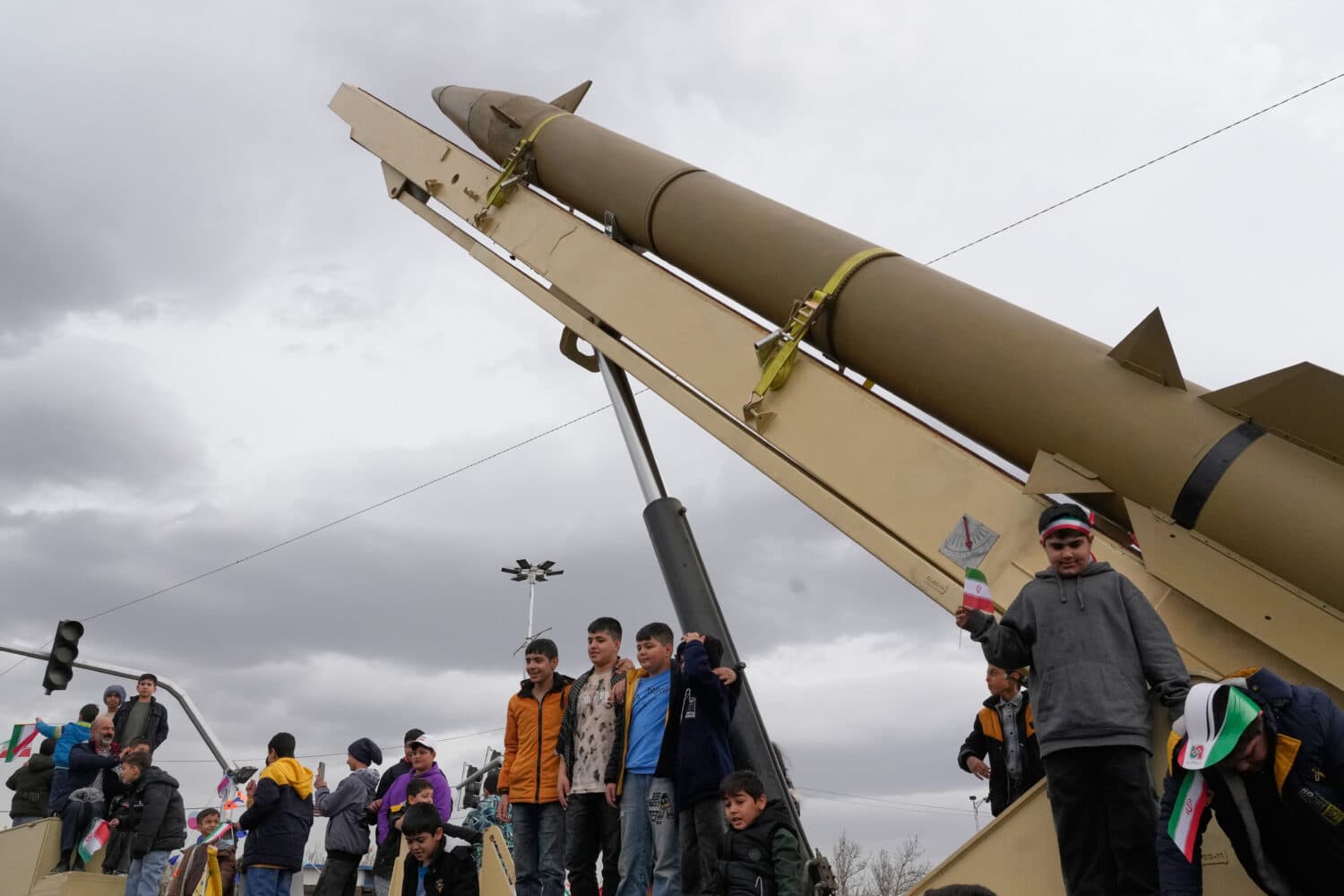
JERUSALEM (AP) — As U.S. forces mass in the Middle East, Iran faces the threat of major strikes by the world’s most powerful military, potentially targeting its leaders, military, nuclear sites and critical infrastructure. Iran has nowhere near the same capabilities, and is even more vulnerable after last year’s war launched by Israel and recent anti-government protests. But it could still inflict pain on American forces and allies, and may feel it has to if the Islamic Republic’s survival is at stake. While Iran suffered major losses last June, it still has hundreds of missiles capable of hitting Israel. While Iran suffered major losses last June, it still has hundreds of missiles capable of hitting Israel, according to Israel’s estimates. Iran boasts a much larger arsenal of shorter-range missiles capable of hitting U.S. bases in Gulf countries and offshore American forces, soon to be joined by a second aircraft carrier. Iran has previously threatened to close the Strait of Hormuz, a vital waterway for the global oil trade, and claimed to have done so partially during military drills last week. Supreme Leader Ayatollah Ali Khamenei warned that Iran could sink American warships, and top officials have said a U.S. attack would spark regional war. Iran’s U.N. ambassador Amir Saeid Iravani said “all bases, facilities and assets of the hostile force in the region” would be legitimate targets. Lingering capabilities Israel carried out heavy strikes on Iran’s longer range missile arsenals — as well as its military leadership and nuclear program — during the 12-day war in June. The U.S. struck Iran’s main nuclear sites, and President Donald Trump said at the time that they had been “obliterated.” But the extent of the damage — and how much has been rebuilt — is still unknown. Iran continued to strike Israel with missiles and drones until the fighting stopped, increasingly eluding its vaunted air defenses. Iran’s shorter-range missile arsenal was largely untouched, said Danny Citrinowicz, an Iran expert at Israel’s Institute for National Security Studies. That could make Iran more inclined to retaliate against tens of thousands of U.S. forces based in Qatar, Saudi Arabia, Jordan, the United Arab Emirates and elsewhere. “Iran may be weak. But it still has ways to inflict real pain on the United States — and much more incentive to try than it did before,” Nate Swanson, head of the Atlantic Council’s Iran Strategy Project, wrote in Foreign Affairs. “Iranian officials feel they need to give Trump a bloody nose or they will perpetually be at risk.” Iran launched missiles at a U.S. base in Iraq after the killing of its top general in 2020 and targeted a U.S. base in Qatar near the end of last year’s war. Those strikes, which appeared to have been telegraphed in advance, caused damage but no fatalities, as early warning systems and missile defenses swung into action. Iran could also carry out attacks farther afield. The country has been accused of using criminal gangs and armed groups to plan or carry out attacks around the world, including on dissidents, Israelis and Jewish targets. Learning curve Last year’s Israeli strikes killed several top generals and nuclear scientists, revealing major vulnerabilities. At one point, Trump said the U.S. knew where Khamenei was hiding, calling him an ” easy target.” Fresh off the capture of Venezuelan leader Nicolás Maduro, Trump may consider decapitation strikes aimed at bringing down Iran’s decades-old Shiite theocracy, which he recently said “would be the best thing that could happen.” The Iranians have had eight months to learn from their mistakes and firm up internal security. Citrinowicz said there are likely contingency plans if Khamenei were to be killed. Rather than naming a single successor, power would probably shift to a small committee until hostilities subsided. Experts say the death of the 86-year-old Khamenei, who has ruled Iran for over three decades, would not in itself spell the end of the Islamic Republic. Power might eventually pass to a member of his inner circle, as it did in Venezuela, or to Iran’s Revolutionary Guard. US allies could be targets American allies are clearly concerned about a regional war, Prime Minister Benjamin Netanyahu has warned of a heavy response to any Iranian attack on Israel. Arab Gulf states have long viewed Iran with concern and leaned on the U.S. for defense, but do not want to be drawn into war. Saudi Arabia and the United Arab Emirates, which host thousands of American troops, have said they would not allow their airspace to be used. An Arab Gulf diplomat said regional leaders were talking to Iran and the United States to avert war, warning that it could have severe consequences, including a spike in oil prices. The diplomat spoke on condition of anonymity to discuss the sensitive, closed-door talks. Iran has its own allies, including Houthi rebels in Yemen, armed groups in Iraq, Hezbollah in Lebanon and Hamas in the Palestinian territories. But its self-described Axis of Resistance suffered major losses in the fighting that rippled across the region after Hamas’ October 2023 attack from Gaza. A global pressure point Another close-in target could allow Iran to inflict wider pain. Around one-fifth of all traded oil passes through the Strait of Hormuz, just off Iran’s shore. The U.S. Navy is committed to keeping it open, but Iranian attacks could disrupt trade, as the far-weaker Houthis managed to do in the Red Sea for much of the past two years. Iranian officials have not explicitly threatened to target the strait in the current standoff, but Iranian forces partially closed it last week during military drills, signaling it could be vulnerable if war breaks out. Other critical oil assets would also be within range. In 2019, strikes on oil infrastructure temporarily halved Saudi Arabia’s production. Yemen’s Houthis claimed responsibility, but U.S. officials later blamed Iran. The nuclear question After initially threatening military action over Iran’s killing of protesters, Trump shifted attention to its nuclear program, warning that “bad things” would happen if Iran doesn’t agree to a deal. The two sides are set to hold another round of indirect talks in Geneva on Thursday. Iran has always said its nuclear program is peaceful, while the U.S. and others have long suspected that Tehran intends to eventually develop weapons. After Trump scrapped a 2015 nuclear agreement, Iran ramped up its enrichment of uranium, building up a stockpile of near-weapons grade material. Iran’s biggest sites were hit by U.S. and Israeli strikes, causing significant damage above ground. But it’s unclear whether enriched uranium was spirited away before they were hit or buried underground. Iran says it has been unable to enrich since then, but it has also barred inspections. Iran is still believed to be a long ways from developing a usable nuclear weapon, but radioactive material could pose a risk in the event of widespread strikes. ___ Associated Press writer Samy Magdy contributed reporting from Cairo.
Share this story