dw.com
Clustered Story
US - Iran nuclear talks open in Geneva amid military posturing
dw.com · Feb 26, 2026 · Collected from GDELT
Summary
Published: 20260226T133000Z
Full Article
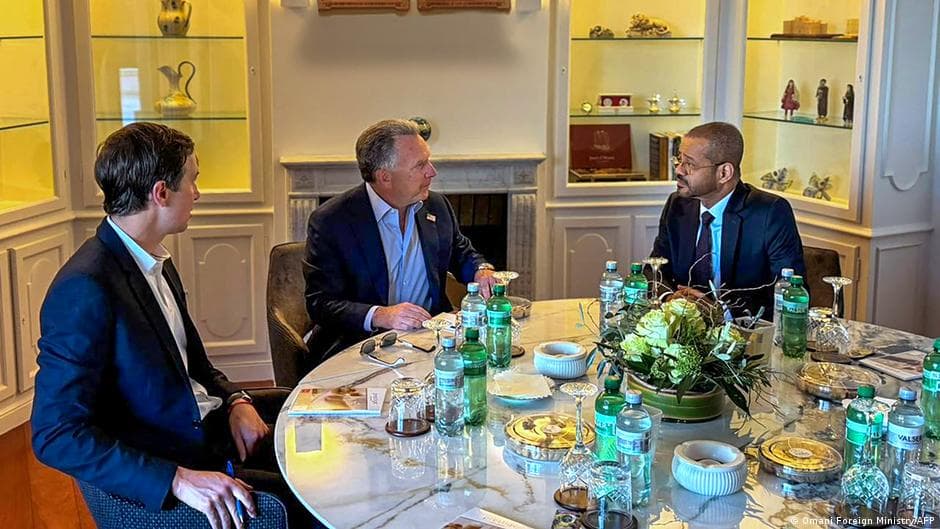
The latest round of indirect negotiations between the US and Iran opened in Geneva early on Thursday as President Donald Trump's conflict negotiation tag team of Steve Witkoff and Jared Kushner arrived at Oman's ambassador's residence in Swiss city. Oman is mediating the discussions, with Foreign Minister Abbas Araghchi leading Iran's delegation. The negotiators arrived at the venue amid tight security, following a protest at the talks last week when Iranian exiles threw objects at the Iranian motorcade.Police officers stood guard outside the ambassador's residence after Iranian protesters targeted last week's talksImage: Martial Trezzini/KEYSTONE/picture alliance Oman's Foreign Minister Badr Al-Busaidi confirmed that discussions had begun. He said that the two sides had expressed "unprecedented openness to new and creative ideas and solutions." According to the Iranian Foreign Ministry, the director of the UN's International Atomic Energy Agency, Rafael Grossi, was also likely to attend the talks. It's the third round of such talks this year, Al-Busaidi relays messages between the two sides rather than them sharing a negotiating table.How Iran could try to defend itself if the US attacksTo view this video please enable JavaScript, and consider upgrading to a web browser that supports HTML5 video US, Iran disagree on alleged nuclear weapons ambitions Prior to Thursday's talks, senior US officials sought to pressure Iran and argue that it was working to rebuild its nuclear weapons program after last summer's brief exchange of fire with Israel, which was punctuated by a major US strike on three of Iran's key nuclear facilities shortly before a truce was reached.US Vice President JD Vance and Secretary of State Marco Rubio claimed on Wednesday that Iran was rebuilding and expanding its ballistic missile and nuclear programs and posed a major threat to US interests. The warnings came a day after US President Donald Trump claimed in his State of the Union address that Iran would "soon" have the capability to strike the US mainland, and a day before US and Iranian representatives are due to meet for talks in Geneva, Switzerland. "After their nuclear program was obliterated, they were told not to try to restart it, yet here they are," said Rubio, referring to strikes carried out on Iranian nuclear facilities by US forces on June 22, 2025, during the twelve-day war between Iran and Israel. "You can see them always trying to rebuild elements of it," he continued. "They're not enriching [uranium] right now, but they're trying to get to the point where they ultimately can." Thursday's negotiations in Geneva come as a US military build-up continues in the Middle East ahead, and soon after major public unrest in the Islamic Republic, which were at their zenith last month but have continued on a much smaller scale since.New protests erupt across Iran's universitiesTo view this video please enable JavaScript, and consider upgrading to a web browser that supports HTML5 video Vance: 'Iran cannot have a nuclear weapon' Tehran insists that its nuclear program is solely for civilian use, but Washington suspects the regime is attempting to enrich uranium to weapons-grade levels. "The principle is very simple: Iran cannot have a nuclear weapon," said JD Vance. In the event of a US attack, Iran has promised to make use of its right to self-defense by launching retaliatory strikes against US interests in the region, although Foreign Minister Abbas Araghchi had admitted that the country doesn't have the capacity to strike the US mainland. "Beyond just the nuclear program, they possess these conventional weapons that are solely designed to attack America and attack Americans if they so choose to do so," said Rubio. "They already possess weapons that can reach much of Europe," he continued, claiming that Iran was also trying to develop weapons that could reach the continental United States.US-Military pressure on Iran: Is a regime change the goal?To view this video please enable JavaScript, and consider upgrading to a web browser that supports HTML5 video He said Tehran's insistence on not discussing the topic of ballistic missiles in the Geneva talks was a "big, big problem." In quotes cited by the Associated Press (AP), two Iranian officials called the claims from the Trump administration "big lies" and said negotiations may yield an agreement through "honorable diplomacy." Rubio said President Trump would also prefer "diplomatic solutions" but said "progress needs to be made" on Thursday. Edited by: Dmytro Hubenko
Share this story