carmagazine.co.uk
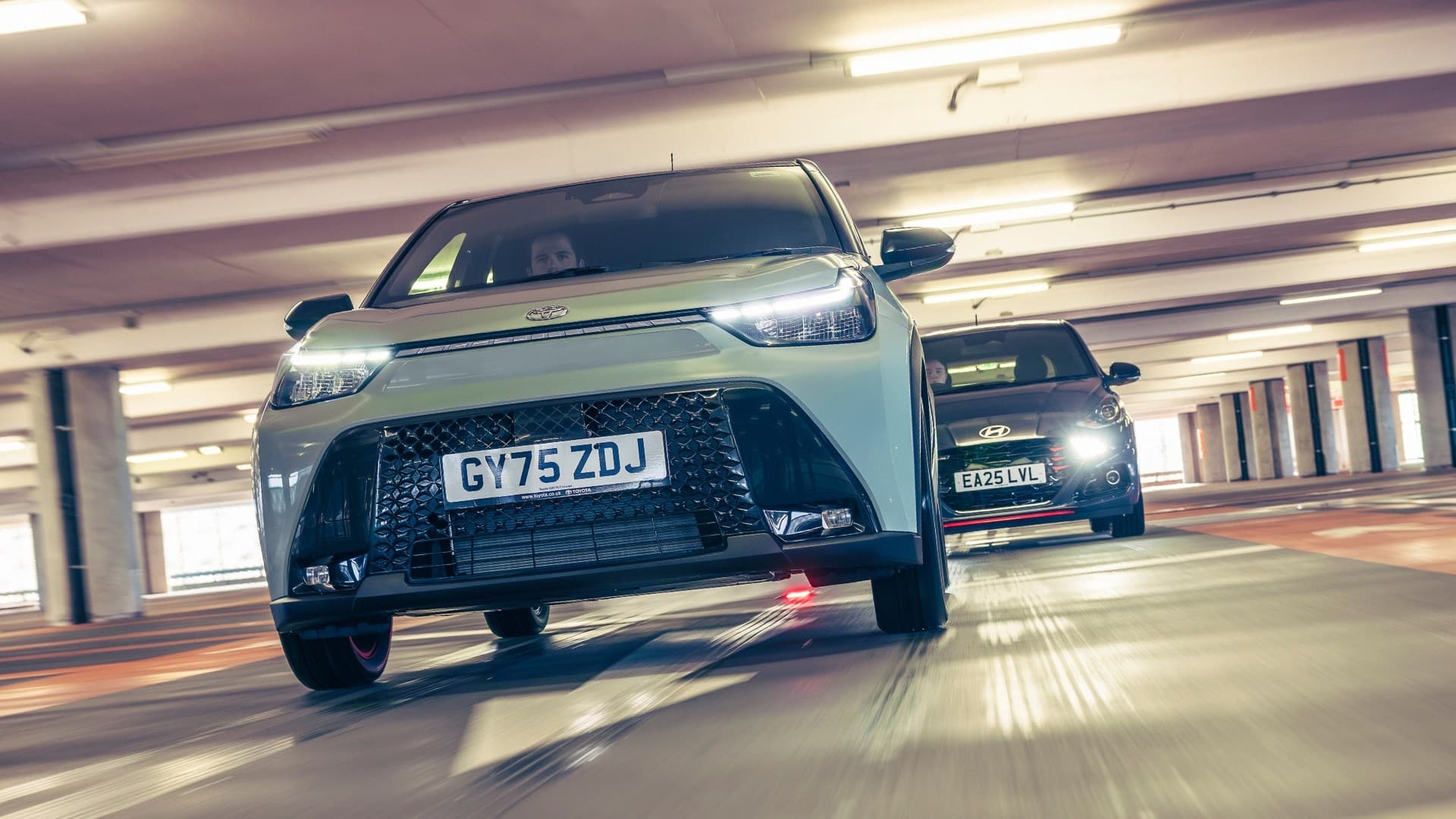
Toyota Aygo vs Hyundai i10 twin test review : extinction rebellion
carmagazine.co.uk · Feb 27, 2026 · Collected from GDELT
Summary
Published: 20260227T161500Z
Full Article
► Toyota Aygo vs Hyundai i10► City cars are a dying breed…► …just ask these two Until very recently, there were only four companies building petrol-fuelled city cars for Europe: Fiat, Hyundai, Kia and Toyota. Manufacturers like to blame legislators for the dramatic drop in choice. They say it’s extremely tricky to fit in all the required safety equipment, and to squeeze in a suitably clean engine, without it all getting too expensive. They also thought the politicians meant it when they said we all needed to go electric, and quickly. But shouldn’t some of the finger-pointing be directed closer to home, as manufacturers eye up the bigger profit margins to be found by encouraging customers to buy crossovers and SUVs? The choice may be much diminished, but the quality has gone up; to paraphrase Blur, modern life isn’t all rubbish. The latest city cars are much better than the one-trick ponies that used to dominate the market. City cars remain the smart choice for someone’s first or last wheels, and a good second family car. But they can be so much more than that. Maybe a two-week family camping holiday would be asking too much, but they can do much longer distances, in much greater comfort, while providing far more entertainment, than the crude, rattly little boxes we grew up driving. Let’s start with the known quality, the i10. Now in its third generation, it last had an update in 2023, which makes it quite old by Hyundai’s fast-moving standards. It’s also one of very few cars from the booming Korean firm that has resisted electrification, but it is now one that’s reached retirement. Even so, it’s still a class benchmark. So, as it bows out, we’re bringing it to battle one last time. Ours is an N-Line version, which brings some welcome performance and styling changes over the lower Advance and Premium trims. Without the N-Line bits and pieces the i10 is starting to show its age, but it’s amazing what a good set of alloys and some hot hatch-esque red detailing can do to improve a car’s looks. It’s the same story inside, with red air vents, stitching and a big red stripe on the seats doing a lot of the visual heavy lifting. But the main reason to favour the N-Line is what’s under the bonnet. Every other i10 makes do with a naturally-aspirated engine and very 1995 levels of power, either 62 or 78bhp. But the N-Line’s 1.0-litre triple is turbocharged, developing 89bhp (which is down 10bhp compared to the pre-facelift model, because of the need to satisfy emissions regulations). The i10 starts from £17,100, making it one of the cheapest new cars on sale, but the N-Line comes in at £19,700. Our test car’s metallic paint just tips it over £20k. Today it faces the newly updated Toyota Aygo X. We have good news and bad news. The good news is the Aygo X has ditched its asthmatic old 1.0-litre naturally-aspirated engine and replaced it with the same (non-plug-in) hybrid 1.5-litre three-cylinder as the Yaris, bringing welcome performance and economy improvements. The bad? The price has gone up by £5000. A quick Aygo recap. It first launched in 2005 alongside the Citroën C1 and Peugeot 107 in a joint project between Toyota and the then-PSA Group. A second iteration came in 2014, but by the end of that decade Citroën and Peugeot decided they wanted out, with only Toyota introducing a third-generation model in 2022, re-branding it as the Aygo X (pronounced ‘cross’, in line with the Yaris Cross and Corolla Cross) and giving it more crossover-like styling. Across the generations the Aygo has always been among the most stylish city cars, and this facelift is no different. The front end is longer than before to house the larger 1.5-litre engine and hybrid gubbins, which are a very tight squeeze even with the extended nose, so Toyota took the opportunity to freshen the face with a new grille and sharper LED lights. It’s more eye-catching than the i10, courtesy of its two-tone paint scheme, jazzy 18-inch alloys and full glass tailgate. The colour palette is also designed to spice up your street. Our car is in Tarragon, but Jasmine, Lavender and Cinnamon are also available (all metallic, all for no extra cost), and it’s good to see some brighter colour options on a modern car for a change. The Aygo X now starts from £21,595, with our mid-spec Design model adding £2000 to that. Toyota’s GR Sport grade brings more sportily tuned suspension and revised steering. On the previous Aygo X that would have been overkill, as it just didn’t have the performance to demand it. GR Sport costs a steep £27,000. While the Aygo scores points for its interesting exterior, less creative energy was left for the interior. Aside from part of the inner door panels being painted in the same colour as the outside, it’s mainly quite plain and gloomy inside. Hyundai does a far better job of disguising the hard black plastic than Toyota does. Where both interiors impress is with their ease of use. They both have a good mix of touchscreen, simple digital instrument cluster and plenty of proper physical buttons. Unusually these days, both have a separate panel for climate control. The i10 shows its age by still having a throwback physical ignition key and old-school halogen headlights. They key still makes a lot of sense to us, but the lights illustrate just how much better modern LED versions are. It has Apple CarPlay and Android Auto, but you can’t connect wirelessly or even via a USB-C – you’ll need to go rummaging in your kitchen drawer for an old-fashioned USB lead. It makes you realise how rapidly wireless smartphone mirroring has changed from being a luxury to the norm in new cars. The Toyota’s cabin isn’t fancy, and some of the materials could be nicer, but there are a few signs that it’s a newer design than the Hyundai. For instance, the previous version’s physical handbrake has now gone, for better or worse. The engines used by these two cars also make it clear which is the older design. The Aygo X represents the first time a serious ‘self charging’ hybrid set-up with automatic CVT has been squeezed into a city car. Its CO2 emissions (as low as 87g/km) are the cleanest of any non-plug-in hybrid on sale today. It’s an impressive feat of engineering, cramming a 1.5-litre petrol engine, two electric motors and a hybrid battery into a car this small (3776mm long), and especially one that was initially intended to house a simple, modest 71bhp 1.0-litre petrol engine. The hybrid is the only version now available, as part of Toyota’s mission to keep the average CO2 emissions of its line-up down. The switch to a new engine is not just about clean air – it’s also much more powerful, with 114bhp on tap, and that’s shaved more than five seconds off the 0-62mph figure compared to the old Aygo X. Whereas motorway slip roads would previously be something you’d fear, it now has no problem getting up to speed, sometimes even raising a cheeky Terry-Thomas-style eyebrow in the process. It’s by far the quicker of the two cars. But it’s not a complete delight. It’s much less grating than the screaming CVTs of old, which may have been good for the environment but were bad for the nerves. It still, however, makes a ‘mooing’ noise during hard acceleration. There are three drive modes – Eco (the default), Normal and Power, but the differences between them are negligible. In all three cases, there’s frequent switching between electric and petrol propulsion. It’s less noticeable when you’re getting a move on, because the wind noise cancels out noises from under the bonnet, but at lower speeds around town the transition is far more pronounced. On the flipside, the way the hybrid technology embraces its job is impressive. I didn’t realise just how much time it was spending as an EV until I checked the trip computer afterwards: on a mixed run, the percentage of electric-only running is typically 50 per cent, but that goes up to as much as 80 per cent around town. It’s in the confines of a city where the Aygo X makes the most sense. Its turning circle is particularly small (surprising given its 18- inch alloys) and means you can do a U-turn where the i10 would leave you looking like a fool doing a three-point turn. Even tight multistorey car parks are a cinch. Parking is a doddle as a result, aided by its exceptionally light steering. It reminds me of the City mode in Fiats, only this is the default. Unfortunately the steering doesn’t weight up once you leave the car park, even in Sport mode, so it becomes unnervingly light at speed. On a local rural road where I know there’s a series of wellsighted left/right sweepers, allowing you to really build up a rhythm as you go arcing across the landscape, the Aygo X has other ideas. I find I’m repeatedly turning in too early and applying too much lock, so what should be a gentle curve becomes a series of movements. It’s here where I find myself really appreciating the dynamic qualities of the i10. The standard version is decent enough, if not exactly pulse-racing, but the N-Line engine’s extra oomph has turned it into something approaching a driver’s car. Or at least one that shows glimpses of real talent and enjoyment. Even though its engine has been detuned slightly in the last couple of years, the peppy 1.0-litre T-GDI turbocharged triple remains buzzy and characterful. It’s quite throaty on a cold start, aided by its twin-exit exhaust system, to the point where I struggle to think of a car with a more amusing power-to-exhaust ratio. The five-speed manual gearbox is also better than you might expect from an 89bhp city car, with a pleasing and precise action. Fairly long gearing means it doesn’t feel like it’s being thrashed too much – even in the outside lane of the M1, it spins at a comfortable 2500rpm. Oddly, it feels more happy out here than it does around town, where the springy clutch and slightly odd ratios in the 30mph40mph zone make it trickier to relax. As for B-roads, the delightfully analogue controls – three pedals, a proper
Share this story