malaymail.com
Through the humanitarian lens : Understanding Indonesia 8 , 000 deployment to Gaza ( soon ) Phar Kim Beng
malaymail.com · Feb 23, 2026 · Collected from GDELT
Summary
Published: 20260223T040000Z
Full Article
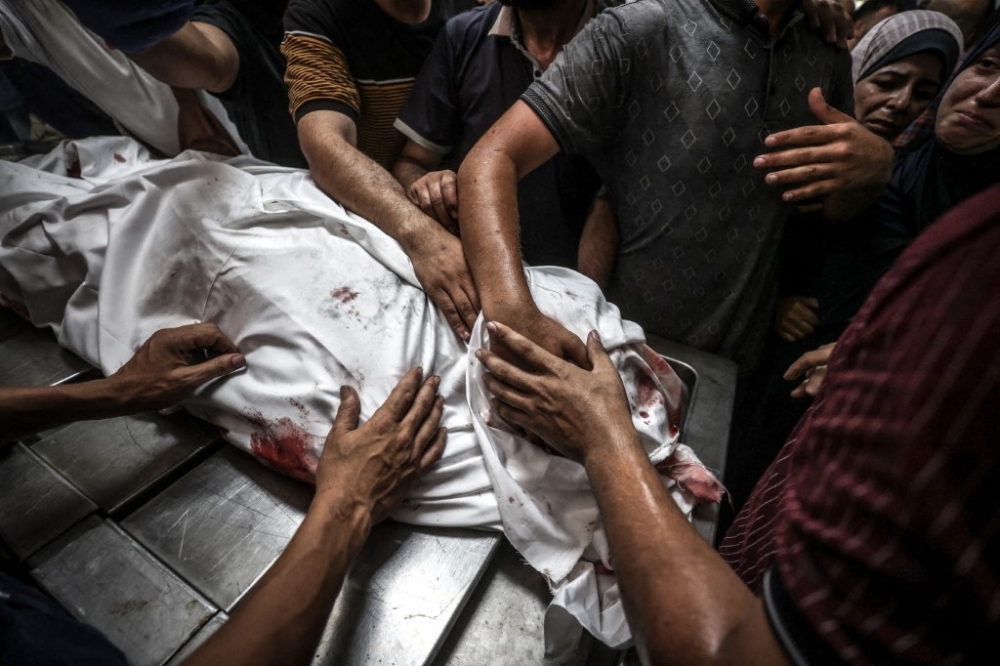
(New users only) Unlock 4%* + 10%* p.a. promo rate for 3 months via Versa and enjoy FREE RM10 & when you sign up using code VERSAMM10 with min. cash of RM100 today! T&Cs apply. Monday, 23 Feb 2026 10:17 AM MYT FEBRUARY 23 — Indonesia’s readiness to deploy up to 8,000 personnel to Gaza has inevitably stirred debate across diplomatic and strategic communities.In an age defined by recurrent wars and fractured alliances, the movement of troops is often read as escalation.Yet to interpret Jakarta’s initiative solely through a geopolitical or military prism is to miss its core intention.The deployment must be understood through the humanitarian lens.Indonesia has been explicit: the mission is not combat-oriented. It is not an enforcement action, nor is it designed to alter political realities on the ground.Rather, it is framed as a stabilisation effort – one centred on civilian protection, medical assistance, reconstruction and support for local security capacity.The use of force, if any, would be limited strictly to self-defence and the protection of civilians.This distinction is not semantic. It represents a different philosophy of engagement.In contemporary conflicts – from the Middle East to Eastern Europe – the greatest casualties are not armies but societies. Infrastructure collapses. Hospitals are destroyed.Water and electricity grids disintegrate. Schools vanish. Entire communities face displacement.The humanitarian crisis becomes more enduring than the war itself.Indonesia’s approach reflects recognition of this grim reality. Friends and relatives mourn the death of Indonesian Hospital director doctor Marwan al-Sultan along with seven members of his family following an Israeli attack on an apartment located in 17th Junction in Gaza City, Gaza on July 2, 2025. — Anadolu via AFP pic As the world’s largest Muslim-majority nation, Indonesia has long supported Palestinian self-determination and consistently advocated a two-state solution.Yet moral solidarity without practical assistance can easily dissolve into symbolic diplomacy.By preparing personnel for humanitarian stabilisation, Jakarta seeks to transform its long-standing position into operational responsibility.The objective is not victory. It is survival.Critics argue that any Indonesian presence risks political normalisation with Israel.But humanitarian engagement and diplomatic recognition are not identical. International practice has long distinguished between the two.States frequently participate in peacekeeping operations in territories whose political arrangements they do not formally endorse.Indonesia’s policy maintains this separation carefully.It does not alter Jakarta’s diplomatic stance. Instead, it asserts that humanitarian responsibility cannot be hostage to unresolved political recognition.Another concern lies in mission creep.History offers examples of humanitarian deployments evolving into enforcement mandates.Jakarta has therefore emphasised that its participation is conditional.Should the mandate deviate from humanitarian stabilisation toward coercive combat operations, withdrawal remains an option.This conditionality is crucial. It protects Indonesia’s neutrality and preserves the integrity of its stated objectives.At a broader level, Indonesia’s initiative signals an evolving doctrine of middle-power responsibility.South-east Asia has traditionally prioritised diplomacy, non-interference and quiet mediation.Yet the nature of global conflict has changed. Absolute non-involvement can no longer shield states from humanitarian fallout, refugee flows or moral scrutiny.The emerging space between neutrality and intervention is increasingly occupied by humanitarian security diplomacy. This model does not seek to defeat adversaries or impose political settlements.It seeks to prevent societal collapse.Indonesia’s proposed role in Gaza fits squarely within this framework.For Asean observers, the implications are noteworthy.Asean centrality has long rested on conflict prevention within Southeast Asia.By extending humanitarian stabilisation beyond its immediate region, Indonesia demonstrates that Asean norms of restraint and dialogue can inform responsible global engagement.There is also a strategic dimension – though not in the traditional sense of power projection.Participation allows Indonesia to help shape the humanitarian architecture from within rather than criticise it from outside. Presence offers influence.Absence yields marginalisation.Still, risks remain real. Gaza is volatile.Peacekeepers can become targets. Domestic political backlash may arise should casualties occur. External powers could attempt to politicise the mission.The complexity of post-conflict governance may exceed initial expectations.Yet the alternative – inaction – carries its own costs.The contemporary international system is increasingly strained by overlapping crises: Ukraine, Gaza, Iran, and tensions in the Taiwan Strait. In such an environment, middle powers face a choice.Retreat into rhetorical protest, or assume calibrated responsibility within defined humanitarian mandates.Indonesia has chosen the latter.Through the humanitarian lens, the deployment is neither militarisation nor geopolitical alignment. It is an attempt to occupy a narrow but necessary space between war and abandonment.Soldiers in this context are not instruments of conquest but guardians of civilian life and social continuity.This reflects a deeper transformation in global security thinking.The measure of international responsibility is shifting from battlefield dominance to human preservation. Stabilisation is replacing occupation.Protection is replacing coercion.Indonesia’s initiative may therefore represent not merely a national policy decision, but a broader signal of how responsible middle powers can operate in a fragmented world order.If executed within its stated humanitarian boundaries, the mission could offer a template for future engagements – where presence serves protection, and restraint preserves credibility.Ultimately, Gaza’s tragedy cannot be solved by military means alone.Nor can it be resolved solely through distant diplomacy.Between those poles lies humanitarian stabilisation – fragile, complex, and imperfect, yet indispensable.Indonesia’s proposed deployment should be understood precisely in that light.*Phar Kim Beng is a professor of Asean Studies and director of the Institute of International and Asean Studies, International Islamic University of Malaysia.** This is the personal opinion of the writer or publication and does not necessarily represent the views of Malay Mail.
Share this story