jurist.org
The US - Israel War on Iran Will Not Lead to Peace But Even Greater Violence
jurist.org · Mar 1, 2026 · Collected from GDELT
Summary
Published: 20260301T014500Z
Full Article
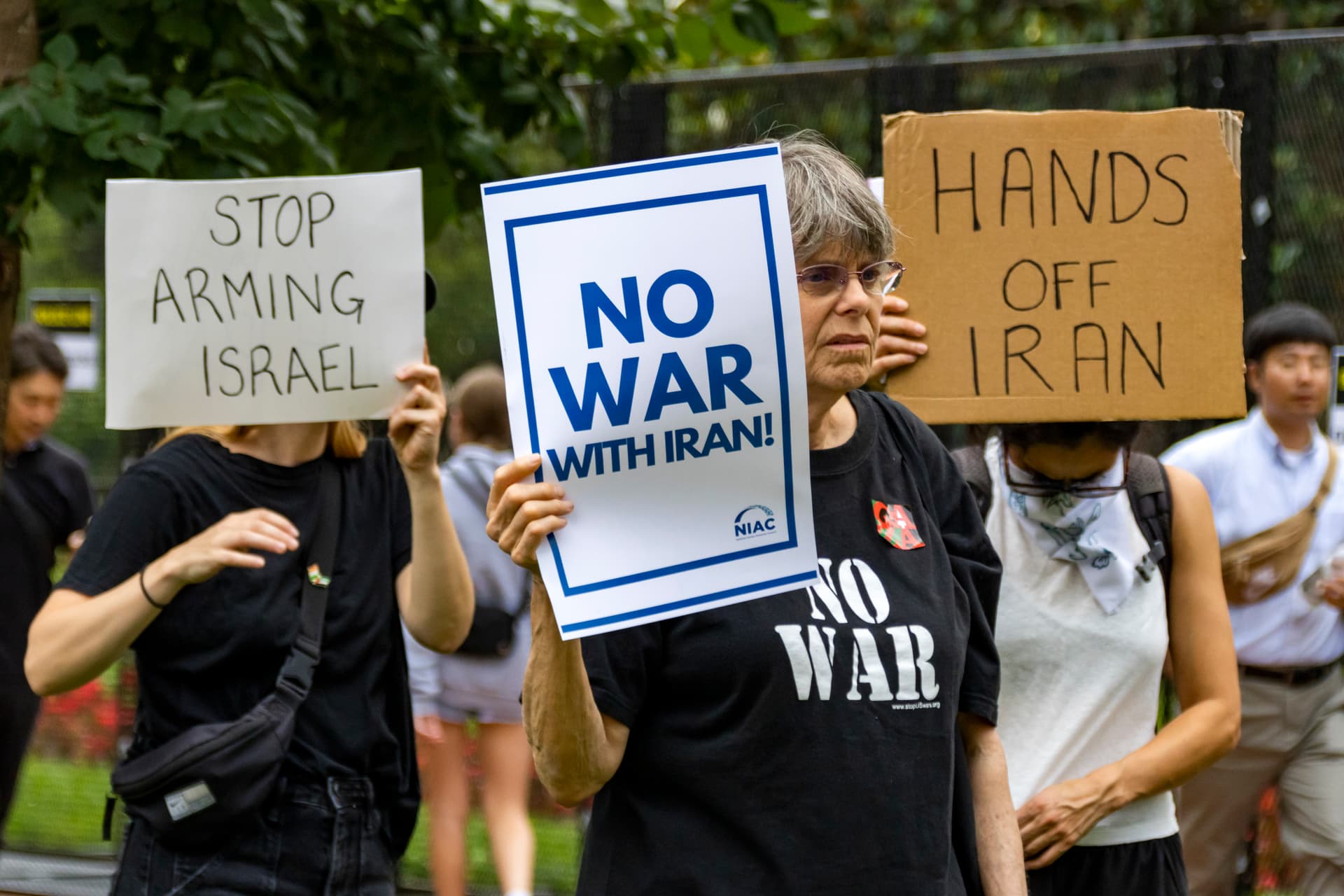
On Saturday morning, February 28th, the United States and Israel launched coordinated military strikes across Iran, hitting targets in Tehran, Isfahan, Qom, and other cities across twenty-four provinces. Iran’s Red Crescent reported at least 201 people killed and 700 injured. President Trump announced “major combat operations” and urged regime change. Iran retaliated by launching missiles at Israel and US military installations across the Gulf.UN High Commissioner for Human Rights Volker Türk deplored the strikes, noting that the parties “had been actively seeking a solution only hours earlier.” He stated that “bombs and missiles are not the way to resolve differences but only result in death, destruction and human misery” and warned that continued escalation “risks an even wider conflict, that will inevitably lead to further senseless civilian deaths and destruction on a potentially unimaginable scale, not just in Iran but across the Middle East region.” He reminded all parties that under international humanitarian law, “the protection of civilians is paramount” and that violations “must lead to accountability.”The strikes came forty-eight hours after the conclusion of a third round of US-Iran indirect nuclear negotiations in Geneva, mediated by Oman, that had produced what multiple parties described as an unprecedented breakthrough. The bombing killed not only Iranian civilians but also the strongest nuclear agreement ever negotiated with Iran.Just forty-eight hours earlier, the third round of US-Iran indirect negotiations had concluded in Geneva. Omani Foreign Minister Badr Albusaidi told CBS News that Iran had agreed to zero stockpiling of enriched uranium, with existing stockpiles to be down-blended to the lowest possible level and converted into irreversible fuel under full International Atomic Energy Agency (IAEA) verification. “The single most important achievement, I believe, is the agreement that Iran will never, ever have a nuclear material that will create a bomb,” Albusaidi said, describing the understanding as “something completely new” compared to the 2015 Joint Comprehensive Plan of Action (JCPOA) negotiated under Obama. The JCPOA was a multilateral nuclear agreement negotiated under President Barack Obama that placed limits on Iran’s nuclear program in exchange for sanctions relief. Albusaidi said that technical discussions with the IAEA had been scheduled for the following week in Vienna. Broad political components of a deal “can be agreed tomorrow,” Albusaidi said, with implementation related to stockpiles, verification, and access achievable within ninety days. He was unequivocal: “I don’t think any alternative to diplomacy is going to solve this problem.” He warned that military action would only “complicate resolving this problem and delay it.”Iranian Foreign Minister Seyed Abbas Araghchi responded to Saturday’s US-Israel strikes by asking the question that demands an answer: “I do not know why the U.S. administration insists on beginning a negotiation with Iran and then attacking Iran in middle of talks.” He speculated that “perhaps the U.S. administration was dragged into it,” and directed a pointed message at ordinary Americans: “Our enmity is not with the American people, who are being lied to yet again.”The echo of Iraq in 2003 is unmistakable.Israel Will Sabotage Any AgreementThis follows a pattern that is now undeniable. When the Obama administration negotiated the JCPOA in 2015, Netanyahu waged an extraordinary campaign against it, including addressing Congress to lobby against a sitting president’s foreign policy. When Trump withdrew from the agreement in 2018 despite Iran’s verified full compliance, Israel celebrated. Obama warned that withdrawal would leave the world “a losing choice between a nuclear-armed Iran or another war in the Middle East.” Now, with a deal on the table that went further than the JCPOA, bombs were chosen over diplomacy once again.The United Nations Institute for Disarmament Research (UNIDIR) study on the Middle East WMD-Free Zone, based on more than eighty interviews with officials from over twenty states, makes the broader context clear. Iran has supported a nuclear weapons-free zone in the Middle East since 1974, when it co-sponsored the UN General Assembly resolution alongside Egypt calling for one. Iran continued that support even after the 1979 revolution. Every Middle Eastern state has expressed support for such a zone except for one: Israel.Israel, the only country in the region that possesses nuclear weapons, is the only country in the region that refuses to join the Non-Proliferation Treaty (NPT), and the one whose participation in disarmament processes has been conditioned on so many prerequisites that Arab and Iranian officials described themselves as being led down an endless “long corridor” of demands. The UNIDIR study also documented a bilateral understanding between the United States and Israel, dating to 1969, under which Washington committed to never pressuring Israel to join the NPT. The country waging war to prevent nuclear proliferation is the only nuclear-armed state in the region that refuses all non-proliferation frameworks.Reza Pahlavi and the 1953 PlaybookThe regime change fantasy already has a leading man, and his family name should alarm anyone who knows Iranian history. In January, Reza Pahlavi, the son of the ousted 1979 dictator of Iran, announced that if brought to power his immediate priority would be to recognize Israel, not pursue the democratic and economic reforms Iranians have been dying in the streets to demand.Reza Pahlavi is the son of the Shah, Mohammad Reza Pahlavi, who was installed by the CIA after the 1953 overthrow of Mohammad Mossadegh, Iran’s first democratically supported prime minister. Mossadegh’s crime was nationalizing Iran’s oil industry, which had been controlled by the Anglo-Iranian Oil Company (later BP). The CIA bribed politicians, religious leaders, and street gang leaders, deployed agents posing as communists to discredit Mossadegh, and orchestrated riots that killed some 300 people. Mossadegh was overthrown and imprisoned. The Shah ruled for twenty-six years as a brutal US-backed dictator whose secret police tortured and disappeared Iranian citizens, producing the 1979 revolution as a direct consequence.As academic Noam Chomsky observed in 2013, “for the past 60 years not a day has passed in which the U.S. has not been torturing Iranians.” Stephen Kinzer, author of All the Shah’s Men, argued that the 1953 coup sent a message across the entire Middle East: “the United States does not support democratic governments and the United States prefers strong-man rule that will guarantee us access to oil.” That message holds today. The United States is now bombing Iran while positioning the same dynasty it installed in 1953 as an alternative, led by a man whose first priority is recognizing the state committing genocide in Gaza, not serving the people of Iran.The Wreckage of Regime ChangeThe historical record of US-led regime change is unbroken catastrophe.In Iraq, the 2003 invasion, championed by Israel, was launched on the false premise of weapons of mass destruction. John Nixon, the CIA analyst who first interrogated Saddam Hussein, revealed that Hussein had no weapons program, was hostile to al-Qaeda, and had largely delegated governance to focus on writing a novel. Hussein warned Nixon: “You are going to fail in Iraq because you do not know the language, the history, and you do not understand the Arab mind.” Saddam also predicted the rise of Sunni jihadism after his removal, a prediction fulfilled by ISIS. Nixon called the invasion “a catastrophe” without “a shred of doubt” and said: “If the Iraqi people wanted to remove Saddam, that was for the Iraqi people to do. There should have been an Iraqi solution, not an American solution.” Over a million people died.In Libya, President Obama himself acknowledged that the failure to plan for the aftermath of Gaddafi’s US-led overthrow in 2011 was the “worst mistake” of his presidency. Prior to Gaddafi’s overthrow, Libya was a country that had maintained basic state functions and, in 2010, had the highest Human Development Index in Africa. Libya, after the US-led overthrow of Gaddafi, became a failed state, carved up by rival militias, with ISIS gaining another foothold, and the country became a transit point for human trafficking into Europe.In 2004, the United States, Canada, and France helped orchestrate the removal of Jean-Bertrand Aristide, Haiti’s democratically elected president, amid armed insurrection. Aristide himself stated he was effectively kidnapped by US forces. Haiti has never recovered. Two decades later, the country lacks a functioning government, is terrorized by armed gangs, and has experienced repeated cycles of foreign intervention that have done nothing to establish stable governance. The Haitian case strips away even the humanitarian veneer: the United States did not remove an authoritarian government to install democracy. It removed a democratic government and left chaos.The Fate of Iran Belongs to Iranians Inside Iran Iran’s domestic human rights crisis is real. A Human Rights Watch report released Tuesday documented mass arbitrary arrests, forced disappearances and torture tied to nationwide protests that erupted in December. The UN Human Rights Council adopted a resolution in January calling for an urgent investigation into the crackdown, during which Türk delivered key messages demanding Iran end extrajudicial killings and arbitrary detentions. But the answer to Iran’s human rights crisis is not American bombs killing Iranian civilians. It is not installing the son of a CIA-backed dictator whose first loyalty is to Israel rather than to the Iranian people.The correct path was the one that was working: negotiations. The Geneva talks produced a framework stronger than anything previously achieved. That path was destroyed not by Ir
Share this story