ynetnews.com
The United States must finally choose war instead of shame , or a worse war will come
ynetnews.com · Feb 22, 2026 · Collected from GDELT
Summary
Published: 20260222T071500Z
Full Article
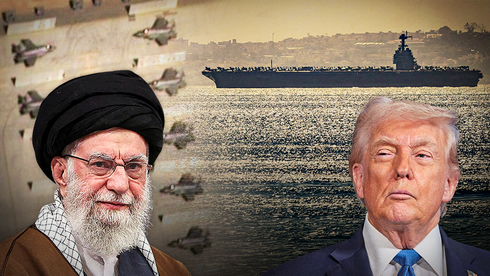
Opinion: While Trump urged Iranians to protest, US inaction echoes past failures from Iran’s 1979 revolution to its nuclear buildup; limited strikes and sanctions have not curbed Tehran and that only sustained military action can halt its programDan Zamansky|On January 13, U.S. President Donald Trump urged Iranians to “keep protesting” and promised that “help is on its way.” More than a month after that social media post, no help has yet arrived. In the meantime, by February 15, according to a count by the Human Rights Activists News Agency (HRANA), the confirmed number of dead Iranian protesters had reached 6,508, among them 226 children. Self-evidently, the true number of those killed is being systematically concealed by the medieval theocratic regime that committed this mass murder.This is very far from the first time that the United States has done nothing while other people were being murdered. Saving Jews being murdered in the Holocaust was not a goal of America’s participation in the Second World War in Europe, which only began once Hitler declared war on the United States on December 11, 1941, four days after the Japanese attack on Pearl Harbor.5 View gallery (Photo: dparody/Instagram/via REUTERS, REUTERS/Jonathan Ernst, KHAMENEI.IR/AFP, Airbus)The minor matter of the systematic murder of six million Jews did not impede academics surveyed by that most American of organizations, the Presidential Greatness Project, from judging Franklin D. Roosevelt, president throughout the period of the Nazi Holocaust, to have been the second greatest leader in American history.This pattern has persisted across time. When the Khmer Rouge murdered almost two million people in the Cambodian genocide of April 1975 to January 1979, two successive American presidents, Gerald Ford and Jimmy Carter, did nothing at all. Academics like Ford and Carter much less than they do FDR, but neither of the two later presidents is considered to have been among the worst American leaders.Carter, who was in fact not only one of the worst presidents but one of the worst men in American history, did not just watch on impassively as Cambodians were murdered. He and his secretary of state, Cyrus Vance, refused to support the Iranian military, at that time the only possible bulwark against Shia Islamism, at the moment of the Shah’s regime collapse in early 1979. Instead, they dispatched General Robert “Dutch” Huyser, the deputy commander in chief of United States European Command (DCINCEUR), to insist that the military support the flailing civilian government of Shapour Bakhtiar.Carter and Vance midwifed a multi-decade bloodbath, which commenced immediately. On February 11, 1979, Bakhtiar’s government imploded, while Abbas Gharabaghi, the last chief of staff of the Iranian Armed Forces, summoned sufficient moral cowardice to declare that the men in uniform were “neutral.” Both Bakhtiar and Gharabaghi soon fled to France, where Bakhtiar, along with his personal secretary, was savagely murdered by agents of the new clerical regime on August 6, 1991. Showing that indifference to murder is far from a purely American habit, France released Ali Vakili Rad, the only one of the three assassins whom it had been able to arrest and imprison, in 2010.5 View gallery Jimmy Carter (Photo: David Rubinger)The present Iranian regime has managed to remain in power for 47 years for only two reasons. First, it very easily decides to commit murder. Second, and more importantly, America and the West at large grant the regime impunity. It took until April 8, 2019, during the first term of President Donald Trump, for America to declare the regime’s Islamic Revolutionary Guard Corps (IRGC) a terrorist organization. It took Europe, which is even weaker than the United States on almost all issues, more than 2,500 days to follow Trump’s and America’s lead, on February 19 this year. It was reported by Politico Europe that France, the same country that could not prevent Bakhtiar’s murder and released his assassin, resisted this step until confirmation of the scale of the regime’s most recent atrocities made the French position untenable.Beyond declarations and sanctions, America has taken very little action against the butchers of Tehran for the last half century. There was the almost completely forgotten Operation Praying Mantis of April 1988, which came after an Iranian mine almost sank an American frigate, the USS Samuel B. Roberts (FFG-58). The U.S. Navy used its enormous power to rapidly sink two Iranian ships and destroy two offshore platforms, but that was that.Two decades later, on January 11, 2007, American forces in Iraq raided the Iranian consulate in Erbil, the capital of the autonomous Kurdistan region, and arrested five Iranian agents, only to release them in two batches, in November 2007 and July 2009, the latter release occurring six months after the inauguration of President Barack Obama. Again, it took until April 2019 and the first Trump term for the United States, in the person of Navy Commander Sean Robertson, to publish an updated acknowledgment that “at least 603 U.S. personnel deaths in Iraq were the result of Iran-backed militants.” At least one in six of the American soldiers killed in Iraq died at the hands of people trained by the Iranian regime, and the most severe step the U.S. took against Iran in response was to hold a small number of Iranian agents in custody for a limited period of time.5 View gallery Iranian Quds Force Commander General Qasem Soleimani (Photo: AP)President Trump deserves abiding credit for directing the U.S. military to kill General Qasem Soleimani, the head of the Quds Force branch of the IRGC and the man directly responsible for directing attacks on American soldiers in Iraq, on January 2, 2020, but this was a single action, which by its very nature could not put an end to Iranian aggression.Even as America repeatedly failed either to deter or to respond to Iranian crimes, the problem of Iran’s nuclear program moved from the background into the foreground. This August, it will be 24 years since the National Council of Resistance of Iran (NCRI) made it a matter of public knowledge that Iran had a secret nuclear facility at Natanz. Only on June 22 last year did the U.S. attack Natanz and two other nuclear facilities in Operation Midnight Hammer, and this operation would most probably have not been authorized by President Trump, had Israel not launched its own much more extensive Operation Rising Lion on June 13, and immediately killed Iran’s top three military commanders.A mere eight months after Operation Midnight Hammer, it is obvious that the fundamental problem remains unchanged. Natanz has been bombed, but Iran is now fortifying Mount Kolang Gaz La or Pickaxe Mountain, a suspicious underground facility just two kilometers (a mile) north of Natanz. Whistling past the graveyard, as practiced by a few American presidents, will not stop Iran. Single-day limited actions, like the killing of Soleimani or the USAF bombings of nuclear sites, will not stop Iran either.The only way to stop Iran’s nuclear program and put an end to its ballistic missile production is war. Not one, or two, or three days of strikes, but war – several weeks of intense attacks. Any supposed alternative, a so-called deal with Iran, will end like all previous deals with the regime – with grotesque and brazen Iranian violations. The choice is, therefore, between war and shame – shameful, false arrangement with Iran which Iran shall only honor in the breach.5 View gallery Satellite images show Iran’s Fordo nuclear facility before and after US airstrikes. The top image, taken June 19, shows the site prior to the attack. The bottom image shows damage in the surrounding area following the strikes (Photo: AFP PHOTO/ SATELLITE IMAGE ©2025 MAXAR TECHNOLOGIES)As Winston Churchill put it in a letter on September 11, 1938, 19 days before the Munich Agreement and less than a year before Hitler attacked Poland: “We seem to be very near the bleak choice between War and Shame. My feeling is that we shall choose Shame, and then have War thrown in a little later on even more adverse terms than at present.”If the Trump administration chooses shame, breaking the president’s public promise to the Iranian people and leaving Iran to gradually restore its nuclear program, this or the next administration will face a worse war. More probably, it will not be a single war, but a set of wars which some or all of China, Russia, Iran and North Korea will initiate once they are confident of the truth of following words spoken by Senator Lindsey Graham at the Munich Security Conference, when considering the consequences of not attacking Iran: “It means the Western world is full of crap. All they do is talk, and when rubber meets the road, they don’t do a damn thing.”The Western world beyond America’s shores is, in fact, full of it, to slightly soften the senator’s phrase. Prominently, Britain’s Prime Minister Keir Starmer, who announces in grand tones that the Royal Navy will send a carrier strike group “to the North Atlantic and High North” and calls this a “powerful show” with breathtaking shamelessness. The same man would, of course, never send a carrier group to attack Iran, and the inept government he leads is letting the press know that it will not let the United States use the base on Diego Garcia or RAF Fairford in Gloucestershire for such a purpose.If the Trump administration acts like the Starmer government, the U.S. will follow Britain into irrelevance and impotence. This would happen at a time when American military power, and thus its ability to deal with a sudden war, has already dangerously declined. Press hyperbole about “the largest force of American warships and aircraft [in] the Middle East in decades” masks the fact that, in comparison with past wars, the present American force is really rather small. This can easily be determined by reading the information contai
Share this story