rabble.ca
The path to prosperity is not necessarily made in Ethiopia
rabble.ca · Feb 27, 2026 · Collected from GDELT
Summary
Published: 20260227T194500Z
Full Article
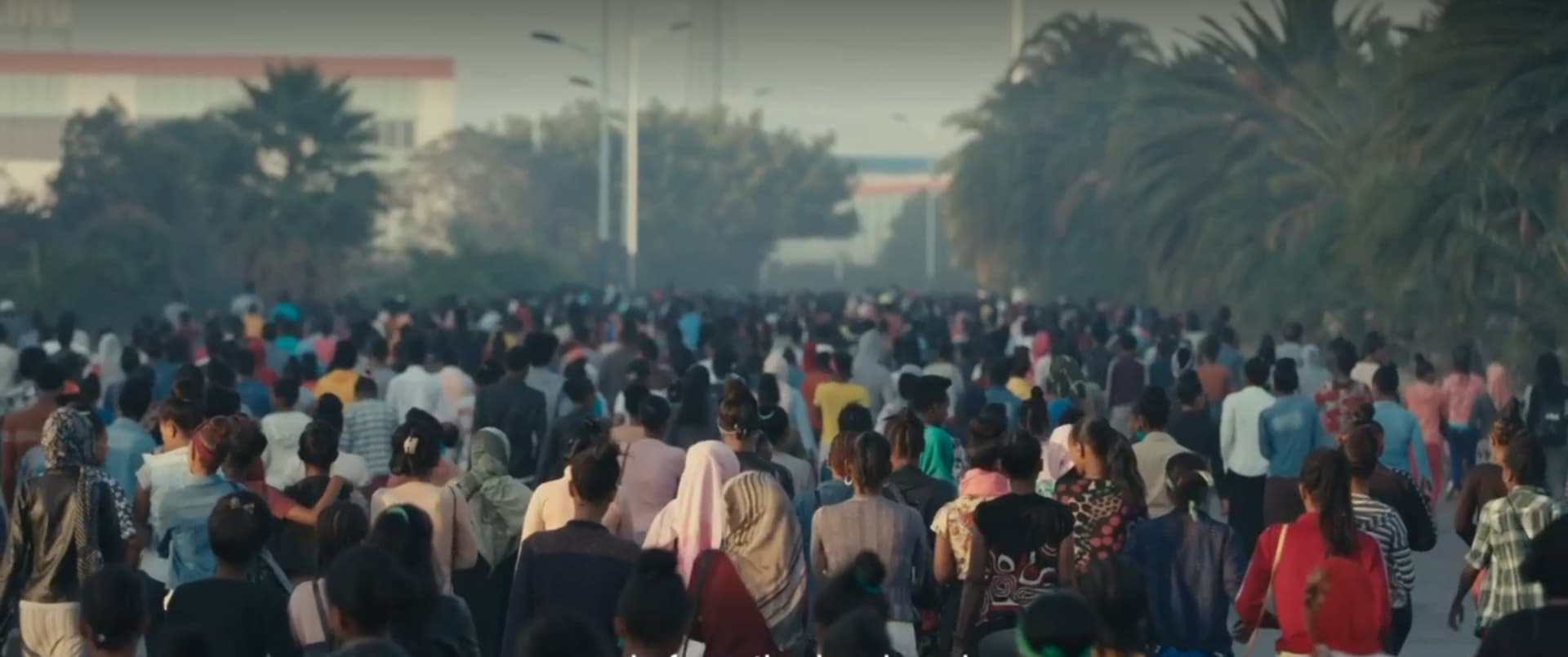
In 2019, filmmakers Xinyan Yu and Max Duncan went to Oromia Region, Ethiopia’s largest and most populous state, to document the lives of Chinese managers, Ethiopian factory workers and local farmers impacted by China’s dream of rapid economic development while showcasing capitalism at its destructive pinnacle. The result of their four years of filming is the incredible documentary, Made in Ethiopia. Ethiopia is the second-most populous country in Africa. Close to 40 per cent of the country’s 130 million inhabitants live below the poverty line, existing on $3 US per day according to The World Bank. The region has long been embroiled in a proxy war between the US and China. The US needs access to metals like niobium, tantalum, zinc and phosphates that are largely found within the Arabian-Nubian Shield which includes Ethiopia and Eritrea. Yet, US policy is destabilizing the region by forcing a showdown, and potential war, between Ethiopia and Sudan over water rights. Meanwhile, Egypt is leveraging the situation to pressure the US to support their claim that Egypt’s water access has been negatively affected by the filling of Ethiopia’s Grand Ethiopian Renaissance Dam. The dam was filled as of September 2025 and there’s evidence that the dam is helping reduce flooding in Sudan while increasing water levels along the Nile River. China set its sights on promoting public-private partnerships (P3s) supplying Ethiopia with much needed infrastructure while taking advantage of high unemployment to attract workers to the massive factory complexes China has been constructing across Ethiopia since 2008. These special economic zones are designed to oversee dozens of factories in a given area. In Made in Ethiopia, Yu and Duncan focus on the latest industrial complex site built in the rural town of Dukem. The Eastern Industrial zone was built according to the blueprint China developed in the 1970’s while industrializing its own vast landscape. In fact, China sees Ethiopia as being, “the China of Africa” – lax environmental protection laws and no minimum wage for the private sector. A story of women Made in Ethiopia follows the complex’s formidable Chinese industrial director, Motto – as fluent in Chinese, English and Amharic – as she uses her charm to push the agenda of expanding the complex. Factory worker, Beti, has hopes and dreams of becoming a fashion designer. Meanwhile, Workinesh the wife of a local farmer, deals with the reality that her home, land and way of life will be destroyed if the factory expands. All three women have a lot to lose in the high-stakes game of economic development in the name of capitalism and globalization. As the three women’s stories unfold, Made in Ethiopia challenges viewers to rethink the relationship between tradition and modernity, growth and welfare, the development of a country and the well being of its people and environment. Nuanced, complex and from a multitude of perspectives, Made in Ethiopia, is a warning Canadians need to heed. When asked what challenges were most striking between rural versus urban Ethiopians as well as the Chinese management, Yu and Duncan replied via email: “Perhaps the biggest challenge is recognizing that everyone is operating under different expectations of what work and opportunity mean. Rural Ethiopians like Workinesh feel conflicted about factory jobs and moving to town. For Workinesh and her daughters, it offered liberation from land and patriarchy; but for her husband Adugna, it meant a loss of identity and agency.” They added: “Inside the factory, Chinese managers have lived through rapid industrialization themselves, and believed discipline and sacrifice were necessary for development, but Ethiopia workers like Beti find it difficult to escape the poverty cycle. Our protagonists represent the complexity of what progress means to a country, a community and the individuals who are impacted. All three women pursued their own vision of prosperity, staking their hopes in industrialization, only to realize that something meaningful is lost in the process.” When the factory opened in Dukem, thousands of migrant workers descended on the farming town. The lack of housing for so many migrant workers escalated housing prices along with the price of most necessities. There is also a dearth of schools, hospitals and infrastructure to support this massive population growth. However, instead of holding Chinese investors to account and using Chinese funds to improve basic human rights, the mayor invests in a modern city park with the intention of making Dukem a world-class destination. Think Therme Spa at the old site of Ontario Place. Young women make up the largest number of factory workers who earn about $50 US a month, an amount insufficient to make ends meet. The women are also routinely docked pay for being late despite transit being out of their control; damages; and bad work trapping them in a cycle of poverty. While Chinese managers send their income home, they live far away from family and work under intense pressure. The largest rewards of industrialization flow to the investors who reside outside of Ethiopia. As for the farmers who have historically stewarded the land, they’re told that their land belongs to the local government. When the 83 farmers impacted by the industrial park expansion demand their government and Chinese investors respect their rights and pay them compensation for their land, they receive assurances that never come to fruition. When asked how Ethiopia can sustainably evolve into a nation that promotes human rights and workers rights while petering on the brink of economic and environmental colonization by the Chinese, the film’s producer Tamara Dawit responded via email: “It is important to remember that Ethiopia’s history, while unique in having avoided colonization, has still been complex and at times deeply unequal. The imperial period was largely feudal, with systems that included slavery and bonded labour. Later, under the socialist government, state-driven projects such as forced villagization and resettlement also placed heavy burdens on ordinary people.” “In that context, the absence of colonization does not automatically translate into a historical record of strong protections for human or workers’ rights. The task today is less about preserving an idealized past and more about ensuring that as Ethiopia engages more deeply with global capital and international partners, economic integration does not create new forms of dependency, but instead fairly benefits and values Ethiopia, while supporting national priorities and institutional development,” she added. Throw in COVID lockdowns as well as renewed civil war squirmishes into the mix triggering foreign investors pulling out and phase two of the industrial park is put on hold. Meanwhile, the mayor’s world class City Park is abandoned and local’s lives are left in limbo. Tensions with Eritrea Although the civil war ended in November 2022, war is imminent between Ethiopia and Eritrea. Landlocked Ethiopia’s desire for access to the Red Sea through Eritrea threatens the 2018 peace agreement that ended a 20-year conflict and earned Ethiopia’s Prime Minister Abiy Ahmed the Nobel Peace Prize in 2019. This situation continues to put pressure on international investment in Ethiopian-Chinese industrial parks. Reality is the short-term winners are large investors and governments benefitting from foreign capital and job creation. But those gains are fragile as political instability and ethnic conflicts continue to flare up in the region. What needs to be said is that no matter how much economic growth there is, gross domestic product (GDP) is not a reflection of how workers on the ground nor the environment are doing. Rather, GDP is a measure of how the one per cent who avoid paying their fair share of taxes are doing. Thing is, workers, especially those working in the Eastern Industrial Zone in Ethiopia, are never going to be one of these elites. Given the current global climate crisis, human rights crisis, over consumption of goods crisis, in conjunction with the corruption of investors and government officials expanding and exporting capitalism, one has to ask, is this the way to economic development and growth for Ethiopia? Yu and Duncan maintain: “The real question is not whether economic development is the way to go, but how to develop in a way that’s sustainable and actually benefits the people who contribute the most. With so few choices, you can’t expect a country like Ethiopia not to industrialize. So, it has to be done right. For example, cheaper green technologies and renewable energy mean that Ethiopia’s growth can be cleaner than China’s was. Industrial projects can take more humane approaches to land appropriation and labour conditions – but that needs responsible corporations and clean government and civil society to hold them accountable.” For Dewalt, it’s important to make films like Made in Ethiopia that move beyond news coverage. “For decades, Ethiopia has been framed almost entirely through external lenses. News headlines, crisis reporting, and outsider narratives have reduced a complex country to a narrow set of images and moments. I was drawn to produce this film because it deliberately pushes beyond that frame. Made in Ethiopia returns agency to real people and creates space for Ethiopians to speak for themselves, in their own voices, with nuance, dignity, and depth,” Dewalt said. Watch Made in Ethiopia on CBC Gem here. Support rabble today! We’re so glad you stopped by! Thanks for consuming rabble content this year. rabble.ca is 100% reader and donor funded, so as an avid reader of our content, we hope you will consider gifting rabble with a donation during our summer fundraiser today. Nick Seebruch, editor Whether it be a one-time donation or a small monthly contribution, your support is critical to keep rabble writers producing the work you’ve come to rely on
Share this story