counterpunch.org
The Nazi Origins of the South American Drug Trade : Klaus Barbie , Cocaine and the CIA
counterpunch.org · Feb 14, 2026 · Collected from GDELT
Summary
Published: 20260214T183000Z
Full Article
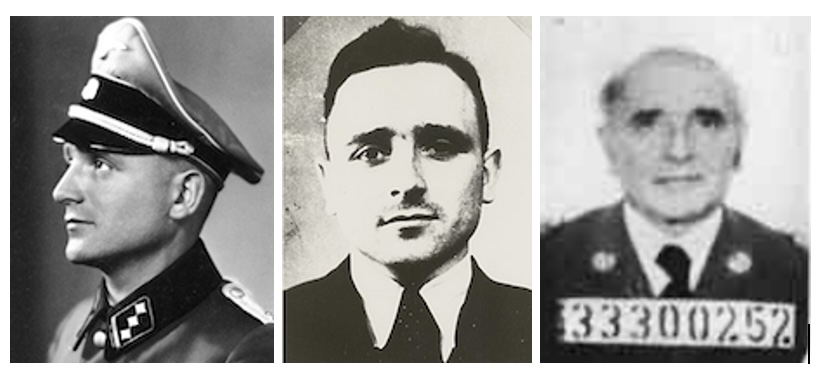
The three faces of Klaus Barbie. Personally, I have no regrets. If there were mistakes, there were mistakes. But a man has to have a line of work, no? – Klaus Barbie By the time Klaus Barbie went on the payroll of an American intelligence organization in 1947, he had lived several lifetimes of human vileness. Barbie sought out opponents of the Nazis in Holland, chasing them down with dogs. He had worked for the Nazi mobile death squads on the Eastern Front, massacring Slavs and Jews. He’d put in two years heading the Gestapo in Lyons, France, torturing to death Jews and French Resistance fighters (among them the head of the Resistance, Jean Moulin). After the liberation of France, Barbie participated in the final Nazi killing frenzy before the Allies moved into Germany. Yet the career of this heinous war criminal scarcely skipped a beat before he found himself securing entry on the US payroll in postwar Germany. The Barbie was shipped out of Europe by his new paymasters along the “ratline’ to Bolivia. There, he began a new life remarkably similar to his old one: working for the secret police, doing the bidding of drug lords and engaging in arms trafficking across South America. Soon, his old skills as a torturer became in high demand. By the early 1960s, Barbie was once again working with the CIA to put a US-backed thug in power. In the years that followed, the old Nazi became a central player in the US-inspired Condor Program, aimed at suppressing popular insurgencies and keeping US-controlled dictators in power throughout Latin America. Barbie helped organize the so-called “Cocaine Coup” of 1980, when a junta of Bolivian generals seized power, slaughtering their leftist opponents and reaping billions in the cocaine boom, in which Bolivia was a prime supplier. All this time, Klaus Barbie was one of the most wanted men on the planet. Even so, Barbie flourished until 1983, when he was finally returned to France to face trial for his crimes. In the whole sordid history of collusion between US intelligence agencies, fascists and criminals, no one more starkly represents the evils of such partnerships than Klaus Barbie. +++ On August 18, 1947, three men sat over drinks in a café in Memmingen, part of American-occupied Germany. One was Kurt Merck, a former officer in Nazi Germany’s military intelligence agency, the Abwehr. Merck had worked in France during the war and had been scooped up by American intelligence, who debriefed him and soon put him on the payroll. The second man was Lieutenant Robert Taylor, an American officer in the Army’s Counter-Intelligence Corps (CIC). The third man was Klaus Barbie, at that time on the run from the French and the Soviets, and number three on a US/British list of wanted SS men. Barbie had already been roughly interrogated by the British and did not care to repeat the experience. Merck was an old friend of Barbie’s. Despite interservice rivalries between the Gestapo and the Abwehr, the two had worked together in France and had gotten along well. Merck was more than willing to vouch to the American officer that Barbie would be a good hire. Merck had been recruited by the Counter-Intelligence Corps in 1946, at a time when US intelligence agencies were trying to recruit Nazi talent. CIC’s cover story for this unwholesome bit of head-hunting was the need to root out and suppress a supposed network of Hitler Youth, whose fanatical detachments had pledged to fight on, no matter what official terms of surrender had been signed. But CIC’s real interest in Barbie had nothing to do with the so-called Werewolves of the Hitler Youth. Barbie’s hiring as an agent of the CIC was contingent on his willingness to impart information about British techniques of interrogation and about the identities of SS men the British might have tried to recruit as their own agents. Barbie was only too happy to comply, particularly as this enthusiastic torturer had been slightly bruised when he was questioned by the British. For the next four years, the third most wanted SS man in Germany worked for the US Army’s Counter-Intelligence Corps. The Americans set up Barbie in a hotel in Memmingen, brought his family from Kassel and partly paid him in commodities–cigarettes, medicines, sugar and gasoline–that he sold for a handsome price on the black market. After initial debriefings about the intentions and techniques of the British, Barbie’s main assignment, as described in a CIC memo, was to file reports on “French intelligence activities in the French Zone and their agents operating in the US Zone.” +++ By 1948, the French government had received information that Barbie was living under the protection of the US somewhere in Germany. The French were more eager than ever to get their hands on Barbie, who had already been sentenced to death in absentia for his war crimes. Barbie was needed to testify in the upcoming trial of René Hardy, the Resistance man who saved his own skin from Barbie’s torture by turning in Jean Moulin. But the CIC had no intention of handing over its prize catch to the French, even on loan for the Hardy trial. Barbie’s handlers at the CIC, who saw the French as allies of Stalin, had nightmares about Barbie spilling the beans on his American employers. Eugene Kolb, the US Army Intelligence officer who had worked with Barbie for a year, said that the Gestapo man couldn’t be returned to the French because he “knew too much about our agents in Europe and the French intelligence agency was saturated with communists.” Kolb’s opinion is backed up by CIC memos, which suggest that the French Sûretė intended to “kidnap Barbie, reveal his CIC connections and embarrass the US.” So it transpired that in December 1950, the US decided to trundle Barbie and his family down the ratline, an escape hatch from Europe for Nazi agents created by CIC officers Lt. Colonel James Milano and Paul Lyon. Lyon and Milano had been shuttling Nazis out of Germany, Austria and Eastern Europe since 1946, sending them to Argentina, Chile, Peru, Brazil and Bolivia. The tour guide for this operation was himself a war criminal, Father Krunoslav Draganovic, a Croatian priest who oversaw the relocation of several hundred thousand Jews from Yugoslavia to their deaths in Nazi concentration camps. As the fascist government in Croatia began to crumble at the end of the war, the priest made his way to the safety of the Vatican. Then Draganovic exploited the cover of his position with the Red Cross and with the Vatican and shuttled hundreds of war criminals out of Europe. Many of Draganovic’s first recruits were members of the Ustaše regime, the death squads under the control of Croatian dictator Ante Pavelic, who supervised one of the bloodiest killing sprees of the war. Hundreds of thousands of Serbs–on some estimates more than two million–were slaughtered by Pavelic’s forces to fulfill his insane desire to make Croatia a “100 percent Catholic state.” Pavelic would show his favorite trophy to visitors at his office: a forty-pound jar of human eyeballs extracted from his Serbian victims. After the war, Draganovic helped Pavelic secure safe passage to Argentina, where he became a frequent dining companion of Juan and Eva Peron. Some of the other notable Nazis who Draganovic helped escape Europe for South America included Colonel Hans Rudel, who went to Argentina, where he headed Peron’s air force and became a leader of the international neo-Nazi movement; Dr. Willi Tank, a chief designer for the Luftwaffe; and Dr. Carl Vaernet, who had overseen surgical experiments on homosexuals at Buchenwald, castrating gay men and replacing their testicles with metal balls. Vaernet was adored by the Perons, who showed their appreciation by making the Nazi doctor head of Buenos Aires’s public health department. +++ In 1947, the Counter-Intelligence Corps contracted with Father Draganovic to help them dispose of some of their own problematic agents and recruits, namely Nazi scientists, doctors, intelligence operatives and engineers. The deal was brokered in Rome by CIC officer Paul Lyon, who noted that Draganovic had established “several clandestine evacuation channels to various South American countries for various types of European refugees.” This priest, Draganovic was not an altruist, even on behalf of his Nazi colleagues. He demanded from the American intelligence agencies $1,400 for each war criminal who passed through his doors, and the US intelligence agencies were glad to pay his price. A memo from an intelligence officer working at the US State Department explained that the Vatican justifies its participation by its desire to infiltrate not only European countries, but Latin American countries as well, [with] people of all political beliefs, as long as they are anti-communists and pro-Catholic church. Fearing that Barbie might slip through their fingers, the French protested directly to John J. McCloy, the US High Commissioner in Germany. McCloy icily replied that the US would not hand over Barbie to the French for possible execution, “because the allegations of the citizens of Lyons can be disregarded as being hearsay only.” McCoy knew this to be untrue. In 1944, Barbie’s name was prominently displayed in McCloy’s own office on a list called CROWCASS (the Central Registry of War Criminals and Security Suspects), where Barbie was identified as being wanted for “the murder of civilians and the torture and murder of military personnel.” Barbie was hardly the only SS man whom McCloy and his cohorts endeavored to shield from justice. Another was Adolf Eichmann’s right-hand man, Baron Otto von Bolschwing. This former SS officer was hired by the CIC in 1945, where he swiftly became one of the agency’s most productive assets, recruiting, interrogating and hiring former SS officers. Von Bolschwing was later traded to the CIA, where he plied his tradecraft in East Germany. Like Barbie, von Bolschwing was a top-rank war criminal, having been one of Eic
Share this story