timesofindia.indiatimes.com
Talented Indians shouldnt have to go to Europe or US to do top - tier research
timesofindia.indiatimes.com · Feb 15, 2026 · Collected from GDELT
Summary
Published: 20260215T003000Z
Full Article
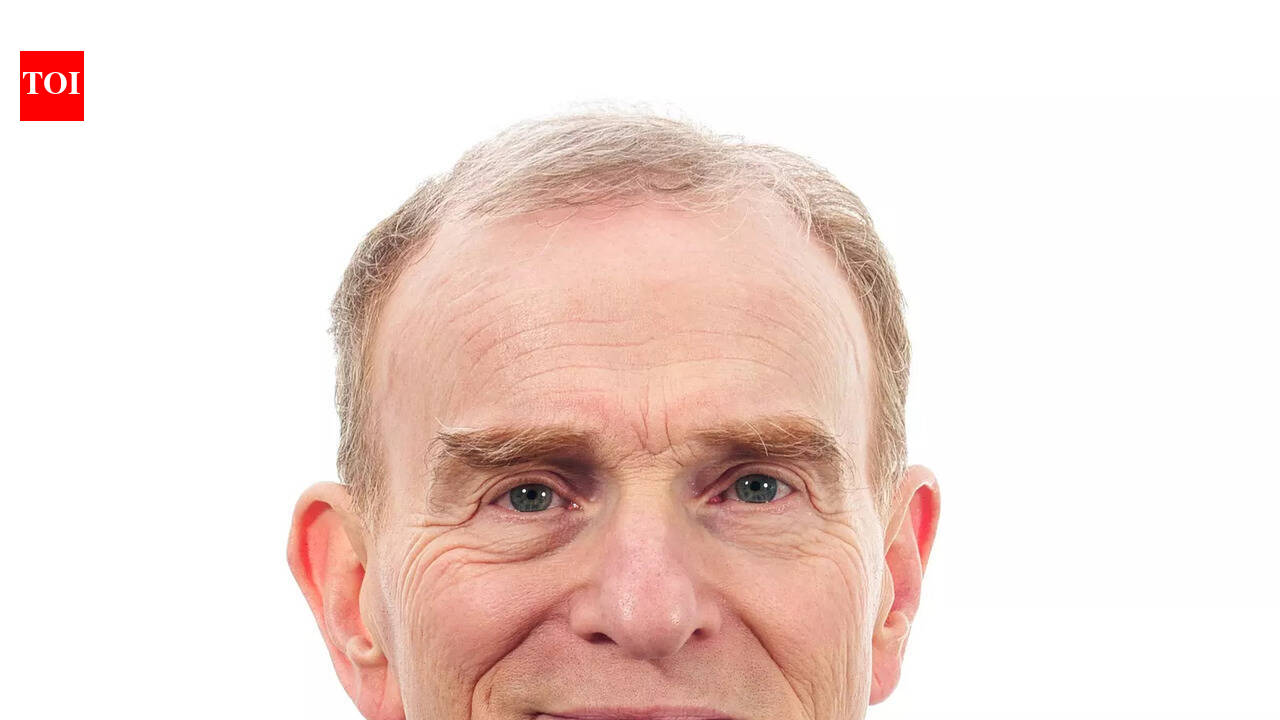
Randy SchekmanRandy Schekman, who shared the 2013 Nobel Prize in Physiology or Medicine for discovering how cells organise the transport of molecules in tiny packages called vesicles, was the chief guest at Infosys Prize 2025 ceremony in Bengaluru. In an interview with Habeeba Salim, he explains why he has made Parkinson’s his latest mission and how his discovery helps diabeticsYour work on vesicle transport won you a Nobel. Can you explain its impact on our lives?Diabetics in India and around the world rely on insulin. What most people don’t know is that much of it is made by the same yeast used to bake bread and brew beer. That’s a very direct way basic cell biology touches everyday life.Our lives are made possible by about 100,000 different protein molecules — long strings of amino acids that fold into enzymes and structural proteins which build and maintain our bodies. They are made inside our cells, many of which must be exported — like insulin or the molecules that let nerve cells talk to each other. These are carried in tiny vesicles, a system that evolved billions of years ago. I was fortunate to choose yeast as the model to study this protein export. Within the first two years, I was able to isolate the genes that organise this pathway, map how they interact, and identify the proteins they encode. Later, when the human genome was sequenced, we discovered that humans have the same genes (as yeast) — not surprising, since this process evolved 2 billion years ago and evolution reuses what works. This made it possible for the emerging biotech industry in San Francisco to use yeast as a platform to manufacture important human proteins that are normally exported from cells, like insulin. Within a few years, scientists could introduce the human insulin gene into yeast and equip it with the signals needed for yeast to recognise and secrete it. Today, about one-third of the world’s supply of recombinant human insulin is produced in giant fermentation vats of yeast.You’ve been a strong advocate of open science. What has made you so upset with elite science journals?The so-called elite, high-profile journals fought bitterly against open access for years because they saw it as a threat to their profit margins. The two biggest commercial players have some of the highest profit margins of any company in the world — not in absolute dollars, but in margins. They rely on what is essentially free labour: scientists review the papers for them, and institutions pay very high license fees to access the journals. On top of that, they charge huge fees for open-access publication because young scholars feel their careers depend on publishing in these journals. Publishing a full-length open-access paper can now cost an investigator about $12,000.Final decisions are made by ‘professional editors’ — people who may once have been scientists but no longer practice. In my view, many of these editors lack the judgment to make such critical decisions, especially when complex new technologies are involved. And although they deny it, they are often influenced by the desire to publish “shiny objects” — sensational papers that generate buzz and media coverage. That pressure can drive them to publish work that appears exciting but later turns out to be wrong. The most infamous case is (UK doctor) Andrew Wakefield’s paper suggesting a link between childhood vaccination and autism. Even after the paper was retracted and Wakefield was found to have manipulated data and lost his medical license, he still has a second career promoting anti-vaccine views alongside people like RFK Jr.Geopolitics is suddenly a factor in scientific research and funding. What should countries like India plan for?India has enormous human potential. The tragedy is that much of that potential is realised only when people move abroad. I’m cautious about telling politicians what to do — they have many competing problems — but fundamentally, countries like India need to invest more in the basic infrastructure of scientific research and create environments where their best minds can flourish at home. Talented people shouldn’t feel they must move to Western Europe or the US to do top-tier work.Tell us an anecdote that captures your journey into science?I’ll share a story that may end up on my tombstone. As a child growing up in Southern California, I got a toy microscope for my 11th birthday. I went to a local dry riverbed, scooped up a jar of pond scum, took it to my bedroom, put a drop on a slide, and looked through the plastic lens. I was astonished by the profusion of tiny organisms swimming around. One evening at dinner I tried to describe this to my father, who was quite sceptical. He thought I just had a vivid imagination. I was offended by his scepticism and decided I needed a real microscope. I did odd jobs — babysitting, mowing lawns, delivering newspapers — and resolved to save $100, which was a lot of money in 1962, to buy a proper student microscope. I hid the money in my bedroom closet. But I could never reach $100 because my mother kept borrowing some of it to buy groceries. One Saturday, I was so upset that I got on my bicycle and rode to the local police station. I told the duty officer I wanted to run away from home because my mother was stealing my money and I couldn’t buy my microscope. They called my father in. He met with the captain, and I’m sure he was angry, but the upshot was that he and I went to a local pawn shop. In the front window was a Bausch & Lomb monocular microscope — my dream. We bought it for $100. That instrument became my pride and joy. All through high school I entered science fairs with projects on microorganisms using that microscope. Then I went off to university, and the microscope went into storage. Fortunately, my parents kept it and later mailed it to me when I was living near Berkeley with my own family. You can now see it on display in Stockholm (at the Nobel museum), with a caption in English and Swedish explaining how I tried to run away from home to pursue my career in science.What else are you working on?There’s another area that is very exciting to me, and it’s personal. My wife died of Parkinson’s disease. I was asked to lead a new effort to bring investigators together to study the basic science of Parkinson’s. This initiative is supported by the Sergey Brin Family Foundation. Sergey Brin, the co-founder of Google, and his mother share a mutation in one of about 20 known genes linked to familial forms of the disease. He isn’t ill yet, but he’s at risk, and he has invested over a billion dollars in Parkinson’s research.
Share this story