circleofblue.org
Syria Environmental Crisis : An Ongoing Tragedy
circleofblue.org · Feb 27, 2026 · Collected from GDELT
Summary
Published: 20260227T184500Z
Full Article
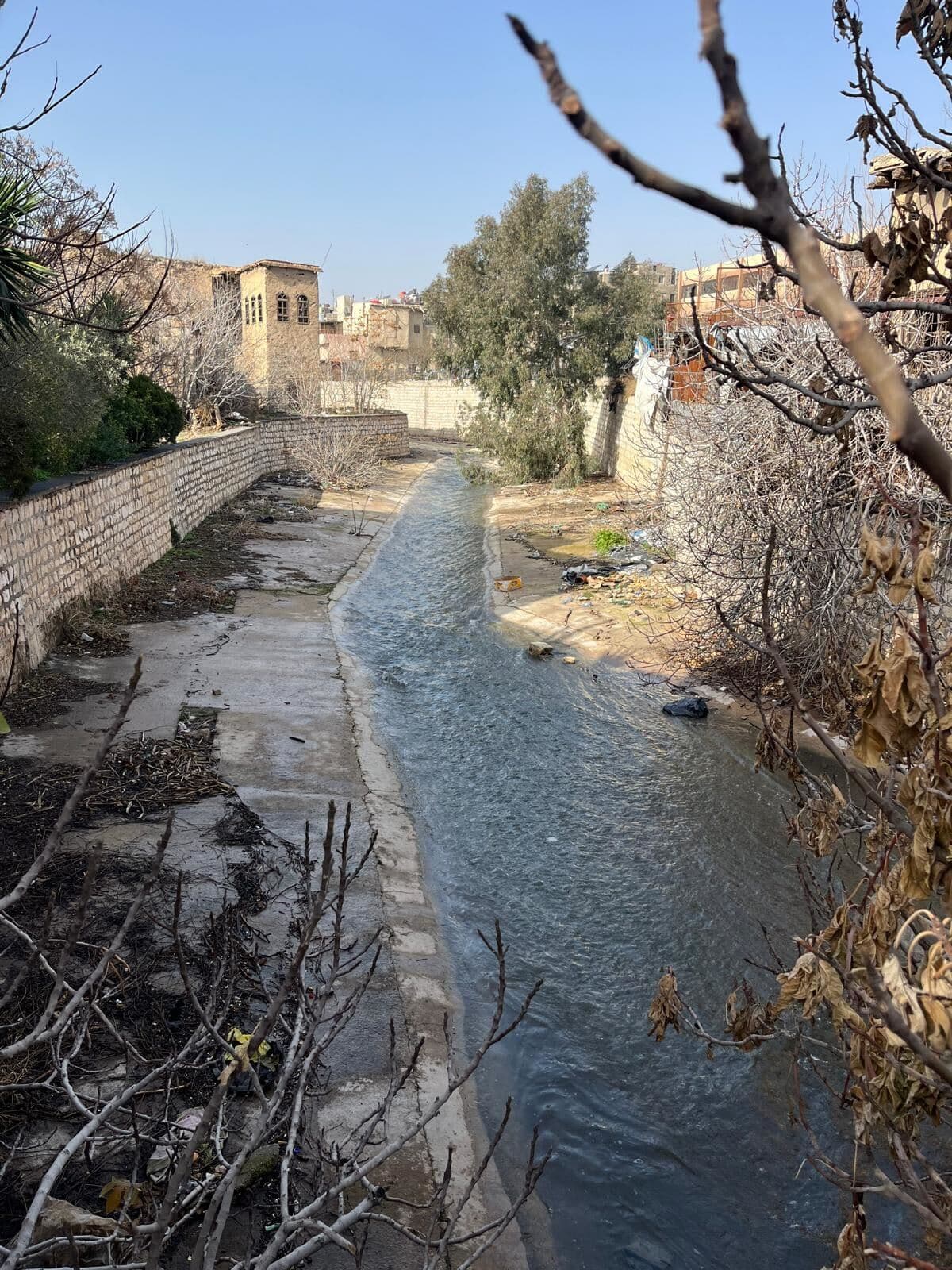
By Peter Schwartzstein Originally published by the New Security Beat; February 23, 2026 I recently returned to Syria for my first peacetime visit. Unsurprisingly, the country is an awful mess. The destruction is somehow slightly more conspicuous than it seemed through a number of trips between 2014 and 2022. People’s exhaustion is palpable, and the economic situation is every bit as bad for many now as it was during the war. A formidable—and thus far entirely unanswered—environmental question also looms: how on Earth is the country’s landscape to be salvaged? As things stand, more trees are still being cut down than are being replanted. Freshly cut stumps dotting the roadsides, and many communities continue to add to the roughly 30% of Syrian woodland that has disappeared over the war. The water situation is dire. The Barada, which flows through Damascus, is filthy and insipid, even after a relatively rich month of rain, while groundwater levels around the capital have plummeted by up to 65 meters in the last six years alone. Among a lengthy catalog of other ecological woes, urban air quality is so poor that pharmacies appear to be among the few businesses doing a brisk trade. Many people burn a rash of plastics through the winter, and deploy diesel generators as often as their finances allow in the absence of more than a few hours of daily electricity supply. “You have to choose whether to stay warm or whether to breathe,” said one pharmacist. “Understandably, most choose warmth, but then they suffer from a lot of medical issues later.” Water and other resource woes threaten to trigger violence among communities that are already divided along ethnic, sectarian, and ideological lines. A “New” Violence None of these problems are easily resolved of course, and some of them may appear secondary to other, intimidatingly big challenges in the new government’s in-tray. But if there were any remaining doubts about the centrality of environmental recovery to Syrian peace and stability, current events on the ground ought to dispel them. Petty crime is mushrooming, especially in many of the rural areas where agricultural fortunes have been sundered by conflict and climate. In the villages along Damascus’s eastern periphery, which previously provided for many of the capital’s food needs, there is nary a cultivated field (because few can access affordable water or inputs), an intact orchard (many of which have gone the same way as other trees), or a buzzy beehive (which are unviable in areas devoid of vegetation). Villagers told me these losses have created a surge in housebreaking and cattle rustling, injecting a dangerous new destabilizer into communities in desperate need of more intercommunal cooperation, not less. Anecdotally, the drug consumption which took off through the war in large part due to the Assad regime’s state-backed narco-production continues to boom. Here, too, workers whose livelihoods have been torpedoed or complicated by climate stresses appear to be among the most ardent users. This group includes farmers who work long hours in hot exposed fields for meager returns. It also includes young rural men who have turned to pushing drugs in the absence of alternative employment. “What was once shameful is no longer. People are tired and desperate,” said one agricultural official outside Damascus. Most seriously, perhaps, water and other resource woes threaten to trigger violence among communities that are already divided along ethnic, sectarian, and ideological lines. Shortages are emerging as dangerous bones of contention. According to a recent study from two parts of the Damascus countryside, 72 percent of reported tensions were related to water access, with others centered on disagreements within water user associations. Many of these same places also struggle with aggravated and potentially violence-inducing inequalities. Longstanding dynamics in some villages are being unsettled as wealthier landowners purchase the fields of their poorer peers for bargain basement prices. No Easy Task Naturally, the obstacles to addressing these crunches are weighty, and go well beyond the raft of ostensibly competing priorities which the government must navigate. The amount of international funding available to do so is woefully insufficient here, as in much of the rest of the world, especially given the needs. The World Bank conservatively puts the cost of Syrian reconstruction at around $216 billion; it is a sum many times more than those mooted by Western donors, IFIs, and even the Gulf states. Few of these pledges have translated into commensurate results on the ground, however, and most of them appear to center on megaprojects. For example, the Saudis have pledged to build a coastal desalination facility, which is no bad thing in itself, but which would appear to be a rather distant priority—especially when so much of the country’s local-level water infrastructure has been shelled and shot into Swiss cheese-like proportions. Capacity in the ministries charged with environmental management is so limited that they seemingly struggle to absorb whatever meager funding is available. In this, they may be suffering from the relatively lowly stature that the environment has traditionally been accorded in the region. Syria’s health and education ministries have benefitted tremendously from the return of talented diaspora professionals with relevant expertise. The Ministry of Local Administration (MoLA), which has traditionally presided over environmental work, and the newly established Ministry of Emergency and Disaster Management (MoEaDM) have received no such bounty. In a meeting, a senior MoEaDM official even requested that I lobby Syrians within the environmental sector to submit their CVs. Unhelpfully, those two ministries also appear to be engaged in something of a turf war over the environment and climate portfolios. The division between their respective responsibilities still being hashed out, according to officials at both agencies. The new government, though significantly more open so far than its police state predecessor, also appears to be displaying similar instincts in its dealings with international NGOs. Senior officials’ insistence on signing off on the smallest of decisions is slowing urgently needed work, Damascus-based colleagues say. I had a very small taste of this continuing emphasis on control when a plainclothes policeman put an end to an interview with a displaced villager in a public setting, inexplicably insisting it was for my “own protection.” The sheer intractability of the authorities’ position—and even their attempts to do the right thing, ecologically speaking—illustrates the risk of additional violence. For example, farmers and households across parts of southern Syria bored an estimated 50,000 new wells over the war, fueling even more rapid aquifer depletion. Yet officials dare not shut down these operations any time soon. To do so, one MoLA official said, would be tantamount to triggering immediate hostilities. What a win it would be if the new government could succeed in a sector where its foe had so manifestly failed. Out of Crisis, Peace? Syria’s environmental challenges are big. So, too, are the opportunities that could come from harnessing them to peacebuilding ends. Plenty of NGOs are desperate to use shared ecological woes to reunite their communities, including one trying to entice urbanites back to their depopulated and previously diverse native villages, and another that plans to leverage waste collection as a means of reunifying residents of divided––and now trash-laden––neighborhoods. In intensely damaged and water-impoverished parts of Hama and Homs provinces, the Aga Khan Foundation is attempting to build water committees with representatives from all local ethno-religious groups. Most of these groups once mixed freely, but their ties have frayed in many instances over the extended period of violence here. The leadership of the Ministry of Emergency and Disaster Management says it is keen to make climate security a priority issue. Most of these officials previously worked for the White Helmets civil defense in opposition-held territories throughout the war. Having responded to 15 plus years of intensifying floods, fires, and other disasters, they ought to have a better understanding than most of how intimately tied up climate and environment are with peace and stability. They will have noted too the impact of solar energy, which provided some of the only power in heavily bombed parts of Syria for years on end. As in other parts of the world, solar energy might simultaneously (re-) electrify communities and temper tensions. Up to 25 percent of Syrian households may now have some kind of rooftop solar, most of it provided by an estimated 3,000 Chinese brands, according to managers of two showrooms in Damascus. Solar panels make for especially encouraging sights across Syria, including in the traditionally oil-producing northeast, where local forces presided over highly polluting extraction practices that have sullied local waterways, and contributed to notably high levels of security sector recruitment. Finally, and above all, successful environmental and climate management nationwide could be a means for the new authorities to assert their bone fides to Syrians, a large share of whom look askance at the formerly jihadi groups who now dominate government. As has frequently been discussed, it was Assad’s cack-handed and neglectful response to climate stresses in the years leading up to 2011 that contributed to popular unrest. What a win it would be if the new government could succeed in a sector where its foe had so manifestly failed. Peter Schwartzstein is a non-resident fellow with the Stimson Center’s Environmental Security Program and an environmental journalist, researcher, and advisor, who focuses on environmental peacebuilding and the conflict-climate nexus. He is
Share this story