watoday.com.au
Clustered Story
Snakes on a plane , skinks in the post : The slippery and growing problem of animal smuggling
watoday.com.au · Feb 15, 2026 · Collected from GDELT
Summary
Published: 20260215T044500Z
Full Article
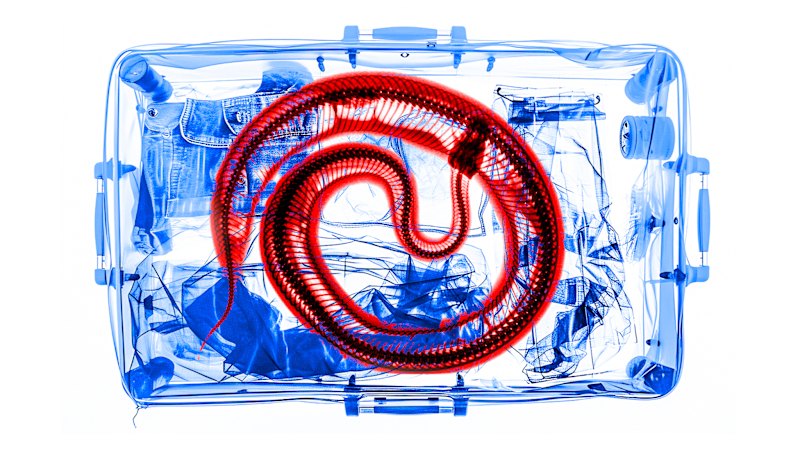
Crime gangs are being caught in record numbers smuggling rare Australian animals for global underground networks, but experts say it’s just the tip of the iceberg in an illegal trade worth billions.Australian reptiles worth up to $100,000 each on international black markets are being intercepted in the $32 billion annual global trade – the world’s fourth-largest illegal market behind drugs, counterfeiting and human trafficking.A crackdown on wildlife trafficking syndicates has caused the number of smuggled animal seizures to more than double in the past two years. Federal authorities stopped more than 1100 trafficked native animals at the border last year.Victoria’s Conservation Regulator has recorded a 254 per cent rise in wildlife-related crime reports over the past five years, including instances of trafficking and cruelty.Snakes like this one, seized as part of Operatino Django, are being smuggled out of Australia in drovesConservation RegulatorDespite the surge in enforcement, wildlife crime experts mapping the illegal trade have found nine out of 10 animal-smuggling attempts in and out of Australia are successful, earning millions of dollars each year for crime gangs, decimating animal populations and risking the nation’s biosecurity.Australia’s unique reptiles are the most frequently targeted species, particularly blue‑tongue skinks, shinglebacks and rare snakes. Hong Kong continues to be the top destination for illegal exports, with most leaving the country via New South Wales.Federal Environment Minister Murray Watt said the Department of Climate Change, Energy, the Environment and Water had set up specialist environmental crime units in Sydney and Melbourne over the past two years as part of an effort to tackle the growing “barbaric trade”.“Illegal trafficking and wildlife crime is fast becoming a threat for many of our species that are already at risk of extinction,” Watt said. “The growing global trade in native plants and animals is illegal, cruel and threatens the future of many of our beloved plants and animals.“Through targeted intelligence analysis, on-ground investigations, and close collaboration with partner agencies, we’re detecting the methods used to traffic native species and closing the gaps criminals rely on.“This work is delivering results – seizures, prosecutions and deterrence – and strengthening Australia’s broader biosecurity and conservation outcomes by making it harder for offenders to profit from the illegal wildlife trade.”A popcorn momentFollowing one of Australia’s largest animal-smuggling busts, the ringleader of a Sydney-based syndicate on Friday received a record jail sentence.Between 2018 and 2023, authorities intercepted 15 packages bound for Hong Kong, Romania, South Korea and Sri Lanka, which contained a total of 101 native reptiles hidden in bags of popcorn, biscuit tins and a handbag.Under Operations Buckland and Pandora, Commonwealth and NSW investigators teamed up with Australia Post and university-based wildlife crime researchers to track down the traffickers, leading to search warrants that uncovered several hundred more live reptiles – shingleback lizards, western blue-tongue lizards, Centralian blue-tongue lizards, bearded dragons, southern pygmy spiny-tail skinks, Eastern Pilbara spiny-tailed skinks, desert skinks, narrow-banded sand swimmers and major skinks – as well as the ringleader, Neil Simpson, 61.On Friday, the Sydney Downing Centre District Court sentenced Simpson to eight years in jail with a non-parole period of five years and four months. Three lower-level syndicate members were previously convicted for their roles.Smokes and lizardsAn investigation by this masthead can also reveal that recent busts have shown an overlap with other forms of organised crime.During a January 22 raid on a Melbourne apartment, federal environmental crime investigators uncovered 800 cartons of illicit tobacco along with native reptiles allegedly being prepared for trafficking.As part of Operation Sam, authorities discovered cartons of illegal tobacco alongside lizards, skinks and snakes.Department of Climate Change, Energy, the Environment and WaterThe raid, codenamed Operation Sam, was launched late last year after 24 live reptiles – including 14 shingleback skinks, three eastern blue‑tongue skinks, three lace monitors and four children’s pythons – were uncovered stuffed into toys, table lamps, clothing bags, socks and plastic tubs bound for Hong Kong.A 26-year-old Chinese national was arrested and charged with three counts of attempting to export specimens.This masthead is aware of at least nine alleged wildlife traffickers slated to face courts in Victoria, NSW, Queensland and Tasmania in the next three months after being identified through a series of ongoing investigations.They follow at least 14 major operations in Australia since 2020, which have brought together a range of agencies – including the Australian Federal Police, Australian Border Force, the Department of Agriculture Fisheries and Forestry, state and territory police services and environment agencies, as well as international agencies including Interpol – and ended with about 30 people convicted of charges connected to the illegal wildlife trade.The Australian convictions include people from China, Hong Kong, Thailand and Malaysia, while there have also been a handful of convictions in the United States, Hong Kong and Germany over the past six years for smugglers in possession of Australian rusty monitors, spiny-tailed skinks and earless monitor lizards.But those convicted are often low-level mules, including international students recruited on Chinese e-commerce and social media sites to conceal live animals in everyday goods and send them through the post and courier channels.Snakes on a planeCal Heppell, the director of regulatory operations at the Conservation Regulator, said the Victorian agency was seeing more reptiles being taken from the wild, with shingleback and blue‑tongue lizards often targeted, driven by their high value in the illicit overseas pet trade.After raiding properties in Noble Park North and Caroline Springs, the Conservation Regulator and Victoria Police seized dozens of illegally sourced native reptiles, including shingleback lizards, blue-tongued lizards and various species of geckos, as part of Operation Pike, which targeted an illegal Victorian syndicate operating with links to other states.In February 2025, the syndicate’s ringleader, Zehong Zheng, 21, was fined $30,000 after pleading guilty to 67 charges including importing and exporting wildlife without a permit, while two women in their 20s were also fined for their roles.Like counterpart agencies around the country, the Victorian authority had detected high demand in Australia and internationally for native species as pets, and reports of illegal wildlife trafficking were rising, Heppell said.“We are working more closely than ever with national and state agencies to disrupt the illegal trafficking of both protected native species and exotic pest animals,” he said.Twenty-four reptiles – including 14 shingleback skinks, three eastern blue-tongues, three lace monitors, and four children’s pythons – were found hidden in toy containers.Department of Climate Change, Energy, the Environment and WaterThe series of complex operations involving informants, data scraping, postal X-ray and organic scanning has intercepted hundreds of shipments that often include dozens of animals cruelly stuffed into hollowed-out electrical equipment, toys, socks, boots, music boxes, rice cookers and other packages bound for underground markets, most commonly in Hong Kong and Germany.Organisations including Rapiscan technologies, Taronga Zoo and the Australian Museum have also been called in to develop world-leading scanning technology capable of detecting live animals at Australia’s borders.As a result, the federal wildlife watchdog last year seized 1118 specimens being smuggled out of Australia – a huge increase on the 331 live specimens seized in 2024, and the 584 specimens seized in 2023.While the crackdown has made it more difficult for organised criminals to operate, intelligence gathered by the federal wildlife watchdog reveals syndicates are adapting to the increased focus and have moved towards “higher‑risk, higher‑volume” shipments.This shift is also apparent in detection figures, provided to this masthead, which reveal a decline in the number of illegal parcels detected last year – from 151 in 2023 to 75 in 2024, and 102 in 2025 – despite a near tripling in the overall number of animals they contained.In response, authorities are undertaking lengthy investigations to trace the source of the shipments. The number of warrants executed by federal Environment Department officials at smuggling headquarters has risen from 11 in 2023 to 16 in 2025.Pet peevesWildlife Crime Research Hub manager Katie Smith and her colleagues are using wildlife forensics and cyber-crime tracking technology to not only research the illegal markets in Australia, but to uncover those operating within them.Although they have recorded a significant increase in detections, Smith said only 10 per cent of animals being illegally traded were being detected.“Since COVID, we’re seeing almost an exponential increase again in the number of seizures being made,” Smith said.“Australia, because of its geographic positioning, has a whole heap of unique species found nowhere else. The exotic pet trade, which is the biggest place we see Australian species being laundered into, is driven by rarity.“They’re really highly sought after in the international markets.”The scale(s) of the problemBased at the University of Adelaide and backed by the Australian Research Council, the research hub has worked with state and federal agencies to co-ordinate seizures across the country – including Operations Buckland and Pandora – by tracking poachers in the wild, as well as the networks they
Share this story