news.sky.com
Clustered Story
Significant progres in US - Iran talks - but no deal - as negotiations to resume next week
news.sky.com · Feb 27, 2026 · Collected from GDELT
Summary
Published: 20260227T020000Z
Full Article
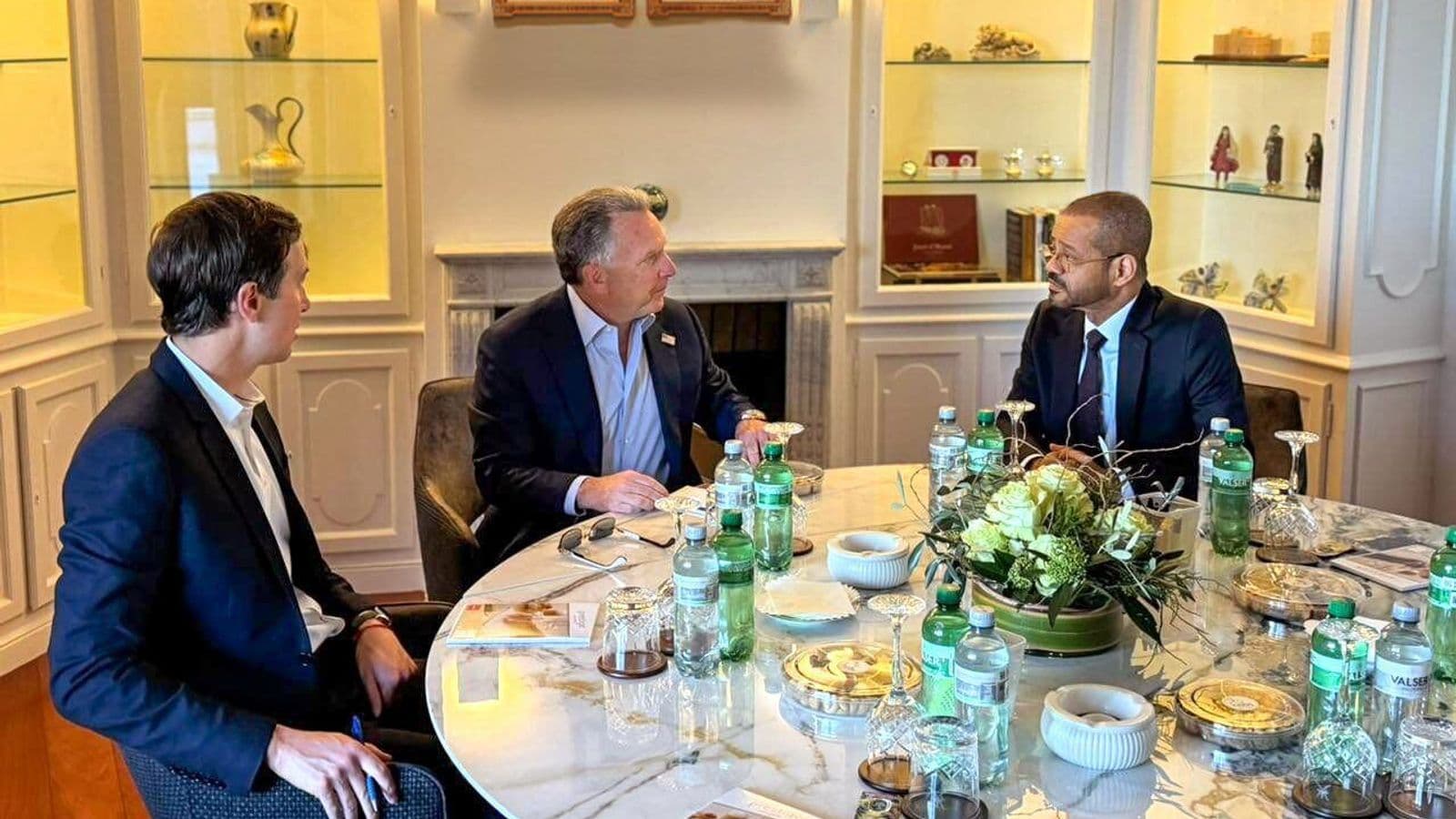
The US and Iran held indirect talks over Tehran's nuclear programme on Thursday, but left the negotiating table without a deal.They made "significant progress" in Geneva, Oman's Foreign Minister Badr al-Busaidi, who participated as a mediator, said afterwards, without elaborating. It comes as the US has gathered a large fleet of aircraft and warships in the Middle East following widespread nationwide protests in Iran.If the US launches an attack on Iran, Tehran has vowed to retaliate by targeting US military bases and by attacking Israel. On 19 February, Trump said that the world would find out "over the next, probably, 10 days" whether a deal would be reached or the US would take military action. Image: Iran’s drone aircraft carrier Shahid Bagheri at sea in the Persian Gulf Credit: Sepah News Talks to 'resume soon' Donald Trump wants to reach a deal restricting Iran's nuclear programme and hopes to take advantage of the turmoil in Iran.But Tehran appears to be standing firm, with state television reporting just before the talks ended that Iran was determined to continue enriching uranium - a key step to build a nuclear bomb - and had rejected proposals to transfer it abroad and sought the lifting of international sanctions. Iran-US talks: What's at stake? Mediator Mr al-Busaidi said the talks "will resume soon", with technical-level negotiations to continue in Vienna next week.The United Nations' atomic watchdog, the International Atomic Energy Agency, is based in Vienna and would likely be critical in any deal. Prospect of war diminishing - at least for now International affairs editor @DominicWaghorn Talks many feared could end up breaking down and leading to war in the Middle East, have instead finished in Geneva inconclusively. There was no complete breakdown in the negotiations between Iran and America, which are mediated by Oman. That means the chances of Donald Trump unleashing the massive firepower he has been amassing in the region recede for now. But there was no breakthrough either. Instead, the two sides will continue talking, at a "technical level", say the Omanis, in Vienna next week. The Iranians say they will focus on the nuclear issue and sanctions only. The Americans had wanted agreement on Iran's ballistic missiles, use of proxies and brutal treatment of its people, too. If Iranians have managed to shift the argument away from those issues, that will be seen as a diplomatic victory for Tehran. The news suggests both sides found something to agree on in principle if the next level is discussing technical details. The best guess is that the focus will be on uranium enrichment. Trump wants the Iranians to stop enriching uranium entirely; the Iranians insist they have the right to do so if only at low levels. The good news is we are moving away from war, and diplomacy continues. But we are not out of the woods. President Trump is mercurial and unpredictable. He may still grow impatient with the peace of talks next week. Americans' big fear is that they get drawn into protracted, drawn-out negotiations and are played for time by the Iranians. The talks may still fail to reach an agreement, but there will be relief across the region that the prospect of war is - for now at least - diminishing. US Special Envoy Steve Witkoff, a billionaire real estate developer and friend of Mr Trump, led the US delegation at the talks, which also included the president's son-in-law, Jared Kushner.Apart from demanding Iran halt its enrichment of uranium, which Tehran maintains it has the right to do, Mr Witkoff also tried to convince Iranian Foreign Minister Abbas Araghchi that Tehran should curtail or stop its production of long-range missiles, a topic Iran refused to discuss.Iran says it will only discuss nuclear issues and claims its atomic programme is only for peaceful purposes.Read more: Trump's plan for Iran isn't working - he has three options Image: Jared Kushner and White House special envoy Steve Witkoff (from left) meet with Oman's Foreign Minister Badr al-Busaidi. Pic: AP US-Iran tensions: 'Some are really scared - we don't know what will happen' 'Most intense negotiations'Mr Araghchi told Iranian state television that US-Iran talks were some of his country's "most intense and longest rounds of negotiations".It was the third meeting since Israel launched a 12-day war against Iran last June, which saw the US carrying out strikes against several Iranian nuclear sites, leaving them in ruins.Read more from Sky News:Jerusalem braces for prospect of Middle East war How Iran may be preparing for US strike The Iranian delegation presented its latest proposal to its US counterparts and while Mr Araghchi offered no specifics on Tehran's demands, he said "what needs to happen has been clearly spelled out from our side".The White House has not yet commented on Thursday's negotiations.But Ali Vaez, an Iran expert for the International Crisis Group, told the Associated Press that it was a good sign that the US delegation did not walk away immediately after receiving Tehran's proposal, explaining that it shows "there is enough common ground between the two sides".
Share this story