NewsWorld
PredictionsDigestsScorecardTimelinesArticles
NewsWorld
HomePredictionsDigestsScorecardTimelinesArticlesWorldTechnologyPoliticsBusiness
AI-powered predictive news aggregation© 2026 NewsWorld. All rights reserved.
Trending
IranMilitaryStrikesIranianSupremeIsraeliLeaderCrisisPricesChinaTrumpDisruptionsOperationsPotentialTargetsStatesPowerSuccessionLeadershipKhameneiSecurityTimelineCouncilIsrael
All Articles
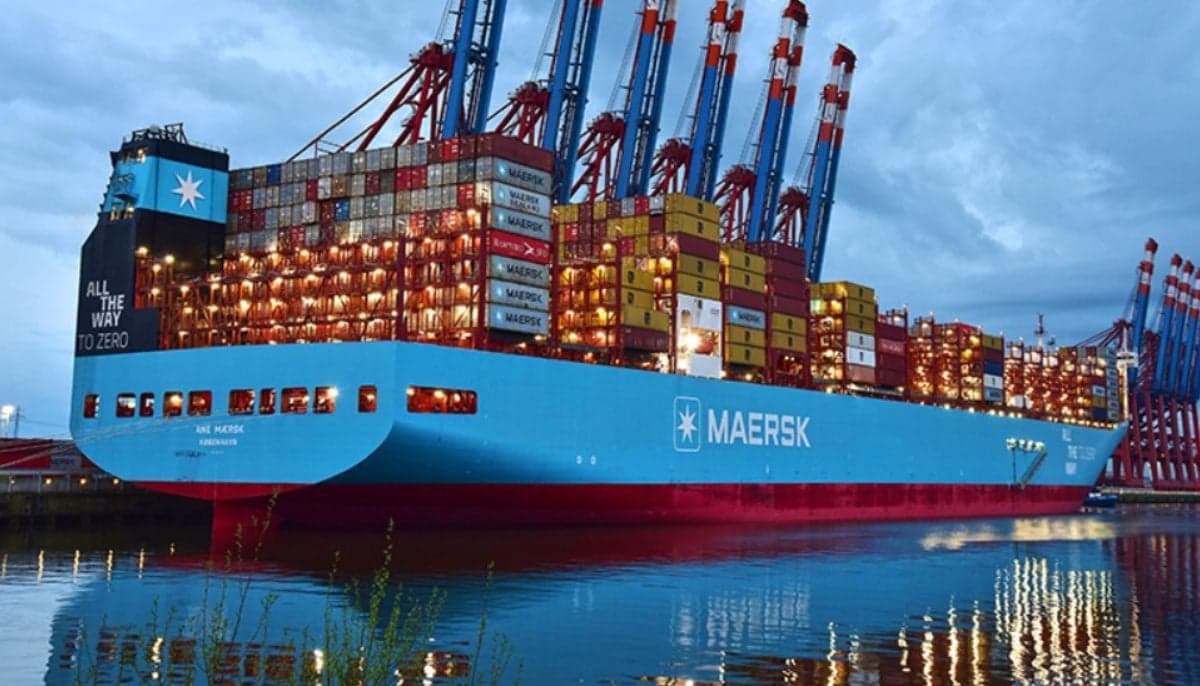
Shipping giant Maersk halts Suez Canal , Bab el - Mandeb sailings amid escalating conflict
thenews.com.pk
Published about 6 hours ago

Shipping giant Maersk halts Suez Canal , Bab el - Mandeb sailings amid escalating conflict

thenews.com.pk · Mar 1, 2026 · Collected from GDELT

Summary

Published: 20260301T203000Z

Full Article

shipping giant Maersk halts Suez Canal, Bab el-Mandeb sailings amid escalating conflict Shipping giant Maersk has halted its operations and sailings in the wake of the US-Israel-Iran latest conflicts. "Due to the deteriorating security situation in the Middle East region following the escalating military conflict, we have decided to pause future Trans-Suez sailings through the Bab el-Mandeb Strait for the time being, said Maersk in a statement on Sunday, March 1, 2026. Denmark's container shipping group Maersk informed on that it will pause sailings through the Bab el-Mandeb Strait and the Suez Canal and reroute ships around the Cape of Good Hope, it said on Sunday, following U.S. and Israeli strikes on Iran. The company last month announced a gradual return of some services to the Suez route, seen as a key step towards ending two years of global trade disruption caused by attacks on ships in the Red Sea by Yemen's Houthi rebels. Maersk had said on Friday it would temporarily reroute some sailings around Africa, away from the Suez Canal, citing unforeseen constraints in the Red Sea region. Maersk also said it was suspending all vessel crossings in the Strait of Hormuz until further notice, adding that services calling ports in the Arabian Gulf may experience delays, rerouting, or schedule adjustments. "We will continue to monitor the situation closely and take all needed actions," the company said. "Once the situation stabilizes and the security conditions again permit, we will continue to prioritize the Trans-Suez route," Maersk added, commenting on its Middle East-India to Mediterranean and Middle East-India to East Coast U.S. services. Additionally, the shipping giant added it was still accepting cargo to the Middle East. Meanwhile, Mediterranean Shipping Company said in a separate statement on Sunday it was suspending all cargo bookings to the Middle East until further notice, as the shift comes in reaction to the growing possibility of a military confrontation between the United States and Iran. MSC said it had instructed all vessels currently operating in the Gulf region as well as those en route to the area to proceed to safe shelter areas until further notice. It said it was closely monitoring developments and that the bookings will resume as soon as the security situation improves. Moreover, CMA CGM, the world's third-largest container shipping line, on Saturday said it had told its vessels inside or headed for the Gulf to proceed to shelter after the U.S. and Israeli attacks on Iran. It also announced it was suspending sailings through the Suez Canal. Maersk had said on Friday it would temporarily reroute some of its sailings around the ⁠Cape of ‌Good Hope, away from the Suez Canal Why it matters: The Suez Canal is the shortest and quickest maritime route linking Asia and Europe via the Middle East. The chokepoint is essential to global trade, handling around 12-15% of all global shipments and 30% of total container traffic. Maersk’s announcement from the shipping giant founded in 1904 comes as the threat of a US-Iran military confrontation looms large. The world’s largest aircraft carrier, the USS Gerald Ford, joined American military forces in Middle Eastern waters on Friday. It is the largest fighting force in the Middle East since the Second Gulf War in 2003. Maersk, a Danish integrated container logistics company and a global leader in shipping, is operating in 130 countries with over 100,000 employees worldwide. The latest tension between the nations has not only affected one company, but experts unveiled that gold, along with other commodities and major businesses, is also affected by the recent conflict.


Share this story

Read Original at thenews.com.pk

Related Articles

middleeastmonitor.comabout 8 hours ago
Shipping firm Maersk suspends vessel crossings in Strait of Hormuz

Published: 20260301T183000Z

lesaffaires.comabout 9 hours ago
Maersk suspend tous les passages de navires par le détroit dOrmuz

Published: 20260301T173000Z

Science Dailyabout 10 hours ago
Massive asteroid impact 6.3 million years ago left giant glass field in Brazil

For the first time ever, scientists have uncovered a vast field of tektites in Brazil — mysterious glassy fragments forged when a powerful extraterrestrial object slammed into Earth about 6.3 million years ago. Named “geraisites” after Minas Gerais, where they were first found, these dark, aerodynamic droplets of natural glass stretch across more than 900 kilometers and may mark one of South America’s most significant ancient impact events.

Al Jazeeraabout 17 hours ago
Video: Smoke seen rising from Dubai’s main shipping port after Iran attack

Plumes of smoke were seen rising from Dubai's Jebel Ali Port on Sunday morning as Iran continued its retaliation.

Bloomberg1 day ago
Japan’s Shipping Companies Suspend Operations in Persian Gulf

Japanese shipping companies have suspended operations in the Persian Gulf as the military conflict in Iran escalates.

Engadget2 days ago
FCC approves the merger of cable giants Cox and Charter

The Federal Communications Commission has given the go ahead for two of the US' biggest cable providers, Charter Communications and Cox Communications, to merge. Charter announced its intention to acquire Cox for $34.5 billion in May 2025, with specific plans to inherit Cox's managed IT, commercial fiber and cloud businesses, while folding the company's residential cable service into a subsidiary. “By approving this deal, the FCC ensures big wins for Americans," FCC Chairman Brendan Carr said in a statement. "This deal means that jobs are coming back to America that had been shipped overseas. It means that modern, high-speed networks will get built out in more communities across rural America. And it means that customers will get access to lower priced plans. On top of this, the deal enshrines protections against DEI discrimination." The FCC claims that Charter plans to invest "billions" to upgrade its network following the closure of the deal, leading to "faster broadband and lower prices." The company's "Rural Construction Initiative" will also extend those improvements to rural states lacking in consistent internet service, a project the FCC was heavily invested in during the Biden administration, but has been pulling back from since President Donald Trump appointed Carr. The FCC also claims Charter will onshore jobs currently handled off-shore by Cox employees and commit to "new safeguards to protect against DEI discrimination," which essentially amounts to hiring, recruiting and promoting employees based on "skills, qualifications, and experience." While Carr's FCC paints a rosy picture of Charter's acquisition, history has provided multiple examples of mergers having the opposite effect on jobs and pricing. For example, redundancies created when T-Mobile merged with Sprint in 2020 led to a wave of layoffs at the carrier. And funnily enough in 2018, not long after Charter's merger with Time Warner Cable was approved by the FCC, the company raised prices on its