royaldutchshellplc.com
Shell Tightens Its Grip on Raízen : Climate Hero or Sugar - Coated Survival Strategy ? – Royal Dutch Shell Plc . com
royaldutchshellplc.com · Feb 26, 2026 · Collected from GDELT
Summary
Published: 20260226T174500Z
Full Article
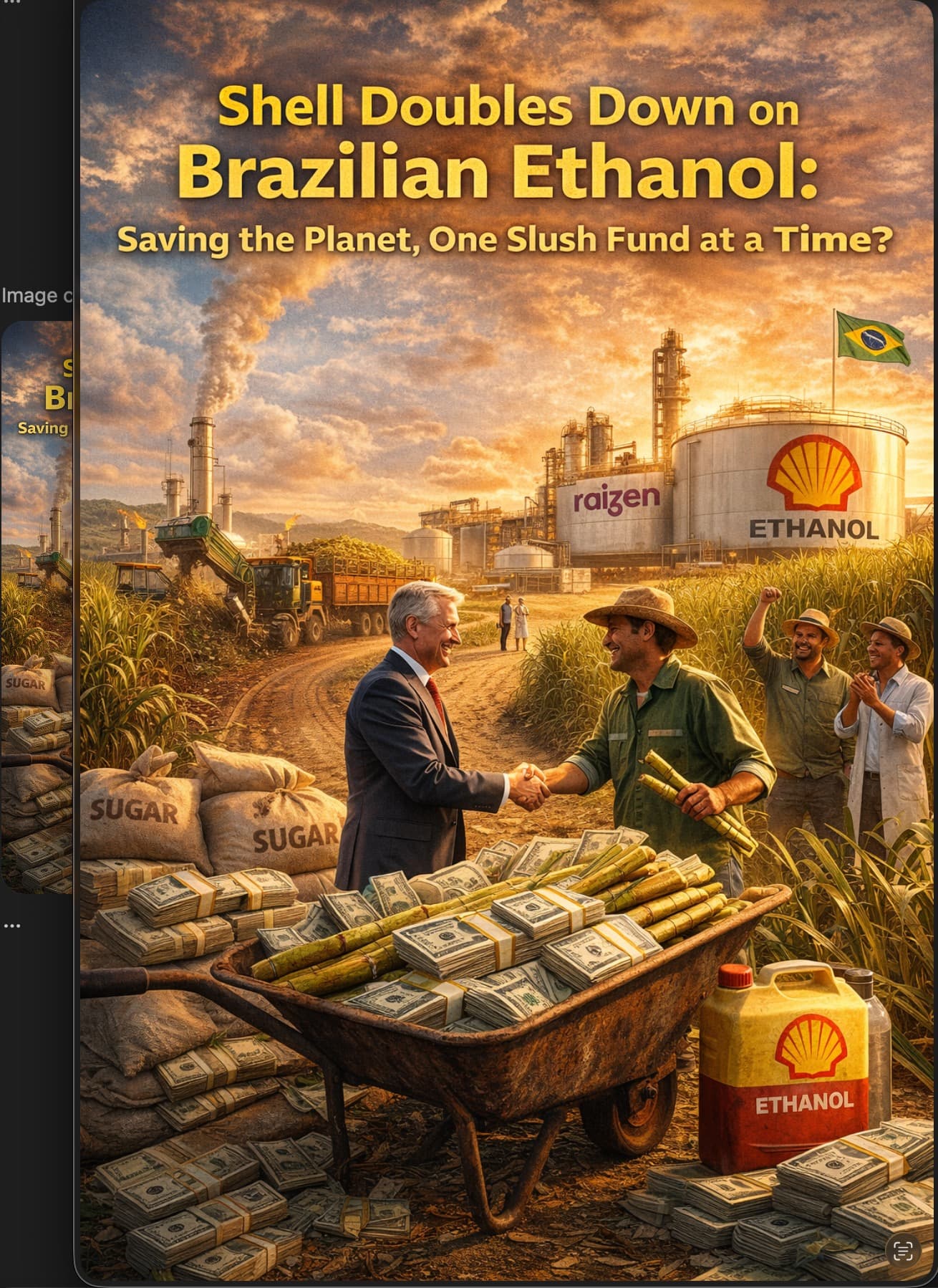
In a world where oil majors are constantly accused of clinging to the past, Shell appears determined to prove it can also cling to sugar. According to Reuters (25 February 2026) and regional energy reports, Shell is prepared to provide a larger financial backstop to its Brazilian sugar and ethanol joint venture, Raízen, as the company navigates debt pressures and expansion challenges. Sources cited by Reuters say Shell is ready to step up support if necessary — reinforcing its commitment to one of the world’s largest biofuels producers. On the surface, this sounds like textbook energy transition material: less oil, more biofuel, greener optics. But as always with Shell, the story is more layered than a corporate sustainability brochure. Raízen: The Crown Jewel of Shell’s “Low-Carbon” Narrative Raízen, a joint venture between Shell and Brazilian conglomerate Cosan, is a powerhouse in sugar, ethanol and bioenergy. It operates dozens of mills and produces billions of litres of sugarcane ethanol annually. In climate presentations, ethanol from sugarcane is routinely showcased as a lower-carbon alternative to gasoline. Brazil’s sugarcane ethanol is indeed among the most carbon-efficient biofuels globally when measured against fossil fuels. Compared to conventional petrol, lifecycle emissions are substantially lower — particularly when land-use change impacts are controlled. And Shell knows this. Raízen has become central to its pitch that it is not merely an oil company, but an “integrated energy company.” But here’s the complication: Raízen has also been expanding aggressively, investing heavily in second-generation ethanol plants and infrastructure — growth that has increased its leverage at a time of volatile sugar prices and tight credit conditions. Enter Shell, the ultimate corporate co-signer. Bigger Backstop, Bigger Bet The Reuters report indicates Shell is prepared to offer greater financial backing if Raízen requires it, effectively reinforcing investor confidence in the venture. Translation: Shell is willing to put its balance sheet behind Brazil’s biofuel expansion. This is not charity. It is strategic positioning. Shell has spent the past few years recalibrating its broader energy transition strategy under CEO Wael Sawan — scaling back some renewable ambitions while doubling down on areas where it sees competitive advantage. LNG trading. Biofuels. Chemicals. High-margin hydrocarbons. Bioethanol fits neatly into that framework: It supports decarbonisation narratives. It generates tradable fuel credits. It integrates with Shell’s global fuel retail network. It allows the company to keep selling liquid fuels — just with a greener label. The Biofuel Debate No One Likes Having Biofuels, particularly sugarcane ethanol in Brazil, are often portrayed as climate success stories. And compared to oil extraction in ecologically sensitive zones, sugarcane fields can look positively pastoral. But scaling biofuels is not impact-free. Large-scale sugarcane cultivation raises questions about: Land use and indirect deforestation pressures. Water consumption. Agricultural chemical runoff. Labour conditions in rural regions. Brazil has improved regulatory oversight in many areas over the years, yet biofuel expansion still intersects with broader environmental and social governance concerns. Shell’s increased backstop does not just support ethanol production — it supports further industrialisation of Brazil’s agricultural energy economy. Investors Love a Transition Story Shell’s largest shareholders — including BlackRock, Vanguard, and State Street — manage trillions in assets and routinely emphasise climate risk management. A strengthened commitment to biofuels provides helpful diversification optics. From a capital markets perspective, supporting Raízen stabilises a strategically important asset while reinforcing Shell’s “balanced transition” narrative. And that phrase — balanced transition — is doing a lot of work. Because at the same time Shell supports bioethanol in Brazil, it continues major LNG expansion and upstream oil production elsewhere. The company is not replacing hydrocarbons. It is layering alternatives on top of them. The emissions math becomes less a substitution story and more a portfolio story. Brazil’s Strategic Importance Brazil is not just another market. It is one of the few countries where biofuels are embedded into national energy policy. Flex-fuel vehicles dominate. Ethanol blends are mandatory. Infrastructure is mature. By reinforcing Raízen, Shell strengthens its foothold in one of the world’s most advanced biofuel ecosystems — a hedge against tightening fuel standards in Europe and elsewhere. It also insulates Shell from the accusation that it has abandoned low-carbon investments altogether after recent strategy recalibrations. Green Growth — or Green Insurance? So what is this really? Is Shell courageously underwriting the next phase of sustainable transport fuel? Or is it ensuring that, whatever happens in global oil markets, it retains profitable exposure to liquid fuels — fossil or otherwise? The honest answer is probably both. Shell has never been ideologically fossil-only. It has always been commercially pragmatic. If ethanol delivers margins and regulatory goodwill, it will expand ethanol. If LNG delivers margins and geopolitical leverage, it will expand LNG. The planet, meanwhile, keeps warming. The Bigger Picture in 2026 Global temperatures continue to test record highs. Governments reaffirm net-zero pledges while grappling with energy affordability. Investors demand returns and resilience. In that environment, Shell’s willingness to backstop Raízen looks less like a moral pivot and more like strategic insurance. Sugarcane may be renewable. The profit motive is eternal. And as long as ethanol flows through Shell-branded pumps alongside conventional fuels, the company can argue it is part of the solution — without ever fully leaving the problem behind. DISCLAIMER: This article is opinion and commentary based on publicly available reporting, including Reuters and other energy news outlets. It is not financial advice, investment advice, or a recommendation to buy or sell any securities. Readers should conduct their own independent research and consult qualified professional advisers before making financial decisions. This website and sisters royaldutchshellgroup.com, shellnazihistory.com, royaldutchshell.website, johndonovan.website, shellnews.net, and shellwikipedia.com, are owned by John Donovan - more information here. There is also a Wikipedia segment.
Share this story