thebftonline.com
Shea trees touted as climate asset
thebftonline.com · Feb 20, 2026 · Collected from GDELT
Summary
Published: 20260220T131500Z
Full Article
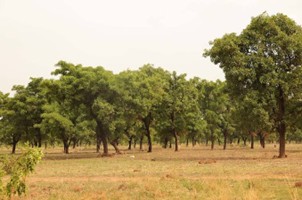
The government is seeking to reposition its shea sector from a largely informal rural activity into a climate-linked industrial asset, as policymakers push to integrate the crop into carbon markets and expand domestic processing. Speaking on behalf of the Speaker of Parliament, Alban Sumana Kingsford Bagbin at the Ghana Tree Crop Investments Summit and Exhibition 2026, Collins Dawuda said shea represents a model for economic growth anchored on sustainability, gender inclusion and climate resilience. “Shea is far more than a botanical species. It is a cornerstone of sustenance, dignity and economic agency,” he said. “Protecting and sustainably managing these ecosystems is directly aligned with our commitments under global climate frameworks. We must aggregate these ecosystems into Ghana’s climate finance architecture and ensure that benefits flow to the custodians of these resources.” Ghana’s shea production is concentrated in the northern regions, where nuts are harvested mainly from wild trees. The sector supports between 600,000 and one million rural women engaged in collection and processing. Annual output currently stands at about 130,000 to 150,000 metric tonnes of shea nuts, valued at about US$118 million. Despite this, less than 60 percent of available trees are harvested each year and over 90 percent of nuts are collected manually. Government-installed processing capacity exceeds 300,000 metric tonnes, but only about 90,000 metric tonnes are commercially used locally, reflecting a gap between potential and realised value. Recent seasons have also exposed vulnerabilities. Industry estimates point to a projected 40–50 percent drop in output for the 2024/2025 season due to shortages, prompting imports from neighboring Burkina Faso to support processors. In 2023, however, Ghana ranked as the world’s top exporter of shea butter, earning between US$90 million and US$100 million from exports. Mr. Bagbin said reforms must ensure fair market structures for women who dominate the value chain, accounting for about 90 percent of participants. “If we are to rely on the diligent labour of our women, often under arduous conditions, then our market structures must reflect fairness and transparency,” he said. “The dignity and economic agency of the women at the base of this pyramid are not negotiable.” He pledged legislative backing to review existing laws to support tree crop authorities and industrial expansion. At the summit, the Vice Chancellor of the University for Development Studies, Prof. Seidu Alhassan, described shea trees as potential carbon assets capable of generating additional income streams beyond nut sales. “By investing in the shea value chain, we are not just buying a commodity, but we are also securing environmental assets,” he said. “Carbon credits provide a steady year-round balance, ensuring the financial health of the supply chain even in off-years.” He cited studies suggesting that under certain carbon standards, trees could attract values of up to US$200 per tree over time. He also called for digital traceability systems to meet emerging global regulations and improve transparency. Under the government’s 24-Hour Economy policy, production is targeted to triple to 400,000 metric tonnes annually, with an estimated value of US$640 million. Plans include reviving the Buipe processing factory with capacity of up to 180,000 metric tonnes and establishing mechanised hubs to strengthen local value addition. Authorities have also signalled plans to ban raw nut exports by 2026 to retain more value domestically. Processors have long argued that feedstock shortages undermine capacity use. If implemented, the combined push for mechanisation, climate finance integration and export controls could reshape the shea industry from a largely informal rural activity into a structured export and carbon-linked sector with stronger domestic value capture. Post Views: 32 Discover more from The Business & Financial Times Subscribe to get the latest posts sent to your email.
Share this story