juancole.com
Saudi foreign policy makers have read Sun Tzu well . Have Iran ?
juancole.com · Feb 22, 2026 · Collected from GDELT
Summary
Published: 20260222T064500Z
Full Article
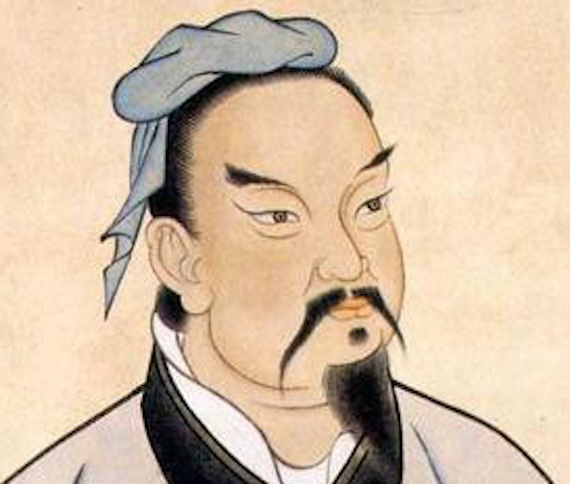
By Ibrahim al-Marashi and Tanya Goudsouzian Through diplomacy & careful positioning in Syria, Yemen & beyond, Saudi Arabia has embodied Sun Tzu’s Taoist principle of water, yielding to pressure, flowing around obstacles, & allowing rivals to exhaust themselves, write al-Marashi & Goudsouzian. ( The New Arab ) – In today’s Middle East, a prolonged Cold War is underway in which the most decisive contests are not won through direct confrontation but through steady economic growth and gradual cultural transformation, even as rivals exhaust themselves in protracted conflicts. The apparent winners are those who have embraced the lessons of Sun Tzu, the sixth-century BCE Chinese strategist, particularly his most counterintuitive and enduring insight: “The supreme art of war is to subdue the enemy without fighting.” Axis of resistance Iran appeared to choose this path. At the turn of the millennium, it was hemmed in by hostile regimes on both flanks: Saddam Hussein’s Iraq to the West and the Taliban’s Afghanistan to the east. The US invasions of 2001 and 2003 removed both threats, dramatically expanding Iran’s strategic depth and opening new corridors of influence. As American power surged and then receded, Tehran skillfully filled the vacuum left by the Arab Spring and Washington’s reluctance to intervene. The 2015 nuclear agreement and tacit cooperation against ISIS further strengthened Iran’s position. By the time US forces withdrew from Iraq and Afghanistan, Tehran appeared ascendant. Entrenched in Baghdad, decisive in Damascus, indispensable to Hezbollah in Lebanon, and increasingly influential in Yemen. Even after Donald Trump’s 2017 withdrawal from the JCPOA, the so-called “axis of resistance” seemed a winning coalition, extending its reach across the Arab world at minimal cost. Yet the illusion of Iranian ascendancy soon began to crack under the weight of overstretch and mounting instability. The crisis accelerated after October 2023. Tehran could have restrained Hezbollah and the Houthis from striking Israel, but its failure to do so invited punishing Israeli retaliation, weakening the regime. In May 2024, a suspicious helicopter crash killed Iran’s president and foreign minister, exposing elite vulnerability. Subsequent attacks inside Iran, widely suspected to involve insiders, revealed fractures beneath the surface. The fall of Bashar al-Assad in December 2024 severed Hezbollah’s supply lines, while renewed Western pressure proved more than Tehran could handle. Together, these shocks triggered the rapid unravelling of Iran’s regional proxy network. This unraveling soon spilled into open confrontation. Throughout the Gaza war, Israeli strikes grew more frequent and audacious, targeting Iranian assets both at home and beyond its borders, and culminating in last summer’s 12-Day War when the US joined the air campaign against Iran’s alleged nuclear facilities and likely eliminated its air defence systems. Political pressure mounted as well as a nascent popular uprising gained traction, fuelled in part by the son of the deposed Shah and openly supported by Israel. International rhetoric sharpened dangerously, with US President Donald Trump openly threatening another round of strikes. The over 40 years of Tehran’s revolution using armed proxies while building the largest missile inventory in the region, side-by-side with an enriched uranium development program, has sapped this once-rich nation of its wealth, becoming an international pariah in the process. Perpetually mobilised, Iran seems trapped in chronic overreach, burning resources to project influence across proliferating and often collapsing fronts, in defiance of Sun Tzu’s fundamental warning: “There is no instance of a nation benefitting from prolonged warfare.” Other countries in the region, such as Saudi Arabia, appear to have mastered the harder discipline Sun Tzu prescribes – restraint. By stepping back from confrontation and letting regional instability consume its rivals and allies, Riyadh and other capitals have prospered amid Middle Eastern chaos. If restraint has been Saudi Arabia’s strategy, Mohammed bin Salman has been its most misunderstood proponent. From his emergence in 2015, the crown prince was widely cast as reckless and impulsive, beginning with his military campaign to counter the Houthis in Yemen. That caricature hardened with the announcement of NEOM in October 2017. The $500-billion, semi-autonomous megacity, explicitly post-oil and post-conflict, was dismissed by critics as a technologically implausible, economically unsustainable pink elephant, politically detached from a region still aflame. NEOM became shorthand for delusion. A techno-utopian fantasy and an emblem of excess. Doubts about bin Salman’s judgment peaked with the murder of Jamal Khashoggi in the Saudi consulate in Istanbul in October 2018, cementing his global image as a rogue actor. The brutal, premeditated and indefensible killing unfolded like a Turkish dizi, gripping audiences with macabre details and espionage intrigue. Yet as Sun Tzu warned, appearances can deceive. NEOM was merely a MacGuffin for the detractors of MBS (even as it has now been scaled back from its original $500-billion ambition) and the murder of Khashoggi was mitigated by then US President Joe Biden’s infamous handshake in 2023. Since Mohammed bin Salman’s rise in 2017, the Middle East has been convulsed by ISIS violence, the US withdrawal from the JCPOA, the Gaza War and the 12-Day War. Against this turbulent backdrop, Saudi Arabia has pursued sweeping social and cultural reforms, economic growth and Vision 2030, achieving a milestone in diversification as non-oil sectors now generate 56% of GDP. The 2017 Future Investment Initiative, nicknamed “Davos in the Desert” was a clear declaration that Saudi Arabia was separately organising amid regional instability, and that it expected to remain standing when the smoke cleared. Only a state confident of survival invests so heavily in a vision still unfolding, signaling to allies and rivals alike that it is thinking generations ahead. While Tehran remains consumed by crisis, Riyadh markets stability and reconstruction. Through diplomacy and careful positioning in Syria, Yemen and beyond, Saudi Arabia has embodied Sun Tzu’s Taoist principle of water, yielding to pressure, flowing around obstacles, and allowing rivals to exhaust themselves. By 2026, this discipline will have carried the kingdom to a position of strategic advantage. It is now seen as a stabilising force in a fractured region, a leading investor in reconstruction, and a diplomatic pivot between Washington, Beijing and the Middle East. As Sun Tzu observed: “In the midst of chaos, there is also opportunity”. Saudi Arabia stands as the region’s clearest example of a state converting instability into sustained advantage. Qing Era portrait of Sun Tzu. Qing Palace Collection Picture Book. Beijing: Palace Museum Press. 1994. Public Domain. Via Wikimedia Commons Iran’s struggles carry a cautionary lesson. As Plato warned, enforcing ideals through coercion can destabilise even the most rigid systems. Tehran’s attempts to project control outward have backfired, intensifying unrest, draining resources and tightening the economic noose of sanctions. By contrast, Saudi Arabia, Qatar, the UAE and others appear to have internalised Sun Tzu’s lesson: patience, flexibility and indirect victory. Iran may yet weather its confrontation with the Trump administration and preserve its alliances, but its rivals are investing in stability and the post-crisis order. Whether Mohammed bin Salman and his peers are students of Sun Tzu or merely its fortunate beneficiaries is beside the point, but the result now appears indisputable. As Iran fights to hold its ground, the region must play for time, heeding Sun Tzu’s advice, that, “[h]e who is prudent and lies in wait for an enemy who is not, will be victorious.” Reprinted with the authors’ permission from The New Arab. Tanya Goudsouzian is a Canadian journalist who has covered Afghanistan and the Middle East for over two decades. She has held senior editorial roles at major international media outlets, including serving as Opinion Editor at Al Jazeera English.
Share this story