perhamfocus.com
Clustered Story
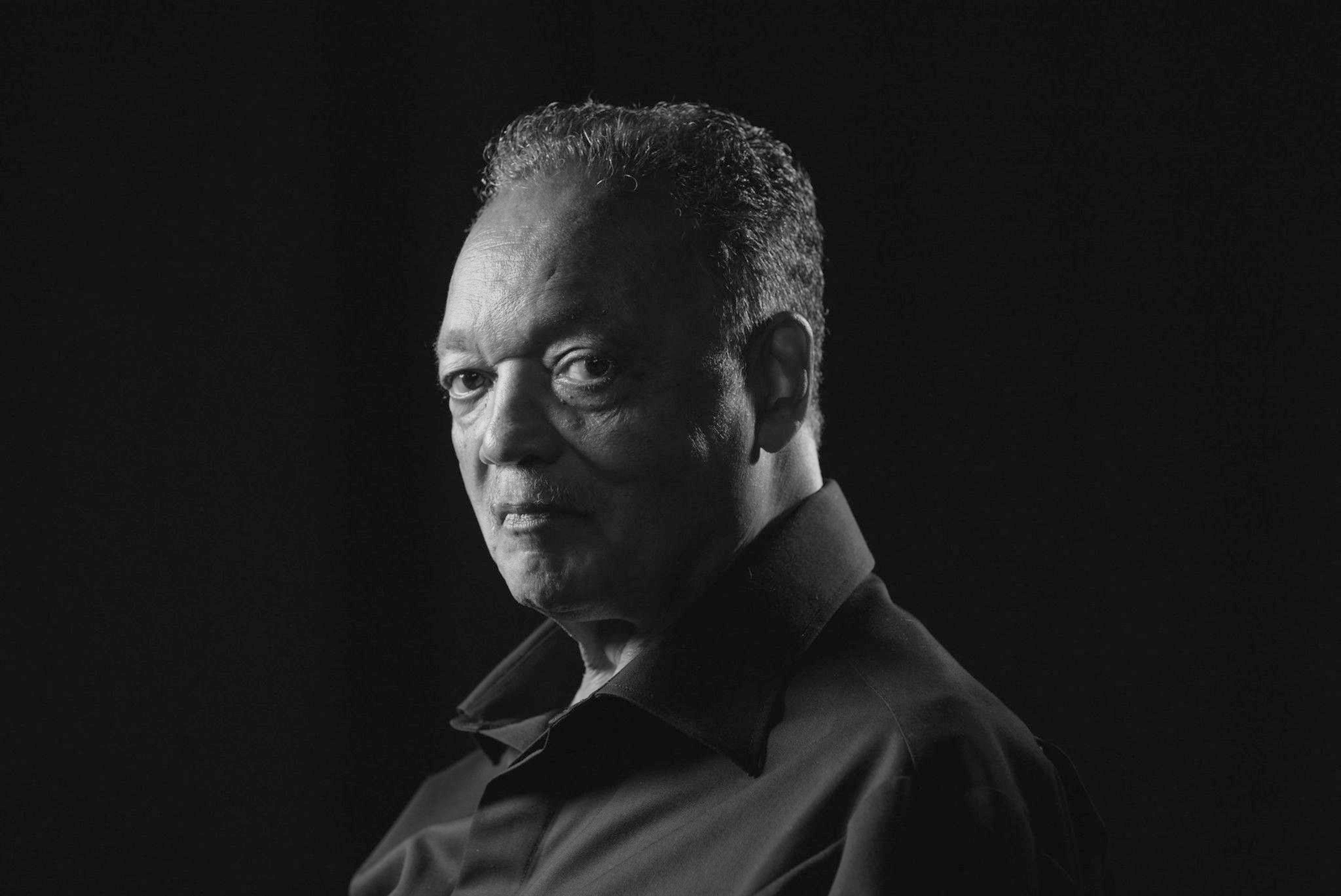
Rev . Jesse Jackson , civil rights icon , dies at 84
perhamfocus.com · Feb 17, 2026 · Collected from GDELT
Summary
Published: 20260217T171500Z
Full Article
CHICAGO — The Rev. Jesse L. Jackson, the Chicago-based Baptist minister, political figure and two-time presidential candidate whose soaring oratory and knack for capturing media attention made him a central figure in the Civil Rights Movement and national politics for more than six decades, died Tuesday, Feb. 17. He was 84.Jackson battled Parkinson’s disease since 2017, and in April, he was diagnosed with progressive supranuclear palsy, a neurological disorder. “Our father was a servant leader — not only to our family, but to the oppressed, the voiceless, and the overlooked around the world,” the Jackson family said in a statement. “We shared him with the world, and in return, the world became part of our extended family. His unwavering belief in justice, equality, and love uplifted millions, and we ask you to honor his memory by continuing the fight for the values he lived by.”A public memorial service will be held in Chicago and announced at a later date, according to the family.Raised in South Carolina under Jim Crow segregation laws, Jackson became a protege of the Rev. Martin Luther King Jr. until the Black leader’s 1968 assassination, and he participated with King in the famed 1965 Selma to Montgomery marches. In Chicago, Jackson led King’s civil rights group and later established activist and social justice organizations that eventually evolved into the Kenwood-based Rainbow/PUSH Coalition. The organization became a driving force for social justice and civil rights, especially during the 1980s, as Jackson built a reputation both as a peripatetic champion of the economically and politically downtrodden and as an expert power player who organized boycotts against major companies he felt weren’t hiring minorities or investing in minority communities. The Rev. Jesse Jackson and Rosa Parks appear at the Democratic National Convention on July 19, 1988, in Atlanta.Karen Engstrom / Chicago Tribune / TNS “He is a political force of nature,” Tribune columnist Steve Daley wrote in 1990, years after Jackson’s two unsuccessful but popular runs for president surprised many observers. “At once an eloquent voice for the dispossessed and a relentless manipulator of events and issues, hopscotching from coal strike to South Africa to statehood for the District of Columbia.”Known for his rhetorical flourishes and his short, catchy and sometimes-rhythmic and rhyming phrases — ideal as sound bites — Jackson sought to instill self-confidence in Black people with his trademark call-and-response celebration of the self that started with “I am somebody.” Another signature line was his anti-drug refrain, “Down with dope, up with hope.”“Jackson’s appeal was a function of his hybridity — his political ambitions and protest inclinations went hand-in-hand with his King-like ability to link American progressivism to Black religiosity,” said In These Times senior editor and WVON-AM host Salim Muwakkil, a longtime observer of Jackson.Brash and at times divisive, Jackson weathered several scandals. In 1984, he was caught using a Jewish slur in calling New York City “Hymietown,” while a 2008 live mic caught him saying he thought Barack Obama had been “talking down to Black people” and that he wanted to “cut (Obama’s) nuts out.” And in 2001, the married Jackson briefly stepped away from leading Rainbow/PUSH after confirming that he had fathered a daughter through an affair with an employee. Although the lone public office to which Jackson was elected was Washington, D.C.’s “shadow senator” — an advocacy post created to lobby for D.C.’s statehood— two of his six children became congressmen. Son Jonathan Jackson has represented Illinois’ 1st Congressional District since 2023, while Jesse Jackson Jr. represented Illinois’ 2nd Congressional District for 17 years until resigning in 2012 amid a federal investigation involving misuse of campaign funds. Jesse Jackson Jr. and his wife, Sandi, pleaded guilty to using about $750,000 in campaign cash to support a lavish lifestyle and both served prison terms. Jackson said little publicly about his son’s wrongdoing, other than describing the ordeal as a difficult, trying time for the family and requesting prayers. Jackson Jr. is now running for the seat once again. ‘I had no name’ Born Jesse Louis Burns at home in Greenville, South Carolina, on Oct. 8, 1941, Jackson was the son of Helen Burns and her married next-door neighbor, Noah Louis Robinson. He endured taunts throughout his youth about his out-of-wedlock birth.“When I had no name, my grandmother gave me her name. My name was Jesse Burns until I was 12,” Jackson told Democratic National Convention attendees in July 1988. “So I wouldn’t have a blank space, she gave me a name to hold me over. I understand when nobody knows your name. I understand when you have no name.”In 1943, Helen Burns married postal maintenance worker Charles Jackson, who formally adopted Jesse in 1957. The couple raised Jackson in a nurturing environment that stressed religion, education and hard work, with his grandmother Matilda Burns as the soul of the household.“Ours was a very stable home and a very loving home,” Jackson wrote in a 1970 book, “Up from the Ghetto.” “My mother was a staunch churchgoer and so was my (step)father. … My sense of moral consciousness was developed in our home — an advantage that is denied many city children today.”Though segregated, Greenville was not on the front lines of the integration movement, nor did it experience the violent white backlash that began to stir elsewhere in the South during Jackson’s upbringing. He nonetheless bristled at Greenville’s segregation, and once protested the segregated restroom facilities and unsafe conditions at a bakery where he worked. The 6-foot-3 Jackson was a good student and an even better athlete at Greenville’s all-Black Sterling High School, playing basketball and quarterback on the football team and excelling as a baseball pitcher. During his senior year, the San Francisco Giants offered him a $6,000 minor-league contract. Instead, Jackson accepted a football scholarship from the University of Illinois Urbana-Champaign. Realizing after one year there that he would not be allowed to play quarterback, Jackson transferred to the historically Black North Carolina Agricultural and Technical College in Greensboro, where he played quarterback and studied sociology and economics. He was also student body president.Greensboro was on the cutting edge of the Civil Rights Movement, and during college, Jackson led near-daily demonstrations and sit-ins to integrate public accommodations. At protests, he met Jacqueline Davis, a student from Fort Pierce, Florida. The couple married in 1962. In 1964, Jackson graduated with honors, earning a bachelor’s degree in sociology. Operation PUSH After college, Jackson enrolled at the Chicago Theological Seminary; he left in 1967 before earning enough credits for a degree, though the seminary awarded him an honorary doctor of divinity degree in 1969 and a master’s degree in 2000. During seminary, Jackson was so outraged by the violent police response to protests in the South that he organized fellow students to participate in protests in Selma, Alabama, where he met King and joined the Southern Christian Leadership Conference.Jackson returned to Chicago to head the Southern Christian Leadership Conference’s Operation Breadbasket, an economic arm focused on opening doors for Blacks as employees, promoting Black-owned enterprises’ products and encouraging white businesses to invest in Black institutions. Their weapons were organized pickets and boycotts followed by negotiations.In 1968, Jackson gained national prominence after King was assassinated on a motel balcony. Jackson had been one floor below King in a parking lot, and he later said he rushed to the balcony after hearing the shots. While the rest of the Southern Christian Leadership Conference remained in Memphis to deal with the crisis, Jackson returned to Chicago, appearing on TV the next morning and then at a Chicago City Council memorial wearing a shirt smeared with blood, leading those around him to believe that he had been with King when King was shot.Jackson and his supporters sought to portray him as King’s natural successor in the civil rights arena. He continued with Breadbasket’s operations in Chicago until 1971, when the SCLC’s new leader, the Rev. Ralph Abernathy, ordered Jackson to take a leave of absence over concerns about the bookkeeping for a Breadbasket offshoot that had organized an annual trade fair. Rev. Jesse Jackson visits the balcony outside room 306 at the Lorraine Motel, where Martin Luther King Jr. was assassinated, is seen on the grounds of the National Civil Rights Museum, April 3, 2018 in Memphis, Tennessee. King was assassinated on April 4, 1968, as he stepped to the balcony.Brendan Smialowski / AFP / Getty Images / TNS That prompted Jackson to quit the SCLC altogether and form Operation PUSH, first an acronym for People United to Save Humanity and later for the less ambitious People United to Serve Humanity. Operating from a former synagogue at 920 E. 50th St. in the Kenwood neighborhood, Operation PUSH became Jackson’s own personal vehicle. Jackson used Operation PUSH both for public good and to elevate his visibility. He organized boycotts against major corporations, including Anheuser-Busch, Coca-Cola, Southland Corp. and Heublein Inc.A prominent local boycott by Operation PUSH began in 1985, after WBBM-Ch. 2 demoted Black anchorman Harry Porterfield. Jackson and others from Operation PUSH eventually walked a picket line in front of WBBM’s Streeterville studios. He complained that the Chicago news media had deliberately avoided covering the boycott and had engaged in a “conspiracy of silence for six months.”Jackson’s goals were for WBBM to hire two male minority news anchors, establish an employment goal of 40% for minorities and donate $10 million to the United Negro College Fund. Ask
Share this story