hindustantimes.com
Politics of Common enemy and the 2026 Tamil Nadu assembly elections
hindustantimes.com · Mar 2, 2026 · Collected from GDELT
Summary
Published: 20260302T024500Z
Full Article
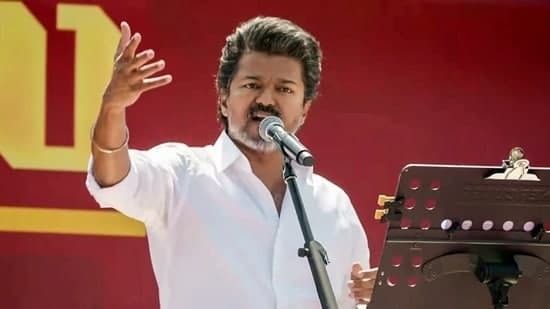
There is a curious rallying theme among the political parties before the Assembly Elections-2026 in Tamil Nadu. Tamil Nadu has rarely experienced formal coalition governments unlike states like Kerala and Bihar. Politics has largely been dominated by single party majority governments, especially by the Dravidian parties either Dravida Munnetra Kazhagam (DMK) or Anna Dravida Munnetra Kazhagam (ADMK). A dominant two-party system has prevailed in Tamil Nadu politics since 1967. Beneath this successful two party system, there exists an effective pre-poll alliance strategy and understanding that keeps post-poll alliances and the prospects of forming a coalition government out of reach. The nature of DMK-Congress alliance and the historic MGR Formula are potential references to this reality.Tamilaga Vettri Kazhagam (TVK) President Vijay delivered a speech during the party's election campaign at Seelanaickenpatti in the Salem district, Tamil Nadu last week. (TVK)There are a few shifts taking place on the ground after the rise and role of Bharatiya Janata Party (BJP) in national politics, especially in the last decade. The BJP has also been maintaining that it wants to emerge as an alternative to the Dravidian parties in Tamil Nadu besides challenging DMK and dismantling AIADMK from within as part of the larger strategy. This situation is unlike the longstanding DMK-Congress alliance and the MGR Formula.Vijay and his new fledgling political party Tamizhaga Vetri Kazhagam (TVK) and the changing pre-election configurations point to a new phenomenon with old realities beyond any simple calculations of pre-poll alliance systems.There is an application of common enemy strategy to draw an alliance with broad pre-poll strategies and long standing goals and objectives in state politics.What is new about the rivalry between DMK and AIADMK in Tamil Nadu politics? There are a few strong indications of the changing political environment.The emergence of factional politics and weakening of the structure and mobilization of AIADMK after the death of Jayalalithaa in 2016 combined with the role of BJP in presenting itself as an alternative to the Dravidian parties besides its coercive influence and control of the AIADMK party and its factional politics by political and institutional means.The projection of actor Vijay’s TVK as a political challenger of DMK and an ideological resistant to BJP keeps TVK in tandem with the strategy of mobilizing anti-DMK parties together along with TTV Dhinakaran and Sasikala as front line commanders to this camp. The core plan is to build and project a common enemy and rally the pre-poll alliance and control the tide if the election results are favourable as a result of discontentment or anti-incumbency factors that may help BJP, AIADMK, AMMK and TVK. The idea of TVK going alone is unlikely to derail this assessment of common enemy strategy adopted by the BJP. In his meeting with the party functionaries in Salem, actor-politician Vijay did not explicitly name or directly attack in his address. He reiterated his party position towards DMK as the sole political enemy besides dismissing the potential negotiation with the AIADMK as of little relevance because of the current status and weakness of the party due to factions. Vijay is cleverly positioning himself against both the DMK and AIADMK by emphasizing DMK as the political enemy. This matches the script and strategy of BJP to keep the anti-DMK mobilization under check and control.The DMK’s strategy of mobilising anti-BJP votes in Tamil Nadu coincides with the cultural and ideological issues rooted in the BJP’s politics.There are other important parties such as the Congress party, Viduthalai Chiruthaikal (VCK) led by Thol Thirumavalavan, the Communist Party of India (CPI) and the Communist Party of India – Marxist (CPI-M) that are key components to this anti-BJP mobilisation in Tamil Nadu politics besides the broader Secular Progressive Alliance (SPA) framework consisting of Muslim identity-based parties. The DMK’s social justice ideology, and its secular image as a defender of minority rights has traditionally drawn minority votes including from the Muslim and Christian communities. There are more substantial issues to the DMK’s mobilisation and consolidating anti-BJP vote share in Tamil Nadu politics based on culture, language, federal rights and identity politics. BJP has long been focusing on dismantling and breaking the Dravidian movement by dividing the Tamil and Dravidian identities as separate and exploitative.The DMK’s argument is that the BJP’s ambition to end the Dravidian parties rule in Tamil Nadu is not to simply replace or further the Tamil identity but to enforce the cultural, religious and linguistic dominance of the North-centric Hindutva ideology.The knitting of the strategy of common enemy by both the DMK and BJP is deeply rooted in the political, cultural, ideological and historical issues beyond the rhetoric of electoral politics. There are also contradictions in the BJP’s anti-DMK alliance and the projection of DMK as common enemy which is short lived for other political parties because of cultural, political and ideological issues involved in integrating and separating the anti-DMK alliance.AIADMK, AMMK and TVK may rally with BJP on the anti-DMK plank but they are equally aware of the ultimate goal(s) and strategies of the BJP, marking the difference between the common enemy and political enemy as visible within the BJP camp and among its indistinguishable allies.Ramu Manivannan is a political scientist – scholar-activist in areas of education, human rights and sustainable development. He is currently the director, Multiversity – Centre for Indigenous Knowledge Systems, Kurumbapalayam Village, Vellore district, Tamil Nadu.
Share this story