South China Morning Post
No more overworked Japan? New figures show employees clock fewer hours
South China Morning Post · Feb 23, 2026 · Collected from RSS
Summary
Japan’s reputation as a nation where employees put in brutally long hours may have to be reassessed, according to recent official statistics showing that they work fewer hours on average than Americans, Canadians and Italians. While the figures appear to show that the Japanese government has finally succeeded in pressuring companies to combat the problem of karoshi, or death by overwork, analysts and employees suggest the figures may not be entirely comparable with those of other nations. The...
Full Article
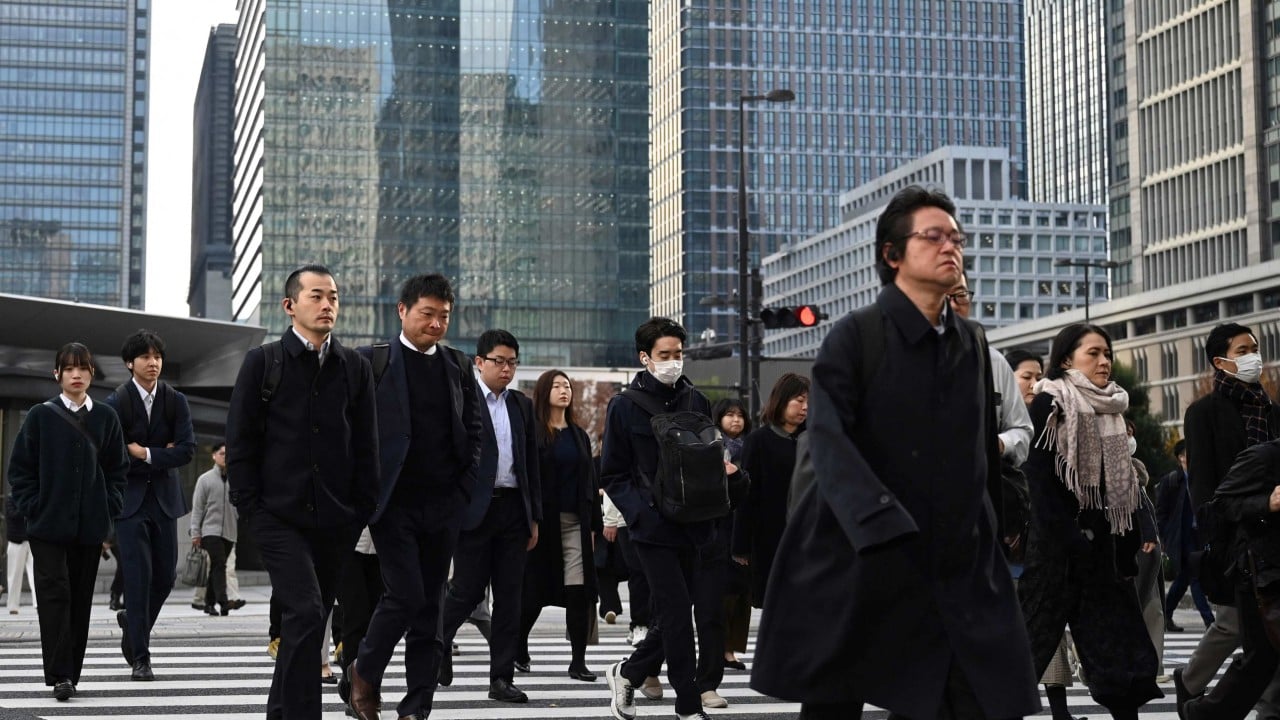
Japan’s reputation as a nation where employees put in brutally long hours may have to be reassessed, according to recent official statistics showing that they work fewer hours on average than Americans, Canadians and Italians.While the figures appear to show that the Japanese government has finally succeeded in pressuring companies to combat the problem of karoshi, or death by overwork, analysts and employees suggest the figures may not be entirely comparable with those of other nations.The average Japanese worker put in 1,654.2 hours over the 2024 financial year, which ended on March 31 last year, according to figures released by the Cabinet Office in January. That figure is down by 17.7 hours from the previous year and is also the second straight year of decline.It is also significantly lower than the average of 2,121 hours worked in 1980, at the height of Japan’s economic bubble.In comparison, Americans worked an average of 1,796 hours in the 2024 financial year, according to the Organisation for Economic Cooperation and Development, while South Koreans clocked in 1,865 hours, Canadians recorded 1,697 hours, and Italians put in 1,709 hours over the same period.Japan still has some way to match Germany, where employees worked an average of 1,331 hours, or Denmark, where the figure was 1,379 hours.
Share this story