philstar.com
Marcos : No Filipino casualties reported so far amid US - Israel strikes on Iran
philstar.com · Mar 1, 2026 · Collected from GDELT
Summary
Published: 20260301T044500Z
Full Article
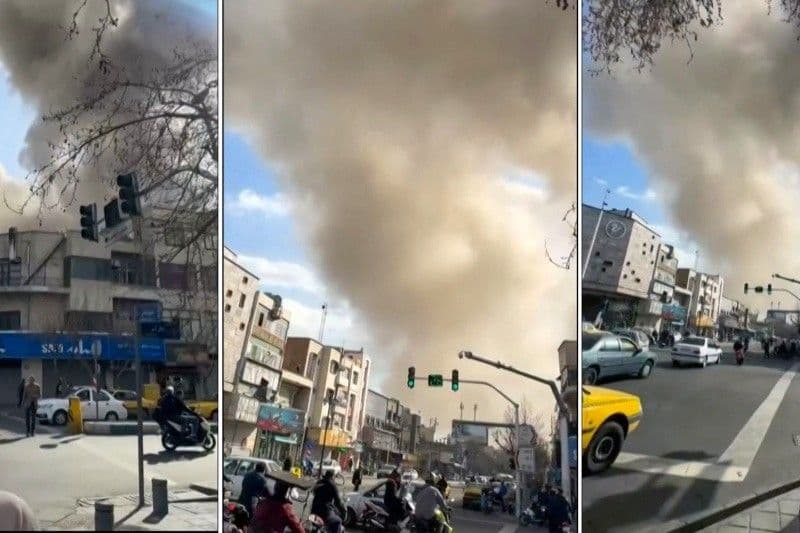
March 1, 2026 | 11:32am This combination of video grabs taken from UGC images posted on social media on February 28, 2026, and verified by AFPTV teams in Paris, show a repoted explosion in Tehran.Various sources via AFP MANILA, Philippines — After the United States launched a joint attack on Iran, President Ferdinand "Bongbong" Marcos Jr. directed the Department of Foreign Affairs, the Department of Migrant Workers and Philippine embassies across the Middle East to activate contingency measures to ensure the safety of the millions of Filipinos living in affected areas. Speaking in a video message on March 1, Marcos said no Filipino casualties had been reported as of 9 a.m. following the back-and-forth strikes between US, Israel, and Iran. "Sa ngayon, as of 9 o'clock Sunday, wala po tayong natatanggap na report na may casualty na Pilipino. Wala pong Pilipino ang namatay, wala na Pilipino ang nasaktan. At sa ngayon, patuloy ang aming pagmo-monitor para tiyakin na nasa magandang kalagayan ang ating mga kababayan sa Middle East," he said. (For now, as of 9 o’clock Sunday, we have not received any reports of Filipino casualties. No Filipinos have died, and no Filipinos have been injured. At this point, we continue to monitor the situation to ensure that our fellow citizens in the Middle East remain safe and in good condition.) DMW Secretary Hans Leo Cacdac also reported this in an interview on DZMM Teleradyo that Philippine embassies in Israel and across the Gulf have not yet reported any Filipinos injured or "adversely affected" by the attacks. The numbers According to DMW data, the Middle East hosts the largest concentration of land-based overseas Filipino workers (OFWs), totaling 1.113 million as of December 2025. Some of the top destinations for these OFWs include: UAE - 397,892 Saudi Arabia - 386,699 Qatar - 160,890 Kuwait - 106,364 Bahrain - 21,129 (as of November 2025) The data also shows 7,473 OFWs based in Israel as of November 2025. What we know so far After US-Iran negotiations collapsed, both the US and Israel attacked Iran's nuclear sites. US President Donald Trump said the operations were intended to neutralize Iran's missile capabilities and nuclear program. In retaliation for the strikes by Washington and Tel Aviv, Iran launched its own barrage of missiles and drones across the United Arab Emirates, focusing on its attackers' military bases in the Persian Gulf. Despite intercepting the incoming missiles and drones, the UAE reported that debris fell over Abu Dhabi, Dubai and parts of Kuwait, damaging military sites and residential areas. According to Iran's state media, the air raids have reportedly killed the country’s Supreme Leader Ayatollah Ali Khamenei, along with his daughter, son-in-law, and grandson. Mizan news also reported that at least 100 children were killed in a strike on an all-girls' school in Minab, Iran. Casualties were also recorded at the Abu Dhabi and Dubai international airports, where one person was killed and at least 15 were injured, including at the Palm development. Officials also confirmed that another individual, a Pakistani civilian, died in Abu Dhabi due to falling debris from the bombs. The ongoing exchange of attacks has also led several Middle Eastern countries to close their airspace, resulting in widespread flight cancellations. Where to seek help The government has advised Filipinos needing urgent assistance to call its round-the-clock hotline at +972 54 466 1188. Embassies in the Middle East have also reminded nationals to stay vigilant and head to the nearest safe zone or bomb shelter when sirens sound. The Philippine Embassy in the UAE also advised Filipinos in the country to "remain calm and follow official advisories," while staying indoors or seeking shelter away from military sites. — with reports from Agence France-Presse
Share this story