hppr.org
Kansas Court of Appeals examines arguments on constitutionality of state ban on fusion voting
hppr.org · Feb 27, 2026 · Collected from GDELT
Summary
Published: 20260227T141500Z
Full Article
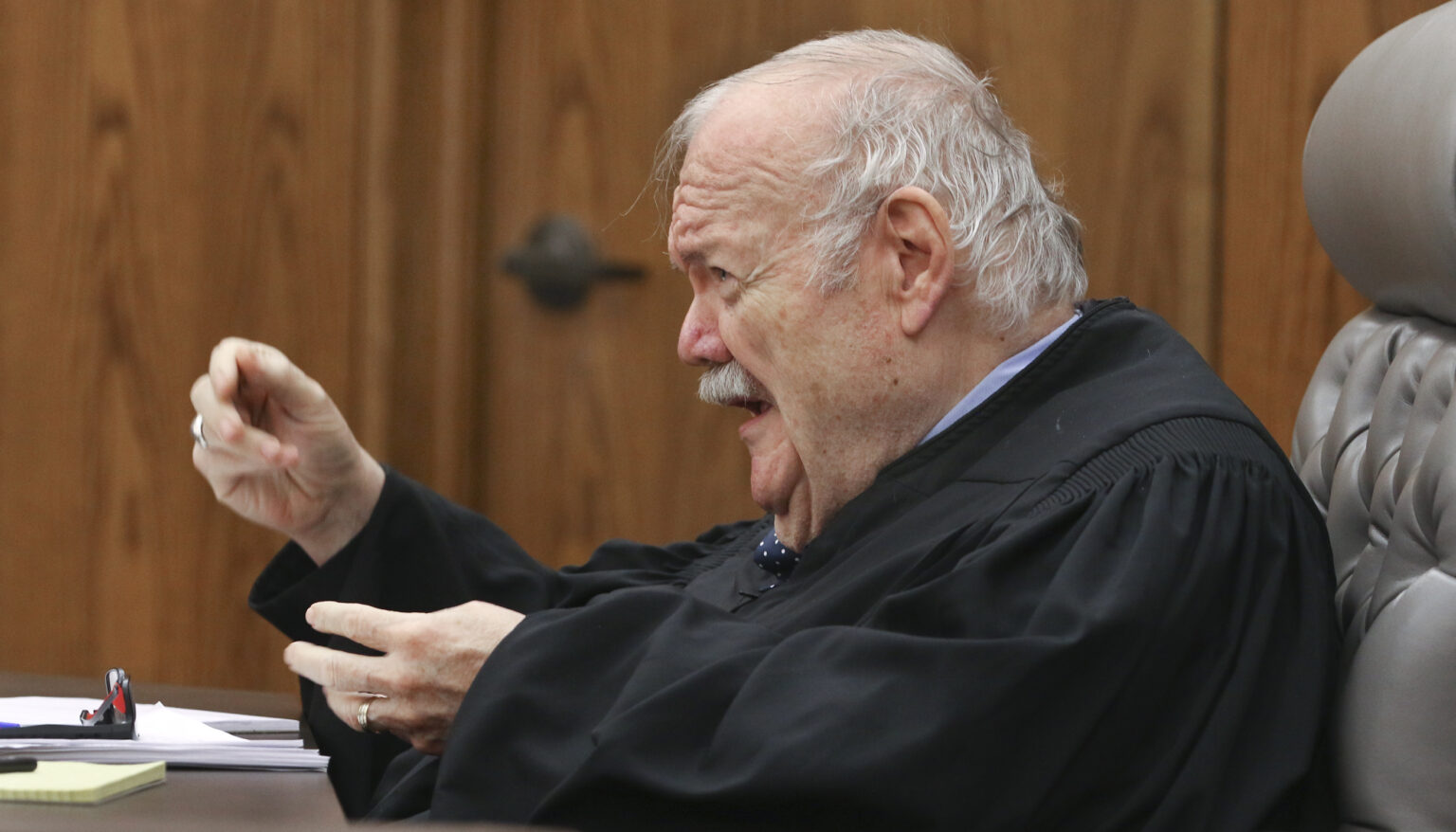
High Plains Public Radio | By Tim Carpenter Published February 27, 2026 at 7:07 AM CST TOPEKA — Members of a three-judge Kansas Court of Appeals panel on Tuesday pushed a United Kansas Party attorney to explain why they didn’t take their fight to the Legislature to change a state law banning multi-party nominations of the same candidate.Saline County District Judge Jared Johnson last year tossed United Kansas Party’s lawsuit seeking to allow “fusion voting” by deciding the state made a strong argument that nomination of a candidate by more than one party in the same election cycle could undermine competition while elevating voter confusion and weakening voter confidence in elections.United Kansas Party appealed its First Amendment case to the state Court of Appeals by arguing the case should be sent back to district court for reconsideration under standards more favorable to the idea of striking down the law.Court of Appeals Judge Stephen Hill, the longest-serving judge in state history with more than 45 years on the bench, broached the jurisdictional issue soon after plaintiffs attorney Ori Lev began a presentation on how the state’s 1901 prohibition on fusion voting violated the Kansas Constitution’s Bill of Rights and handicapped third parties by tipping elections in favor of dominant political parties.“Are you on the wrong side of 10th Avenue right now?” Hill asked. “Shouldn’t you be across the street in that domed building asking for a change in the law?”“That’s a fair question,” said Lev, who works for Protect Democracy, which is headquartered in Washington, D.C. “No, I think we’re on the right side of the street. First, this court has the constitutional duty to render a state law unconstitutional if it is. But the circumstances here are unique in that the dominant political parties have no incentive to change the laws that grant them an advantage and stifle political competition in the state.”Court of Appeals Chief Judge Sarah Warner doubled down on whether the question of fusion voting was a better fit for members of the state Senate and House.“Isn’t that a political problem?” she said. “Not a judicial problem?”“Fundamentally,” Lev said, “our challenge is that this law violates Kansans’ right to free speech and association under the Kansas Constitution. This is not a political question. It’s a legal question that is appropriately before the court. The burdens here are significant in that they prevent political parties from doing the one thing that they are constituted to do, which is to nominate and elect candidates, and to amass political power through popular support at the ballot box.”Bradley Schlozman, a Wichita attorney representing the state in United Kansas Party v. Secretary of State Scott Schwab, said the Kansas Supreme Court previously found Article 4, Section 1 of the Kansas Constitution clearly left to the Legislature the task of setting boundaries on the mode of voting in the state.“This is a decision of the Legislature,” he said. “This is a classic public policy argument. They’re directing their attack at the wrong branch of government.”Schlozman said the folly of the state courts wading into a political clash was revealed by United Kansas Party’s claims that fusion voting was outlawed in Kansas by Republicans intent on preventing the Populist and Democratic parties from regaining power after that coalition’s heyday in the 1890s.He said the state Court of Appeals had no business deciding after 125 years to use its authority to send the case back to district court with instructions to consider the issue in a light more favorable to advocates of fusion voting who were keen to elect more political moderates to elective office.“I can’t think of anything more dangerous for the court to be deciding,” he said.In July 2024, a group of Kansans aligned with United Kansas Party filed suit claiming the state constitution prohibiting their party’s nomination of candidates simply because their preference had formal support of a major political party. Schwab, the secretary of state and chief election officer in Kansas, said dual nominations were prohibited.United Kansas Party plaintiffs include former Democratic state Rep. Jason Probst of Hutchinson and one-time Republican candidate for secretary of state Scott Morgan of Lawrence.Their suit put forward the proposition state law prevented voters, political parties and nominees from engaging in protected political speech and of freely associating in the political process. They argued an anti-fusion law ought to be assessed under the strict scrutiny standard tougher for the state to sustain.Johnson, the Saline County district judge, granted the state’s summary judgment motion to dismiss the suit in March 2025. He rejected plaintiffs’ claim that the state ban on fusion voting was an unconstitutional violation of state laws designed to restrict competition and participation in politics.The judge’s decision said the state’s regulatory interest in forbidding multiple nominations of a single candidate “greatly outweigh any burden it might have on United Kansas Party.”“Anti-fusion laws impose reasonable modes of voting and are not an abuse of power,” Johnson said.In a statement, United Kansas Party founder and chairman Jack Curtis said the Court of Appeals panel should recognize the secretary of state’s decision to invalidate the party’s nomination of Democratic and Republican candidates for the Legislature violated the state constitution.“Any law invalidating our nominees undermines the fundamental rights of candidates to associate with the parties of their choice and of parties and voters to choose their preferred nominees,” Curtis said.This story previously appeared in the Kansas Reflector.Copyright 2026 High Plains Public Radio
Share this story