theage.com.au
Clustered Story
ISIS brides history : Why wont Anthony Albanese , Labor repatriate Islamic State wives , children ?
theage.com.au · Feb 20, 2026 · Collected from GDELT
Summary
Published: 20260220T193000Z
Full Article
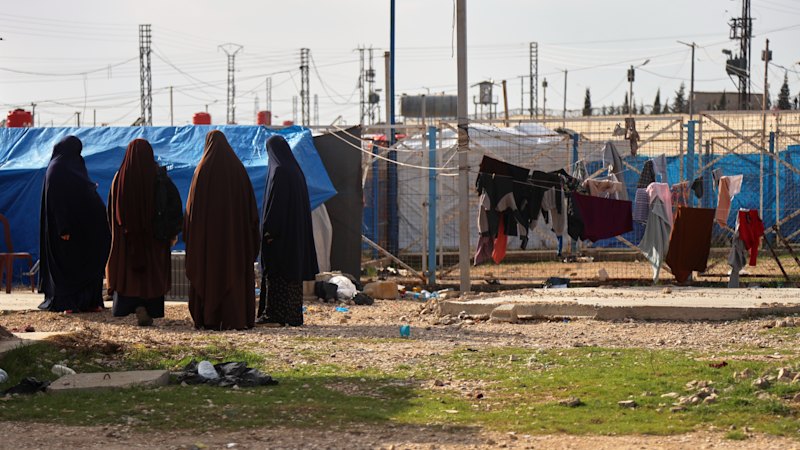
Anthony Albanese did not hesitate when the news broke from Syria that 34 women and children connected to Islamic State were trying to get home.Hours later, first thing on Tuesday morning, he was on the airwaves objecting to the move – and his rhetoric was strong. The government, he said, had nothing to do with it.“We are not providing any support,” he told interviewers across several days, also saying there was “no assistance”. Quoting his own beloved mother, he said: “If you make your bed, you lie in it.”By the end of the week, his words had become almost brutal: “I have nothing but contempt for these people.”Albanese’s hawkish position is born from both fear and disgust. The fear is of the kind of political backlash the government experienced in western Sydney in 2022 when an earlier cohort of families was brought back. Disgust comes from his understandable repugnance at the appalling acts of the regime under which these women and children lived.These feelings were likely to have been heightened further by the emotion surrounding December’s terrorist attack against Jews in Bondi, carried out under the same black and white flag that once fluttered over Islamic State’s Syrian and Iraqi “caliphate”.Buried in the fine print of Albanese’s harsh words, however, is an important caveat. All 34 of these people are citizens and, with the exception of one woman now prevented by a temporary exclusion order from returning, they are entitled by law to come home. This means they can request passports – passports that, very recently, after years of obfuscation and excuses, the government finally issued to them.So, Albanese concedes, if they had made it out of their camp, al-Roj, to Damascus and onto flights out on Monday, the government would have been required to let them re-enter Australia. Albanese just wanted to make it clear – very clear – that he didn’t like it. At all.It’s a position designed to look tough to a domestic audience but not to breach the law.By the time his words reached Syria, though, any hope of subtlety had been lost.“Australia Refuses to Repatriate Its Nationals”, said the headline of Syria’s independent Enab Baladi news organisation. Over there, the prime minister’s words were read as: “We won’t let them in.”Sources based in Syria but unable to be publicly identified confirm these words resonated in the halls of power in Damascus. And they solidified the Syrian position. If the Australian government didn’t want these people, why would Syria’s fledgling interim government – desperately seeking international approval – put them on a plane?So for now, as the Muslim world enters Ramadan, the sources believe, there’s no immediate prospect of this group of Australians leaving al-Roj camp again. The supposedly temporary glitch that stopped them on the road to Damascus on Monday stands a chance of becoming permanent.Meanwhile, in north-eastern Syria, the politics on the ground make Australia’s internal ructions over this issue look milquetoast. There, the landscape is chaotic and dangerous – and the disorder is edging closer to the camp where the women and children live.The al-Roj camp housing Australian family members of suspected Islamic State militants in Syria.APFor now at least, that’s where Albanese is content for our citizens to remain. Which prompts the question: how did we get to this point?‘Australian values’In 2022, in the flush of Albanese’s first election victory, his home affairs minister, Clare O’Neil, repatriated 17 Australians through the front door. O’Neil, at least initially, was proud of the fact.“It was a really important thing for the Australian government to bring back the four women and 13 children,” she told the National Press Club in December that year.“The question for us is: is the safest thing for these 13 children to grow up in a squalid camp where they are subjected to radical ideologies every single day and then return to Australia at some point when they’re an adult? Or is it safer for us to bring them here so they can live a life around Australian values?”Australian families at the al-Roj refugee camp attempting to start their journey home. For that cohort of women, she said, the government had “made the latter decision”.O’Neil’s message echoed the advice of ASIO, the US Army and multiple humanitarian agencies over many years. They have long said that, for security reasons, if not for compassionate ones, these families should all return home.Once they got back, of course, they became subject to Australian laws, including criminal and national security charges. Of the 2022 cohort, one woman, Mariam Raad, was charged with willingly entering Syria to be with her Islamic State fighter husband, which was then a crime. She pleaded guilty and was discharged with no conviction.From the rest we have heard nothing.It didn’t stop a swift and vicious political backlash. Dai Le, the independent member for Fowler, and a number of mayors in western Sydney – where the women’s families lived – objected strenuously.“This lunatic of a proposal is a betrayal of the thousands of families and community members that have escaped their homelands due to the atrocities and barbaric acts committed by [Islamic State] upon them,” said Cumberland City councillor and former mayor Steve Christou at the time.“For the federal government to now turn around and say they want to bring these traitors and highly dangerous individuals back to Australia is a betrayal upon our own citizens.”The upshot, according to sources close to the situation but not authorised to speak publicly, was that Albanese resolved not to “expend political capital on this issue”. He would not engage in further official repatriations.Faced with a firm blockage in Canberra, charity Save the Children launched legal action in the Federal Court, trying to force the government to act.The court rejected the application, saying it lacked legal grounds but, in his judgment, Justice Mark Moshinsky said the evidence showed that, when the 2022 group came back, it was clear that “the Australian government was planning to request more repatriations”. After all, it had called the group “Cohort 1″.“The evidence does not explain why [it] is not doing so,” the judge observed.Official government documents give us a clue why it changed its mind.Close to the end of Albanese’s first term, Home Affairs Minister Tony Burke met a group of family advocates, including Save the Children chief executive Mat Tinkler. Notes of the meeting taken by department secretary Stephanie Foster show Tinkler spelling out to Burke the mounting dangers in Syria, and the deteriorating health conditions of some of the Australians.Burke responded by citing the political situation in Australia. It was only months until the federal election, and Burke told the advocates: “Politics harder at this end of term.” He urged them to go quiet publicly, under threat of forcing Albanese’s hand. “Public pressure makes it harder. Don’t want gov to rule it out,” say the notes, tabled in parliament late last year.Burke’s parting shot was “can’t see a way to navigate earlier”. It was a “no”. But to the advocates, it gave hope that, after the 2025 election, things might change.Positions hardenIn mid-2025, something else happened that stiffened Albanese’s position even further.In June that year, two women and four children paid people smugglers to get them out of al-Hawl camp – a sprawling, lawless and more radical camp than Roj. The six Australian citizens were smuggled over the Lebanese border, arrested, imprisoned and then taken to their embassy in Beirut. There the government issued them passports and they returned to Australia.When the news became public, the backlash from Sussan Ley’s opposition was strong. Describing the women and children as a “highly dangerous cohort of individuals”, they accused the government of a “dereliction of duty”.Albanese’s response was to come up with the “no assistance” mantra he deployed again this week. Under it, the remaining women in Roj would have to find their own way out, presumably using people smugglers, then somehow make it safely across an international border, without papers, to an Australian embassy. In that case, he confirmed, the government must, reluctantly, issue documents.But it wouldn’t be his fault.Burke spelled out the politics of this to advocates in another meeting in June 2025.“Government doesn’t have a plan to get people out of the camps at this time,” he said, according to meeting notes taken by a public servant.“The thinking is if people are able to get out, there are no blockages to them returning. Government doesn’t want to be perceived to have been paying to have them smuggled out.”Around the table were Burke, long-time family advocate Kamalle Dabboussy, Tinkler, and Dr Jamal Rifi – a man close to Burke and close to the families. He’s also the man who was revealed this week to be in Damascus trying to organise the ill-fated family repatriation.Tinkler, according to the notes, tried to make it as simple as he could for the government. The people running the camps, the Kurdish regional authority in north-eastern Syria, would “allow people to leave if the government would provide assurances that passports will be issued”.Still, it was not simple enough.“Minister responded that this is not something the government is considering at this time,” the notes say.Plan BAfter that further rejection, the family advocates retired to come up with plan B. That plan, revealed in an August 2025 letter from Dabboussy and Tinkler and also released to parliament, involved getting help from the US military.The Americans have long expressed the desire for Western governments, including Australia’s, to repatriate their citizens to prevent a new generation of children being radicalised.“Family members are seeking to take control of their own destiny,” Dabboussy wrote in his letter to Burke, “and have recently confirmed that the US Government has offered to pro
Share this story